Does SoftWave Therapy Really Work?
Learn more About Softwave Therapy
Are you struggling with chronic pain, slow-healing injuries, or mobility issues? Maybe you’re frustrated by treatments that just mask symptoms or require invasive procedures. You’re not alone. Millions seek relief from pain and want to heal naturally, without surgery or long-term medications. Simply Well Chiropractic now offers SoftWave Therapy, a non-invasive solution that’s making waves in the world of pain management and recovery. But does it really work?
Yes, the effectiveness of SoftWave Therapy is supported by a growing body of clinical research and patient testimonials as an effective, safe, and non-invasive treatment for a range of musculoskeletal and soft tissue conditions. It offers accelerated healing, pain reduction, and improved mobility, especially for those who haven’t found relief with traditional therapies.
Many patients report significant pain relief and improved mobility after just a few sessions. While individual results vary, the high satisfaction rates and clinical evidence suggest that SoftWave Therapy is a valuable option for those with chronic pain or injuries.
does SoftWave really work?
SoftWave Therapy (a form of extracorporeal shockwave therapy, or ESWT) uses high‑energy acoustic waves to trigger biological repair processes in injured or overloaded tissue. Clinical research on ESWT shows meaningful pain reduction and functional improvement for conditions like plantar fasciitis, tendinopathies (Achilles, tennis elbow, shoulder), and some chronic soft‑tissue and bone‑related problems, with many studies reporting success rates in the 60–80% range when patients complete a full course of care.
At Simply Well, most patients who respond notice a clear change in pain or function within 1–3 sessions, with best results typically building over 4–6 visits as the tissue remodeling process continues. SoftWave is not a cure‑all, and it will not reverse severe structural damage overnight, but as a non‑invasive, drug‑free option it can be a powerful tool when conservative care and “rest and pills” have stalled.
How SoftWave works
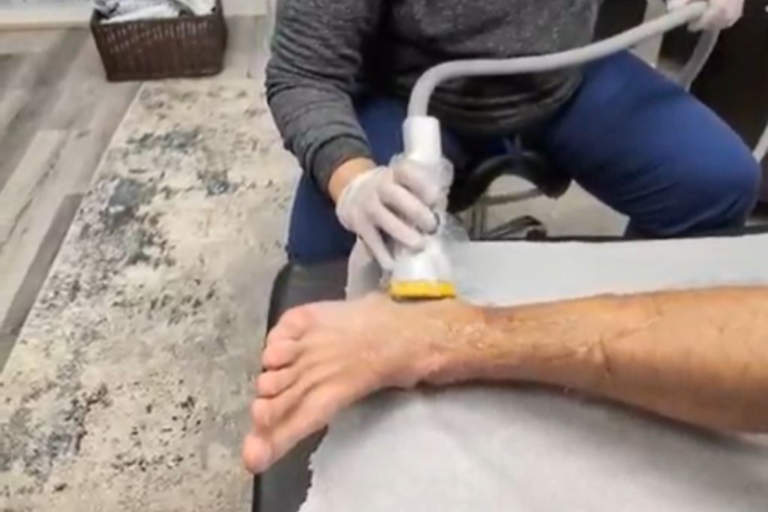
SoftWave Therapy is built on the same core science as ESWT, which has been used in medicine for decades to help break up kidney stones and, later, to treat stubborn tendon, fascia, and bone problems. Instead of cutting or injecting the area, the device sends controlled acoustic shockwaves through a water‑based applicator into the tissues that need help.
Under the surface, several things happen:
- Mechanotransduction: The acoustic wave creates a brief mechanical “stress” on cells, which turns into a chemical signal that tells the body to start repair work.
- Increased blood flow: ESWT stimulates angiogenesis, the formation of new micro‑blood vessels, improving oxygen and nutrient delivery to damaged tissue.
- Stem cell activation: Studies show shockwaves can recruit and activate local stem or progenitor cells, which support regeneration of tendon, muscle, skin, and even some bone tissue.
- Inflammation modulation: Instead of just numbing pain, SoftWave influences inflammatory mediators, helping chronic, “stuck” inflammation shift toward an active healing phase.
- Pain signal disruption: Shockwaves can alter nerve signaling and reduce the sensitivity of local pain receptors, which often leads to noticeable symptom relief.
SoftWave’s broad‑focused design means the energy is distributed over a wider and deeper field (up to several centimeters), which allows us to treat not just a pinpoint of pain but the surrounding tissue chain that is often part of the problem.
Conditions SoftWave helps
SoftWave can help a range of musculoskeletal and soft‑tissue problems. At Simply Well, we most often consider SoftWave for:
Neuropathy and Nerve‑Related Symptoms
Sports Injuries and Overuse Conditions
Arthritis‑Related Joint Pain
- Knee osteoarthritis
- Hip osteoarthritis
- Shoulder osteoarthritis
- Lumbar spine arthritis
- Cervical spine arthritis
- Ankle osteoarthritis
- Facet joint arthritis
- Thumb CMC arthritis
- First MTP (big toe) arthritis
- Wrist osteoarthritis
- Hand/finger arthritis
Elbow Pain
- Tennis elbow (lateral epicondylitis)
- Golfer’s elbow (medial epicondylitis)
- Triceps tendinitis
- Biceps tendinitis (distal)
- Radial tunnel syndrome
- Elbow ligament sprains (UCL, RCL)
- Post-surgical elbow pain & stiffness
wrist and hand Pain
- Carpal tunnel syndrome
- De Quervain’s Tenosynovitis
- Wrist Sprain
- Trigger Finger (Stenosing Tenosynovitis)
- Mallet Finger (Baseball Finger)
- Dupuytren’s Contracture
- Thumb Sprain
Leg Pain
- Sciatica (lumbar radiculopathy)
- Hamstring strains
- IT band syndrome
- Shin splints (medial tibial stress syndrome)
- Achilles tendinitis / tendinosis
- Quadriceps tendinitis / strain
- Patellar tendinitis (Jumper’s knee)
- Hip flexor tendinitis / strain
- Calf strains (gastrocnemius/soleus)
- Restless Leg Syndrome
How SoftWave compares to other options
Here is a comparison of SoftWave Therapy versus common pain treatments you may have already tried or are thinking about trying:
What to expect at Simply Well Chiropractic in Cincinnati
Because success with SoftWave depends on matching the right patient to the right protocol, our process is designed to be both diagnostic and therapeutic from day one.
Your $49 SoftWave Discovery Session
During your initial Discovery Session at Simply Well Chiropractic:
History and exam: We review your pain history, prior treatments, imaging (if available), and how the problem affects work, sport, and daily life.
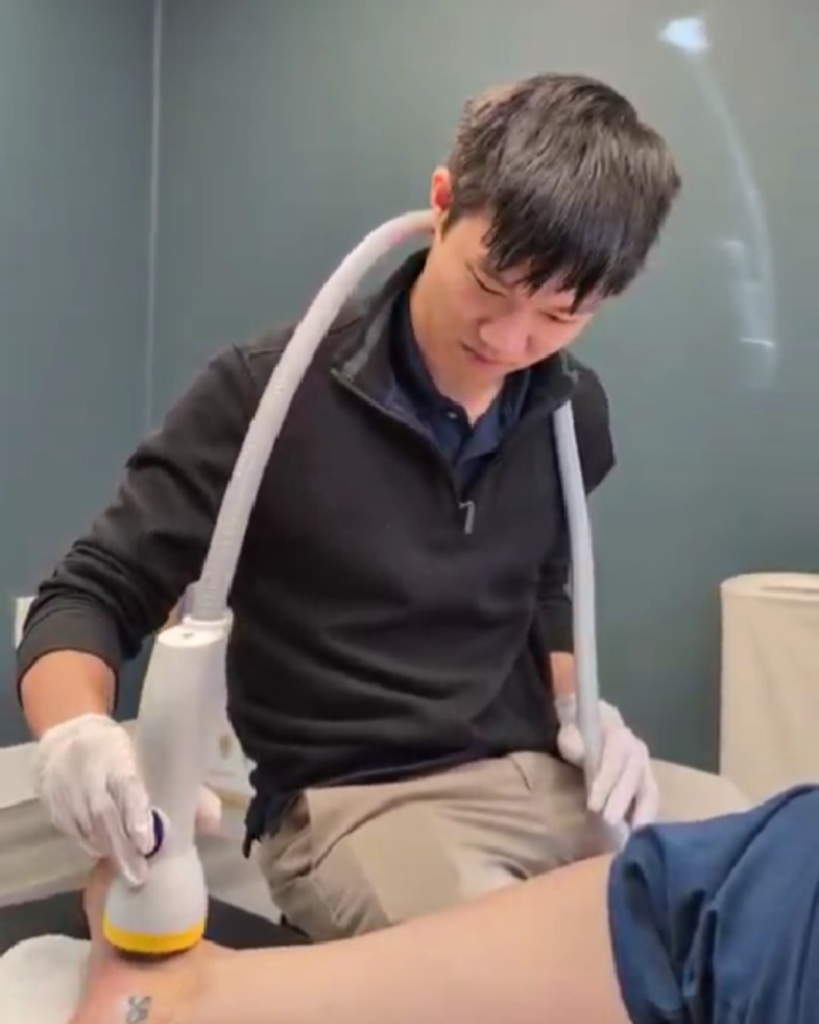
Targeted SoftWave scan: We use the SoftWave applicator at low settings over the involved region to “map” areas of tissue irritation and degeneration based on your feedback and the device response.
Test treatment: Once we identify a target zone, we deliver a focused trial of therapeutic‑level impulses so you can feel how your tissue responds in real time.
Immediate response check: Many responsive patients notice a short‑term change—less sharp pain with movement, easier walking, or reduced tenderness within the visit itself.
Clear plan (or honest “no”): By the end, both you and Dr. Faith will have a practical sense of whether SoftWave is likely to help your specific condition and, if so, what a reasonable treatment plan looks like.
If your tissues or history suggest that SoftWave is unlikely to move the needle for you, we will tell you that directly and discuss other options instead of pushing a package.
How many sessions and how fast it works
The number of sessions depends on the diagnosis, how long the issue has been present, and your overall health and activity level. A typical pattern we see, which aligns with published shockwave protocols, looks like this:
- Short‑term response: Some patients feel a “light switch” change after 1–2 visits, especially with plantar fasciitis or localized tendon pain.
- Standard plan: Many chronic cases do best with a series of 4–6 sessions, usually spaced about a week apart, with improvements in pain, walking tolerance, and daily function accumulating over several weeks.
- Stubborn or complex cases: Long‑standing problems, multiple pain generators, or co‑existing arthritis may need more visits and a stronger focus on rehab, strength, and lifestyle alongside SoftWave.
It is important to view SoftWave as a healing process, not a numbing shot: the acoustic waves set off biological changes that continue unfolding in your tissues for days to weeks after each appointment.
Safety, side effects, and who should avoid it
SoftWave Therapy is FDA‑cleared for several indications, including activation of connective tissue, treatment of chronic diabetic foot ulcers, and certain pain conditions, which means it has met defined safety and performance criteria. In musculoskeletal care, it is widely used in orthopedic, sports medicine, podiatric, and chiropractic clinics for its favorable risk–benefit profile.
Most people tolerate SoftWave very well:
- Common temporary effects: Mild soreness, tenderness, redness, or swelling in the treated area, typically easing within 24–48 hours.
- Less common effects: Brief bruising or a temporary flare in pain, especially with very chronic or sensitive tissues, usually managed by adjusting intensity and spacing.
SoftWave is not appropriate for everyone. We generally avoid or modify treatment if you:
- Are pregnant
- Have an implanted pacemaker or certain electronic devices near the treatment area
- Have active cancer in the region being treated
- Have a severe clotting disorder or uncontrolled infection in the target area
Because evidence is still evolving for some off‑label uses, we always combine device guidance with your medical history, exam findings, and, when needed, coordination with your other healthcare providers.
Ready to see if SoftWave Therapy Will Work for You?
Ready to experience the benefits of SoftWave Therapy for yourself? At Simply Well Chiropractic, we’re offering a no obligation $49 Discovery Session. SoftWave is both a diagnostic and treatment tool. At the end of the first session both you and Dr. Faith will know if this treatment is right for you.
There’s no pressure. Don’t let pain hold you back any longer—book your $49 Discovery Session at Simply Well Chiropractic today and take control of your health!
Address
5721 Dragon Way #110, Cincinnati, OH 45227
info@simplywellchiro.com
Phone
(513) 271-1233

Written and medically reviewed by Dr. Faith Swartzendruber, DC
Ohio Chiropractic License: DC-05144 | Palmer College of Chiropractic
Founder, Simply Well Chiropractic, Cincinnati
– Freya