
IT Band Syndrome Treatment in Cincinnati
Schedule your $49 Discovery Session today!
What Is IT Band Syndrome?
IT Band Syndrome occurs when the iliotibial (IT) band—a thick ligament running from your hip along the outer thigh to below the knee—becomes inflamed or tight, rubbing against the knee during repetitive motion. This overuse injury causes burning pain on the outer knee or hip, swelling, snapping sensations, and worsening discomfort with downhill running, cycling, or prolonged sitting—common for Cincinnati runners on hilly terrain like Eden Park trails.
IT Band Syndrome Symptoms
Iliotibial (IT) Band Syndrome is a common overuse injury that causes pain and inflammation along the outside of the thigh, typically affecting runners, cyclists, and active individuals. The symptoms often develop gradually and worsen with continued activity.
Common symptoms include:
- Sharp or burning pain on the outer knee. Pain usually occurs where the IT band crosses the outside of the knee joint and may worsen when the knee bends about 30 degrees—such as during running, cycling, or going downstairs.
- Tenderness or swelling along the thigh or knee. Some people notice localized swelling or tightness on the outer part of the thigh.
- Pain that worsens with activity but improves with rest. Symptoms tend to flare up during repetitive movements and ease once activity stops.
- A snapping or popping sensation. You might feel or hear a faint click as the IT band moves over the outer knee bone (lateral femoral condyle).
- Discomfort that radiates up the thigh or hip. Although the pain often centers near the knee, it can extend up the outer thigh toward the hip if inflammation spreads.
If left untreated, IT Band Syndrome can interfere with training and daily activities, as the irritation and inflammation can become chronic. Early intervention—through rest, stretching, and addressing muscle imbalances—can help prevent long-term discomfort.
What Causes IT Band Syndrome?
IT Band Syndrome develops when the iliotibial band becomes irritated from repeated bending and straightening of the knee, especially during running, cycling, and other endurance activities. Over time, this constant friction on the outside of the knee leads to inflammation, tightness, and pain.
Common causes and contributing factors include:
- Overuse and repetitive motion
Frequent running, cycling, stair climbing, or other high-volume activities can overload the IT band, especially when training volume or intensity increases too quickly. - Training errors
Sudden mileage jumps, adding hills too fast, excessive downhill running, or not allowing enough rest between workouts all raise stress on the outer knee. - Running surface and terrain
Running on sloped roads, banked tracks, or uneven trails can tilt the leg and increase strain on the IT band on one side of the body. - Biomechanical issues
Factors like weak hip muscles, excessive inward collapse of the knee, leg length differences, flat feet, high arches, or bowed legs can change how your leg tracks and increase tension through the IT band. - Muscle tightness and poor flexibility
Tightness in the IT band, hip flexors, or surrounding muscles can limit normal movement and make the band more likely to rub against the outside of the knee. - Improper or worn-out footwear
Shoes that no longer provide adequate support or are not appropriate for your foot type can alter your mechanics and put extra load on the IT band. - Structural factors you are born with
Some people naturally have a tighter IT band, inwardly rotated shin bones, or more prominent outer knee bones, which can increase friction in this area.
Understanding what is driving your IT Band Syndrome is key to lasting relief; a thorough movement assessment can help identify which of these factors are most relevant for you.
How SoftWave Therapy Helps IT Band Syndrome
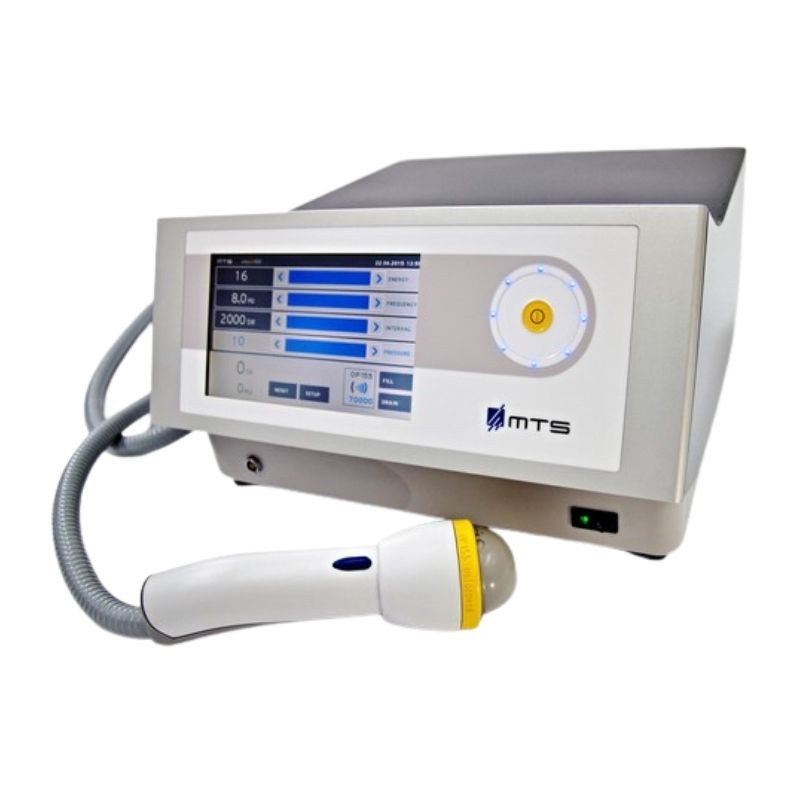
SoftWave Therapy is a non-invasive treatment that uses focused acoustic waves to stimulate your body’s natural healing response in irritated soft tissues like the IT band and surrounding structures. Those waves penetrate deep into the outer thigh and lateral knee, targeting the inflamed band and the tissues that support hip and knee movement.
Supports long-term results for active patients
Because SoftWave Therapy addresses both inflammation and underlying tissue irritation, it can fit seamlessly into a care plan that also includes targeted rehab, stretching, and strength work, helping reduce flare‑ups and support sustainable return to running and sport.
Calms inflammation and pain
The acoustic waves help modulate the inflammatory response in the IT band and lateral knee, which can quickly reduce irritation, swelling, and pain without drugs or injections.
Stimulates tissue repair and regeneration
SoftWave Therapy triggers a healing cascade at the cellular level, activating dormant stem cells, improving tissue quality, and supporting long-term repair instead of just masking symptoms.
Improves circulation and mobility
By boosting local blood flow and promoting new vessel formation, SoftWave helps deliver more oxygen and nutrients to the IT band, which can speed recovery and restore more natural, pain-free movement.
Targets problem areas without downtime
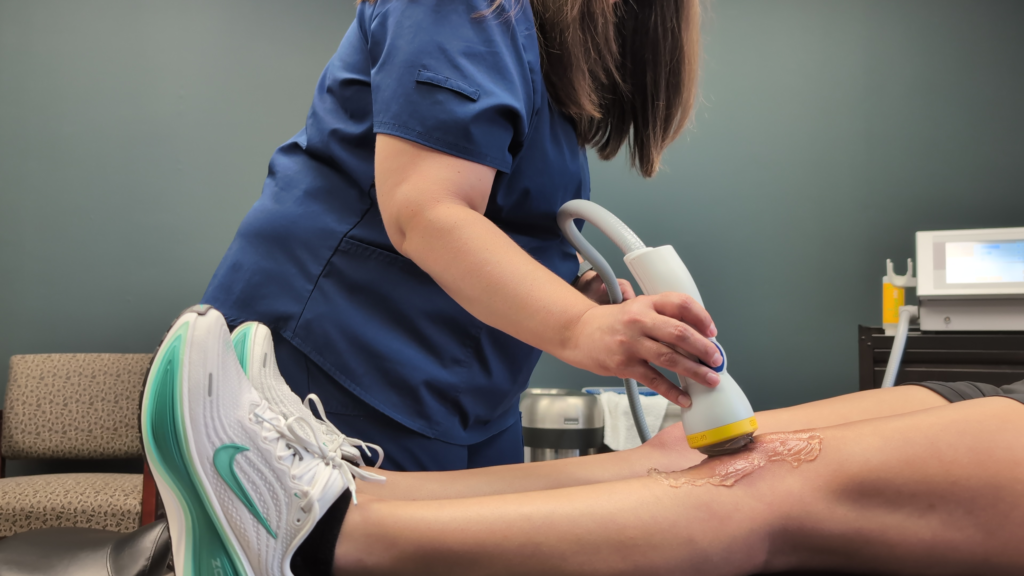
During a session, the provider glides the SoftWave applicator along the outer thigh and knee, and patients typically feel a brief pulsing or “rubber band snap” over irritated spots but little sensation over healthy tissue. Treatments usually take about 10 minutes, require no anesthesia, and have no downtime, so most people can walk out and resume normal daily activities the same day.
SoftWave Therapy Process for IT Band Syndrome
When you come to Simply Well Chiropractic for IT Band Syndrome, we follow a step-by-step SoftWave Therapy process designed to quickly identify irritated tissue, reduce pain, and support long-term healing.
1. Comprehensive evaluation and movement assessment
Your visit starts with a focused consultation where we review your health history, activity level, and when your IT band pain shows up most. We then perform a detailed movement and orthopedic exam to assess your hip, knee, and ankle mechanics, looking for tightness, weakness, and compensation patterns that may be feeding the problem.
2. Targeted SoftWave mapping of the IT band and knee
Next, we apply a small amount of gel along the outside of your thigh and knee and glide the SoftWave handpiece over the area. You’ll feel a gentle pulsing sensation that becomes more noticeable over irritated or inflamed tissue, which helps us “map” the exact hot spots in your IT band, lateral knee, and surrounding structures.
3. Therapeutic SoftWave treatment to inflamed tissue
Once we identify the problem areas, we concentrate SoftWave pulses into those zones to stimulate your body’s natural healing response. This process helps calm inflammation, reduce nerve sensitivity, and kickstart tissue repair without injections, surgery, or medication.
4. Fast, comfortable sessions with no downtime
Most IT band SoftWave sessions take about 10–15 minutes. You remain awake and comfortable throughout, and there is no need for anesthesia. When your treatment is finished, you can walk out the door and resume normal daily activities right away.
5. Personalized care plan to keep you moving
SoftWave Therapy works best as part of a broader plan. At Simply Well Chiropractic, we pair your sessions with customized recommendations—such as specific stretches, hip and glute strengthening, chiropractic adjustments, or activity modifications—to help restore healthy mechanics and reduce future flare‑ups.
Heal IT Band Syndrome in Cincinnati
If you’re tired of IT band pain limiting your runs, workouts, or daily life, schedule a SoftWave assessment at our Cincinnati clinic and find out if this regenerative approach is right for you.
- Non-invasive: No incisions or needles required
- Minimal downtime: Most patients resume normal activities quickly
- Clinically proven: Supported by research for effectiveness in soft tissue healing and pain reduction
- Safe and well-tolerated: Suitable for a wide range of patients

How to Prevent IT Band Syndrome (and Recurrence)
Warm up and cool down every time
Spend 5–10 minutes walking, easy jogging, or cycling lightly before harder efforts, then finish with gentle stretching for your hips, quads, hamstrings, and glutes.
Increase mileage and intensity gradually
Follow the “no more than 10% per week” rule when adding distance, speed, or hills so your IT band and supporting muscles can adapt without getting overloaded.
Choose smart surfaces and routes
Run or walk on level ground when possible, avoid heavily cambered (slanted) roads, and alternate directions on a track to prevent repeated strain on the same outer knee.
Wear supportive, up-to-date footwear
Use shoes that match your foot type and replace them regularly so worn-out cushioning or poor support doesn’t change your mechanics and stress the IT band.
Prioritize hip and glute strength
Strengthen the muscles that control your hip and knee—especially the glute medius and glute max—with exercises like side‑lying leg lifts, bridges with a band, lateral band walks, wall squats, and side planks.
Stretch and mobilize regularly
Incorporate IT band–related stretches and hip mobility drills a few times per week, especially on training days, to keep surrounding muscles flexible and reduce tension through the band.
Schedule rest and cross‑training
Plan at least one full rest day every 7–10 days, and mix in low‑impact activities like cycling, swimming, or strength training to reduce repetitive strain on the same tissues.
Address early warning signs
If you notice tightness, twinges, or outer‑knee fatigue, back off intensity, add extra recovery, and consider a movement assessment or tune‑up visit before it progresses.
Address
5721 Dragon Way #110, Cincinnati, OH 45227
info@simplywellchiro.com
Phone
(513) 271-1233

Written and medically reviewed by Dr. Faith Swartzendruber, DC
Ohio Chiropractic License: DC-05144 | Palmer College of Chiropractic
Founder, Simply Well Chiropractic, Cincinnati
Meet Your Provider, Dr. Faith Swartzendruber
Dr. Faith Swartzendruber is a licensed chiropractor and SoftWave Therapy provider in Cincinnati, Ohio, who helps people recover from IT Band Syndrome and related knee or hip pain. She focuses on reducing tension and inflammation, restoring smooth movement, and supporting the body’s natural healing process—without surgery or heavy medications. Using an evidence-informed, personalized approach, Dr. Faith combines SoftWave Therapy with targeted chiropractic and rehabilitative care to promote lasting relief, improved flexibility, and better lower-body function.
Dr. Faith earned her Doctor of Chiropractic degree from Palmer College of Chiropractic in 2022.
She holds Ohio chiropractic license (DC-05144).
Dr. Faith Swartzendruber, DC, integrates her SoftWave Therapy training and chiropractic license with her education background to deliver SoftWave treatments that are both clinically informed and patient-centered.
Dr. Faith has helped hundreds of Cincinnati patients overcome chronic pain with SoftWave Therapy and chiropractic care.