
Schedule Your Jumper’s Knee Evaluation in Cincinnati Today
$49 Discovery Session at Simply Well Chiropractic
Non-Invasive | FDA-Cleared
What Is Patellar Tendinitis (Jumper’s Knee)?
Patellar tendinitis is a painful condition of the tendon that connects your kneecap (patella) to your shin bone (tibia). It works with your quadriceps muscle to help straighten your knee and control powerful movements like jumping, sprinting, and sudden direction changes.
Over time, repetitive stress can create tiny microtears in the tendon. Instead of fully healing, the tendon becomes irritated, stiff, and weaker, which is why patellar tendinitis is often called an “overuse” injury or a repetitive strain injury. Many people first notice a dull ache at the front of the knee that gradually progresses to sharper pain with activity.
Common Symptoms of Patellar Tendinitis
You don’t have to be a pro athlete to develop patellar tendinitis. We routinely see weekend warriors, active adults, and teens with knee pain that has slowly built up over time.
Typical symptoms include:
- Pain at the front of the knee, usually just below the kneecap
- Tenderness when you press on the patellar tendon
- Stiffness or tightness when bending or straightening your knee
- Pain that worsens with squatting, going up or down stairs, running, jumping, or landing
- A feeling of weakness or “giving way” with more intense activity
Early on, the discomfort may feel like a mild nuisance that flares only after sports or workouts. If you keep “pushing through it,” the pain usually becomes more constant and can start to limit day‑to‑day activities.
Common contributors include:
- Sudden increase in training volume or intensity (more miles, more jumps, harder practices)
- Not enough rest or recovery days between intense sessions
- Tight quadriceps, hamstrings, or calves that change how your knee loads
- Weakness in the hips or core, causing the knee to collapse inward
- Poor landing mechanics or running technique
- Hard playing surfaces or worn-out footwear
- Flat feet or altered lower‑extremity alignment that overloads the patellar tendon
Left unaddressed, the tendon can move from a simple inflammatory issue into a more degenerative state (tendinosis), where the tendon fibers are structurally weakened.
Will Patellar Tendinitis Go Away on Its Own?
Sometimes, mild patellar tendinitis improves with a few weeks of rest, ice, activity changes, and basic rehab exercises. But if you return to full activity too quickly or only focus on short-term pain relief, the underlying tendon damage often remains and symptoms tend to come back.
Chronic cases may linger for months and significantly limit sports, work, and daily life without a targeted plan that helps the tendon truly remodel and heal.


Standard Treatment Options for Patellar Tendinitis
Most large orthopedic and academic centers recommend a combination of conservative measures as the first line of care. These commonly include:
- Rest and activity modification to reduce the load on the tendon
- Ice and short-term use of over‑the‑counter anti-inflammatory medications (NSAIDs) to help manage pain and swelling
- Physical therapy to improve flexibility, correct biomechanics, and progressively strengthen the quadriceps, hips, and calves
- Bracing or patellar straps to help support the tendon during activity
In more stubborn cases, some patients are offered injections:
- Corticosteroid injections, which may temporarily decrease pain but do not repair the tendon and can weaken tissue if used repeatedly
- Platelet-rich plasma (PRP), which uses your own blood components to stimulate healing over several months
Surgery is usually reserved for rare situations where the tendon is significantly torn or symptoms remain severe despite an extended course of conservative care.
These approaches can help many people, but for chronic tendinopathy, pain can return if the tendon never truly remodels and regains strength.
SoftWave Therapy for Patellar Tendinitis in Cincinnati
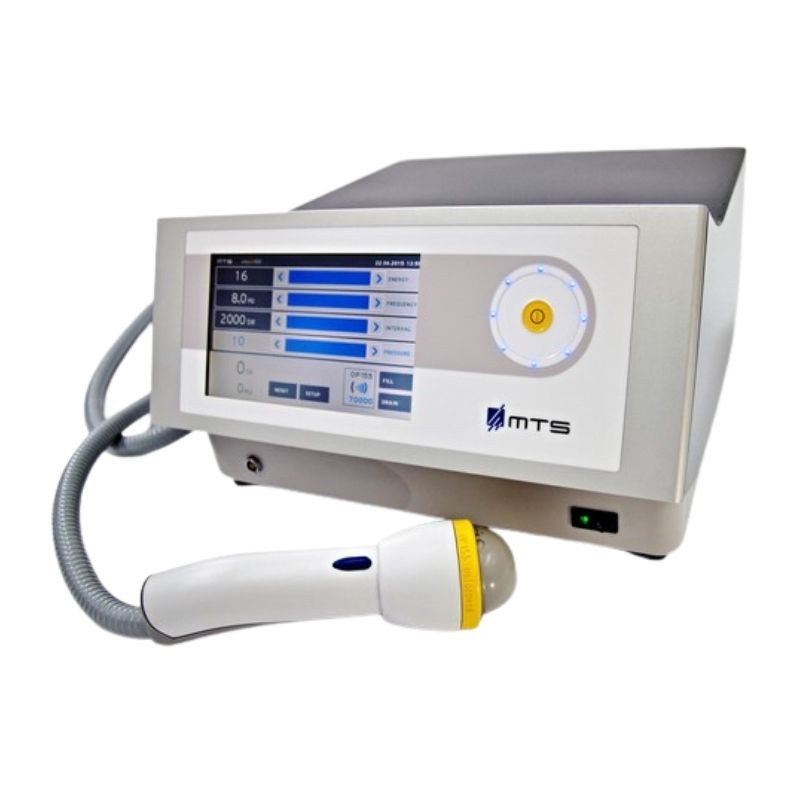
SoftWave Therapy is an FDA‑cleared, broad‑focused form of extracorporeal shockwave therapy (ESWT) that delivers acoustic waves into the injured area to stimulate healing. Unlike treatments that primarily reduce inflammation or numb pain, SoftWave is designed to kickstart a biological repair process inside the tendon.
Research on ESWT shows multiple beneficial effects on tendons:
- Stimulates tenocytes (tendon cells) to become more active, which promotes tissue regeneration
- Increases collagen production, critical for tendon strength and structure
- Encourages new blood vessel formation (neovascularization) to improve blood flow and nutrient delivery
- Modulates inflammatory pathways and promotes more balanced healing responses
- Reduces certain pain-signaling chemicals and alters nerve activity to decrease pain perception
By improving the tendon’s internal environment, SoftWave Therapy supports both symptom relief and long‑term tissue repair when paired with an appropriate loading and rehab program.
Is SoftWave Therapy Right for Your Patellar Tendinitis?
SoftWave Therapy may be a good fit if you:
- Have ongoing pain below your kneecap that limits jumping, running, or squatting
- Have tried rest, stretching, or generic exercises with incomplete relief
- Want a non‑invasive option that supports healing without injections or surgery in appropriate cases
- Are committed to pairing SoftWave with an active rehab plan rather than relying on passive care alone
Clinical and case‑based reports suggest shockwave‑type treatments can be especially helpful for chronic, stubborn patellar tendinopathy that has not responded to more basic approaches. At your initial visit, we will review your history, goals, and exam findings to determine whether SoftWave is a good option for you or if another route is more appropriate.
SoftWave Therapy vs. Traditional Patellar Tendinitis Treatment
Patients often ask how SoftWave compares to common options they’ve read about online.
At Simply Well Chiropractic, we don’t view SoftWave as a replacement for smart rehab; we use it to accelerate and amplify your body’s natural healing so physical therapy and progressive loading work more effectively.
What to Expect From Patellar Tendinitis SoftWave Treatment in Cincinnati
At Simply Well Chiropractic, your SoftWave care for patellar tendinitis follows a structured process; sessions are designed to be quick, targeted, and comfortable for most patients. During your visit, you can expect:
Evaluation and targeting
- Focused exam to confirm patellar tendon involvement and rule out other knee conditions
- Identification of precise treatment zones along the patellar tendon and surrounding tissues
SoftWave application
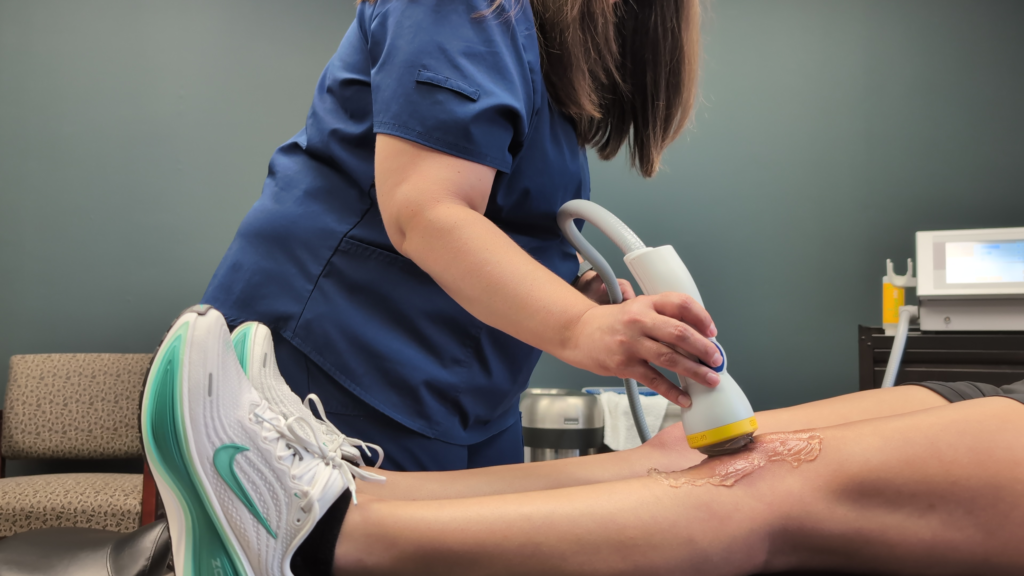
- A gel is applied to the skin over your knee
- The SoftWave device glides over the area while delivering acoustic waves at a controlled intensity
- Most people feel a tapping or pulsing sensation that is adjusted to your tolerance
Immediate post‑session plan
- Brief guidance on activity for the next 24–48 hours
- Individualized plan based on results of the Discovery Session
Many people notice changes in pain or function over a short series of sessions, though chronic cases often require multiple visits and consistent rehab to achieve durable improvements.
Combining SoftWave with at-home rehabilitation
SoftWave Therapy is most effective when it is part of a complete, active treatment plan for patellar tendinitis. At Simply Well Chiropractic, we combine SoftWave with:
- Progressive tendon loading
- Eccentric and heavy slow resistance exercises for the quadriceps and patellar tendon
- Hip, core, and calf strengthening to support better mechanics
- Activity and load management
- Clear guidelines on how much you can jump, run, or lift while healing
- Sport‑specific progressions so you can return to practice and competition with a plan
- Movement and joint care
- Chiropractic adjustments when appropriate to address restrictions in the spine, hip, or ankle
- Soft tissue techniques for surrounding muscles that may contribute to abnormal tendon load
- Supportive strategies
- Education about braces, straps, and taping for selected cases
- Home strategies such as icing and recovery habits to support your in‑clinic care
This integrated approach aims to reduce pain, restore tendon capacity, and build confidence so you can return to sport or activity stronger than before.
How Long Does Patellar Tendinitis Take to Heal?
Healing time varies widely. Mild cases may feel significantly better after several weeks of dedicated rest and rehab, while more severe or long‑standing tendinopathy can take a few months to fully rebuild strength and resilience.
Key factors that influence recovery include:
- Duration of symptoms before starting treatment
- Training load and how quickly it’s modified
- Quality of your strengthening and movement program
- Overall health, sleep, and nutrition
- Whether advanced therapies like SoftWave are used to stimulate tendon healing
Why Choose Simply Well Chiropractic in Cincinnati for SoftWave and patellar tendinitis?
For patellar tendinitis, you need more than just pain relief—you need a plan that lets you stay active while your tendon becomes more resilient. At Simply Well Chiropractic in Cincinnati, we:
Whether you are a high school athlete, a weekend rec‑league player, or an active adult who wants to train and move without constant knee pain, we build your plan around your goals.
Cincinnati’s trusted softwave provider
Dr. Faith Swartzendruber is a licensed chiropractor and SoftWave Therapy provider in Cincinnati, Ohio, who helps people recover from patellar tendinitis and persistent knee pain. Her goal is to reduce inflammation, ease discomfort, and restore strong, pain-free movement—without surgery or reliance on medication. Dr. Faith takes an evidence-informed, personalized approach, combining SoftWave Therapy with targeted chiropractic and rehabilitative care to promote tendon healing, improve strength, and support long-term knee function.
Dr. Faith earned her Doctor of Chiropractic degree from Palmer College of Chiropractic in 2022.
She holds Ohio chiropractic license (DC-05144).
Dr. Faith Swartzendruber, DC, integrates her SoftWave Therapy training and chiropractic license with her education background to deliver SoftWave treatments that are both clinically informed and patient-centered.
Dr. Faith has helped hundreds of Cincinnati patients overcome chronic pain with SoftWave Therapy and chiropractic care.
Ready to Get Help for patellar tendinitis in Cincinnati?
If you are dealing with patellar tendon pain and are tired of hoping it will just go away, we are here to help. Early, structured care can reduce pain, improve function, and help you get back to jumping, running, and lifting with more confidence.
Contact Simply Well Chiropractic in Cincinnati today to schedule an appointment for patellar tendinitis (jumper’s knee) evaluation and treatment, and take the next step toward healthier, stronger knees.
Schedule your $49 Discovery Session today!

Written and medically reviewed by Dr. Faith Swartzendruber, DC
Ohio Chiropractic License: DC-05144 | Palmer College of Chiropractic
Founder, Simply Well Chiropractic, Cincinnati