Post‑Surgical Elbow Pain & Stiffness Relief in Cincinnati
Schedule your $49 Discovery Session today!
Why Your Elbow Still Hurts or Feels Stiff After Surgery
After elbow surgery (or shoulder surgery that affects how you use your elbow), several things can keep your joint from moving and feeling normal again.
Common reasons include:
- Protective splinting and immobilization that cause muscles and soft tissues to tighten
- Post‑operative swelling and inflammation that make movement painful
- Scar tissue and adhesions that limit how far the elbow can bend or straighten
- Changes in your movement patterns that overload nearby joints, like the shoulder or wrist
Orthopedic literature shows that stiffness is one of the most common complications after elbow surgery, and early, safe motion plus targeted rehab are key to regaining a functional range of motion.
When Post‑Surgical Elbow Pain Is More Than “Normal Recovery”
In the first weeks after surgery, some pain and stiffness are expected, especially when your splint or sling comes off and you start moving again. But there are certain red flags that mean you should be evaluated:
- Pain that is getting worse instead of gradually improving
- Significant loss of motion that makes it hard to bring your hand to your mouth or straighten your arm
- Swelling, redness, warmth, or fever, which may suggest infection or a blood clot
- Numbness, tingling, or weakness into the hand, which can point to nerve irritation or compression
Your surgeon, primary doctor, or rehab provider should always rule out serious complications. Once those are addressed, many patients are still left with lingering pain and stiffness that interfere with daily life—this is where SoftWave can help.
SoftWave Therapy: A Non‑Surgical Option for Post‑Surgical Elbow Stiffness
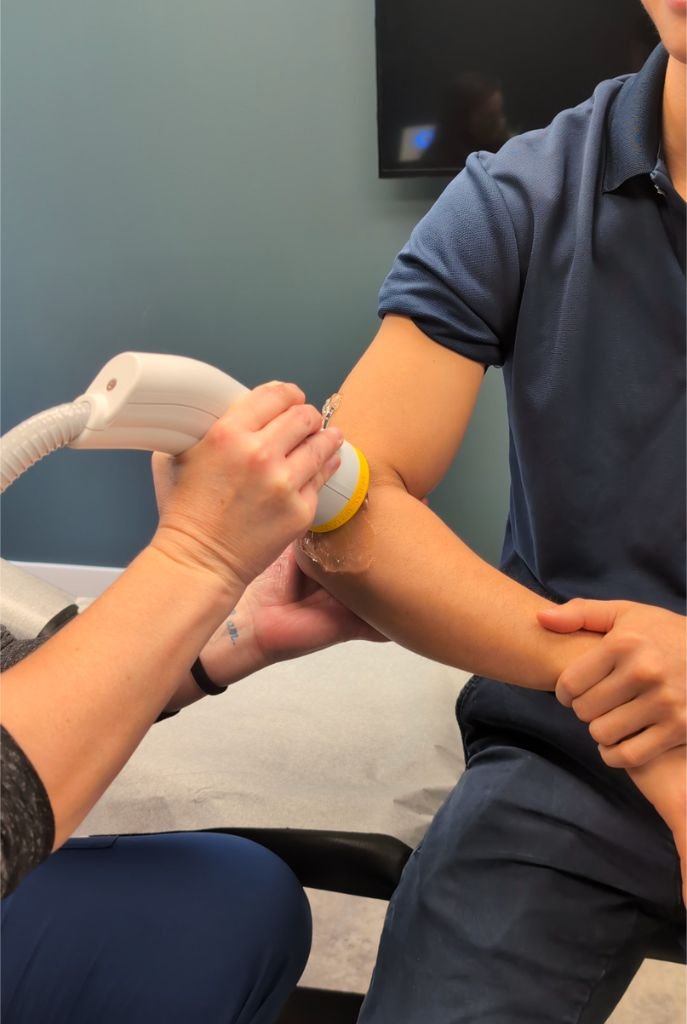
SoftWave Therapy uses low‑intensity, unfocused acoustic waves to stimulate your body’s own healing processes in and around the elbow joint. It is non‑invasive, does not involve injections or anesthesia, and sessions typically take 10–15 minutes in the office.
How SoftWave supports post‑surgical elbow recovery:
- Reduces pain and inflammation: Acoustic waves help calm irritated tissues and decrease inflammatory chemicals around the joint.
- Improves blood flow: Increased circulation brings more oxygen and nutrients to healing tissues that may have stalled after surgery.
- Helps break up scar tissue and adhesions: SoftWave can disrupt dense, painful scar tissue that restricts movement, helping restore a smoother glide at the elbow.
- Activates your own repair cells: Research shows SoftWave can stimulate stem‑cell activity and growth factors, which support regeneration rather than just numbing symptoms.
- Supports better motion: As pain calms and soft tissues loosen, patients are often able to get more out of their physical therapy and home exercises, leading to more lasting gains in range of motion.
SoftWave is already used in many clinics for post‑surgery recovery and stubborn musculoskeletal issues, including elbow pain, tendon pain, and joint stiffness.

Post‑Surgical Elbow Problems SoftWave Can Help
We commonly see Cincinnati patients dealing with:
SoftWave is not a replacement for appropriate surgical follow‑up, wound care, or formal rehabilitation. Instead, it is designed to bridge the gap between “rest, medications, and PT” and more invasive options by helping your tissues respond better to the care you are already receiving.
What to Expect at Your Cincinnati SoftWave Visit
At Simply Well Chiropractic, every post‑surgical elbow visit starts with a thorough evaluation so we are clear on what tissue is still struggling to heal.
You can generally expect:
- A focused history and movement assessment to understand your surgery, rehab, and current limitations.
- An exploratory SoftWave scan over the elbow and surrounding area to find “hot spots” of impaired healing.
- A targeted SoftWave treatment, typically5-10 minutes, tailored to your pain level and surgical history.
- Practical guidance on what to do after treatment—how to move, what to avoid, and how to coordinate SoftWave with your surgeon’s and therapist’s protocols.
Most patients can return to normal daily activities right away, with no downtime. Many notice a change in pain or stiffness within the first 1–2 sessions, with improvements often continuing over several weeks as treatments build on one another.
SoftWave vs. Other Non‑Surgical Elbow Treatments
Below is a simple look at how SoftWave compares to common non‑surgical options used after elbow surgery.
Cincinnati’s trusted softwave provider
Dr. Faith Swartzendruber is a licensed chiropractor and SoftWave Therapy provider in Cincinnati, Ohio, who helps people recover from post-surgical elbow pain and stiffness. She focuses on reducing inflammation, improving mobility, and supporting the body’s natural healing process—without prolonged reliance on medication. Using an evidence-informed, personalized approach, Dr. Faith combines SoftWave Therapy with targeted chiropractic and rehabilitative care to promote tissue recovery, restore range of motion, and support long-term elbow function.
Dr. Faith earned her Doctor of Chiropractic degree from Palmer College of Chiropractic in 2022.
She holds Ohio chiropractic license (DC-05144).
Dr. Faith Swartzendruber, DC, integrates her SoftWave Therapy training and chiropractic license with her education background to deliver SoftWave treatments that are both clinically informed and patient-centered.
Dr. Faith has helped hundreds of Cincinnati patients overcome chronic pain with SoftWave Therapy and chiropractic care.
Post‑Surgical Elbow Pain & Stiffness Treatment in Cincinnati: Next Steps
If you are in Cincinnati and dealing with post‑surgical elbow pain or stiffness, you do not have to choose between “just living with it” and another surgery. A targeted program combining SoftWave Therapy with smart movement and coordinated care can help you move, reach, and lift with confidence again.
To find out whether SoftWave Therapy is right for your post‑surgical elbow, schedule a consultation at Simply Well Chiropractic in Cincinnati and get a plan built for your specific surgery, goals, and timeline.

Written and medically reviewed by Dr. Faith Swartzendruber, DC
Ohio Chiropractic License: DC-05144 | Palmer College of Chiropractic
Founder, Simply Well Chiropractic, Cincinnati