
knee instability treatment in Cincinnati
Schedule your $49 Discovery Session today!
What Is Knee Instability?
Knee instability means the knee does not feel secure when you stand, walk, pivot, or go up and down stairs. People often describe it as:
- A sudden “buckling” or “giving way” of the knee
- A wobbly, loose, or weak feeling in the joint
- A sensation that the knee might slip out of place when you turn, twist, or step on uneven ground
- Sharp jolts of pain followed by swelling, stiffness, or loss of confidence in the leg
Instability is a symptom rather than a diagnosis. It can come from ligament injuries, kneecap tracking problems, meniscus tears, tendon overload, or arthritis that has weakened the structures that normally hold the knee steady.
Common Causes of a Knee That “Gives Out”
Several different problems can lead to knee instability:
- Ligament injuries (ACL, PCL, MCL, LCL) – Tears or sprains in one or more of the major stabilizing ligaments can cause the knee to slip, twist, or feel like it will not hold you.
- Multiligament instability – Trauma such as a fall, collision, or car accident can injure more than one ligament at a time, creating significant instability and difficulty trusting the knee.
- Patellofemoral (kneecap) instability – If the kneecap does not track smoothly in its groove, it can partially slip (sublux) or completely dislocate, leading to recurrent buckling and a fear of repeating the episode.
- Meniscus or cartilage injury – Tears in the meniscus or damage to the cartilage lining the joint can cause catching, locking, or giving way with certain movements.
- Chronic overuse and tendon irritation – Repetitive strain on the patellar tendon, quadriceps tendon, or surrounding soft tissues can weaken the knee’s dynamic support over time.
- Arthritis and degenerative changes – Wear-and-tear changes can alter joint mechanics, making the knee painful, stiff, and less stable under load.
Because different causes require different treatment strategies, a careful evaluation is essential before deciding whether you really need surgery or can improve with a structured non-surgical plan.
Signs and Symptoms You Should Not Ignore
You should take knee instability seriously if you notice:
- Repeated episodes where the knee buckles or slips out from under you
- Swelling, warmth, or stiffness after activity
- A popping, cracking, or “shifting” feeling inside the joint
- Pain when standing up from a chair, using stairs, or squatting
- Fear or apprehension when you try to move the kneecap or bend the knee in certain positions
In some people, there is little pain between episodes, which can make it tempting to delay care even while cartilage or ligament damage slowly progresses. Early evaluation helps protect the joint and reduce your risk of falls, further injury, and long-term arthritis.
Our Knee Instability Evaluation at Simply Well Chiropractic
When you visit our Cincinnati office for knee instability, we start with:
If you already have X-rays or an MRI from an orthopedic surgeon or hospital system in Cincinnati, we will review them with you and connect the findings to how your knee actually feels and performs day to day
Non-Surgical Treatment Options for Knee Instability
In many cases, especially after a first-time instability episode, standard medical guidelines support starting with conservative care. Common non-surgical strategies include:
- Short-term bracing or immobilization to calm pain and swelling
- Activity modification and the R.I.C.E. approach (rest, ice, compression, elevation) in the acute phase
- Targeted physical therapy to restore range of motion, strength, and neuromuscular control
- Balance and proprioception training to retrain your brain and muscles to stabilize the knee
- Addressing hip and core weakness that can contribute to poor knee alignment
Many patients do very well with the right combination of therapy, exercises, and lifestyle changes and never need surgery. For others, conservative care is still an important foundation even if surgery is ultimately required, because it improves outcomes and recovery.
Our clinic focuses on building a comprehensive non-surgical plan that combines advanced regenerative technology with chiropractic, movement retraining, and individualized rehab so you have every opportunity to stabilize your knee without an operation.
How SoftWave Therapy Supports Knee Stability
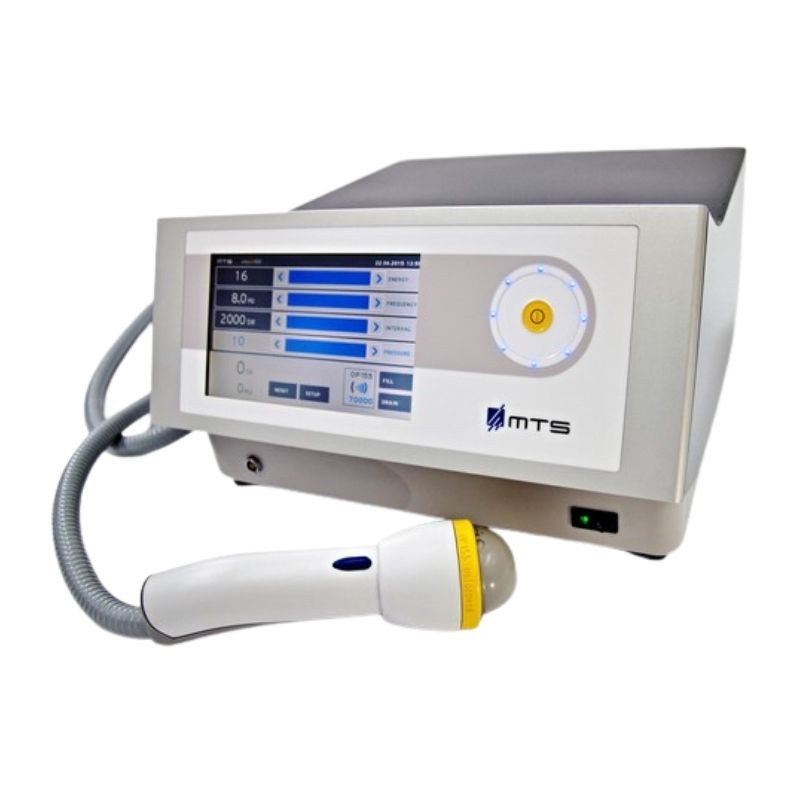
SoftWave Therapy is an advanced form of extracorporeal shockwave therapy (ESWT) that uses unfocused acoustic waves to stimulate healing in ligaments, tendons, and other soft tissues around the knee.
Research on ESWT for knee and anterior knee pain has shown it can:
- Reduce pain and inflammation more sustainably than repeated steroid injections
- Improve function, walking performance, and overall joint mechanics
- Support tissue regeneration and blood vessel growth (angiogenesis), which improves local circulation and healing conditions
By improving the health of the soft tissues and the joint environment, SoftWave can make it easier for your knee to tolerate load, respond to rehab, and feel more stable during real-life activities. Many patients use SoftWave as a way to delay or avoid more invasive procedures when instability is related to chronic tendon irritation, early arthritis, or long-standing overuse rather than a major acute ligament rupture.
What a SoftWave Knee Session Looks Like
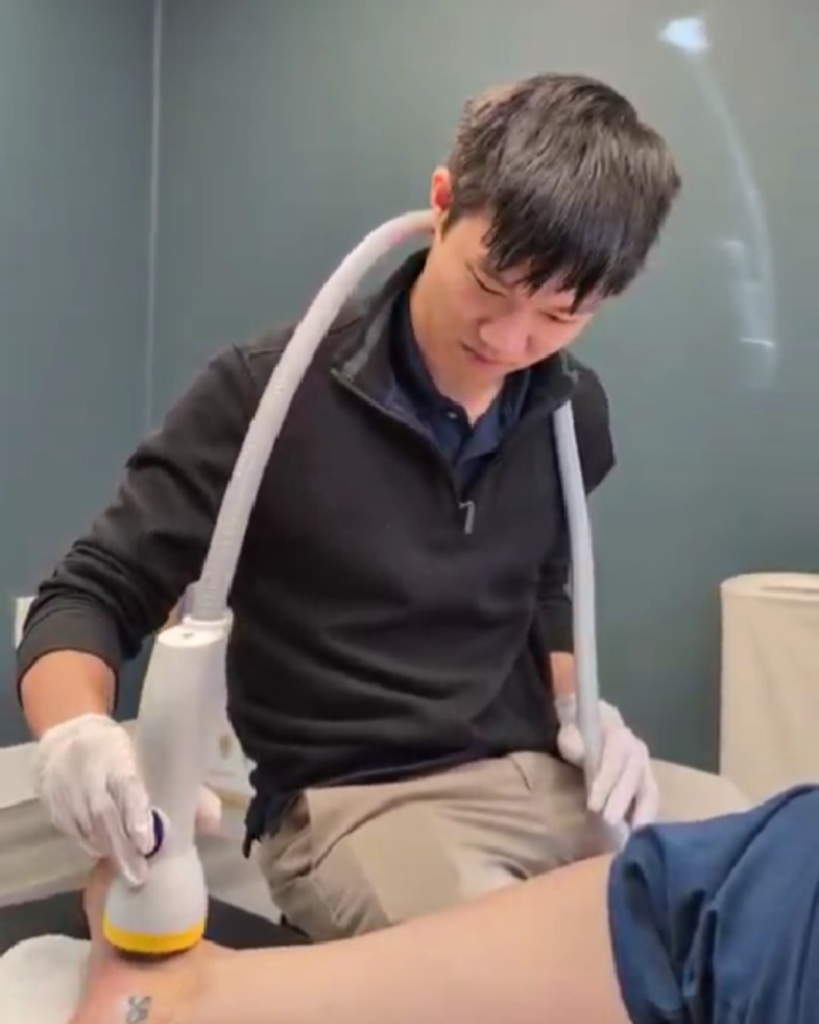
During your SoftWave visit for knee instability:
- We identify the most overloaded, irritated, or weakened tissues around your knee based on your exam and symptoms
- A handheld SoftWave applicator delivers acoustic waves through the skin into these tissues
- You feel a strong but adjustable sensation that we calibrate to your comfort level
- Sessions are brief, and you walk in and out the same day with no injections, incisions, or anesthesia
Most people can return to normal daily activities quickly, and many notice changes in pain, walking confidence, or step control within the first few treatments. For best results, we integrate SoftWave with specific exercises and movement cues so your brain and muscles learn to use the improved tissue quality to better stabilize the knee.
Cincinnati’s trusted softwave provider
Dr. Faith Swartzendruber is a licensed chiropractor and SoftWave Therapy provider in Cincinnati, Ohio, who helps people strengthen and stabilize weak or unstable knees. Her goal is to reduce discomfort, enhance joint control, and restore confident movement—without the need for surgery or reliance on medication. Dr. Faith uses an evidence-informed, personalized approach, combining SoftWave Therapy with targeted chiropractic techniques and rehabilitative care to promote lasting stability, improved strength, and better knee function.
Dr. Faith earned her Doctor of Chiropractic degree from Palmer College of Chiropractic in 2022.
She holds Ohio chiropractic license (DC-05144).
Dr. Faith Swartzendruber, DC, integrates her SoftWave Therapy training and chiropractic license with her education background to deliver SoftWave treatments that are both clinically informed and patient-centered.
Dr. Faith has helped hundreds of Cincinnati patients overcome chronic pain with SoftWave Therapy and chiropractic care.
Who Is a Good Candidate for SoftWave Therapy?
You may be a good candidate for non-surgical SoftWave-centered care if:
- Your knee feels unstable, but your surgeon has said surgery is optional or recommended trying conservative care first
- You have lingering instability or pain after an old injury or previous surgery
- You have been told “it is just arthritis” but your knee still buckles or feels unreliable
- You want to explore advanced, research-supported non-surgical options before committing to a more invasive procedure
If we believe your condition is better suited for surgical management, we will tell you honestly and can coordinate with orthopedic specialists in the Cincinnati area.
Knee Instability Treatment in Cincinnati – Start With a $49 Discovery Session
Knee instability does not have to control your life or keep you stuck between living in fear and jumping straight to surgery. At Simply Well Chiropractic in Cincinnati, we combine careful assessment, individualized rehab, and SoftWave Therapy to help stabilize your knee, reduce pain, and support safer, more confident movement.
- Non-invasive: No incisions or injections
- Minimal downtime: Most people resume everyday activities quickly
- Research-supported: ESWT has growing evidence for knee pain and soft tissue healing
- Safe and well-tolerated: Appropriate for a wide range of ages and activity levels
Schedule your $49 Discovery Session with Cincinnati SoftWave Therapy at Simply Well Chiropractic today. We will review your history, examine how your knee moves, and let you know whether you are a good candidate for our non-surgical knee instability program—and if not, we will help you understand your next best steps.

Written and medically reviewed by Dr. Faith Swartzendruber, DC
Ohio Chiropractic License: DC-05144 | Palmer College of Chiropractic
Founder, Simply Well Chiropractic, Cincinnati