Pectoralis Minor Strain Treatment in Cincinnati
Schedule your $49 Discovery Session today!
What Is a Pectoralis Minor Strain?
The pectoralis minor is a small, triangular muscle that sits underneath the larger pectoralis major on the front of your chest and attaches from your shoulder blade to ribs three through five. Its main job is to help stabilize your shoulder blade and assist with forward and downward movement of the shoulder, especially during pushing, reaching, and some breathing patterns.
A pectoralis minor strain happens when the muscle fibers are overstretched or torn, usually from sudden overload, repetitive overuse, or poor posture that keeps the muscle shortened for long periods. This can range from mild microtears (grade 1) to more significant fiber damage (grade 2) and, rarely, a severe tear that may require surgical evaluation (grade 3).
Unlike a major chest tear that often occurs during heavy bench pressing, a pec minor strain can develop more gradually from everyday activities, repetitive sports, or slumped sitting at a desk.
Important: Sudden chest pressure, crushing pain, shortness of breath, sweating, nausea, or pain that feels like heart attack symptoms is a medical emergency. Chest pain is not always muscular—if in doubt, call 911 or go to the ER immediately.
Common Causes of Pectoralis Minor Strain
You do not have to be a powerlifter to injure your pec minor. Several everyday and sports-related factors can overload this small muscle:
- High-volume upper body workouts, especially bench press, push-ups, dips, and chest fly variations, without adequate recovery.
- Sudden increase in training load, like jumping into CrossFit, bootcamps, or weight training multiple times per week after being relatively inactive.
- Poor posture, particularly rounded-shoulder desk posture that keeps the pec minor shortened for hours at a time. This can contribute to tightness, trigger points, and shoulder pain.
- Repetitive overhead or throwing motions in sports such as baseball, tennis, volleyball, or swimming. These can lead to overuse of the anterior shoulder muscles.
- Abnormal breathing patterns (chest-dominant breathing), which make the pec minor work harder than it was designed to support respiration and can activate trigger points.
Understanding the underlying cause is key, because true long-term relief comes from both healing the strain and changing the patterns that overloaded the muscle in the first place.uscle tweak that heals on its own.
Symptoms of a Pectoralis Minor Strain
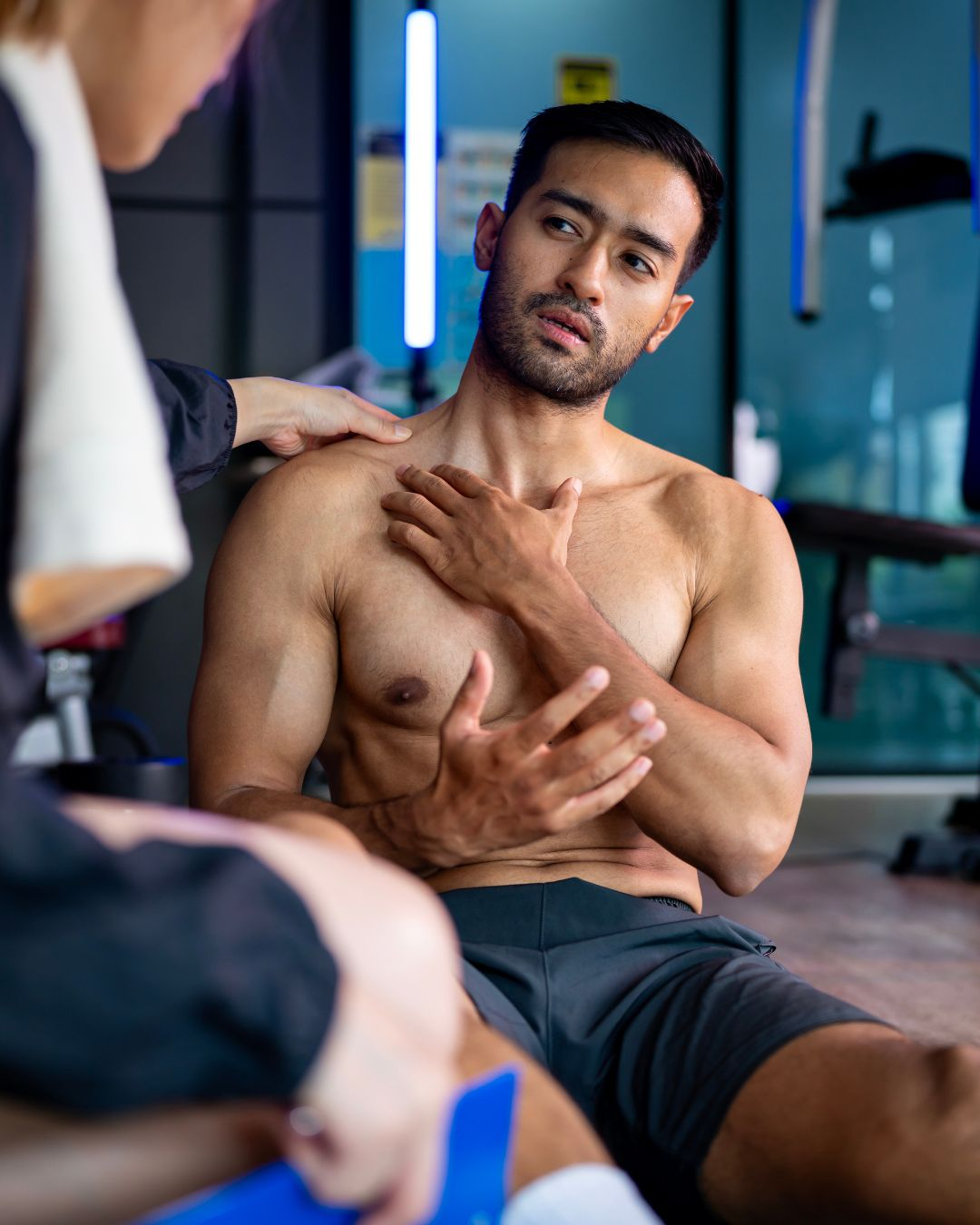
Pec minor problems often show up as a mix of chest, shoulder, and arm symptoms. Common signs include:
- Sharp, burning, or aching pain in the front of the chest or just in front of the shoulder.
- Pain that increases with pushing, reaching forward, or moving the arm up and away from the body. These motions recruit the pectoral muscles, so pain with contraction is a hallmark sign of strain.
- Local tenderness or tight “knots” (trigger points) in the upper chest near the front of the shoulder.
- Referred pain that may travel into the front of the shoulder, between the shoulder blades, or down the inner arm toward the elbow and hand in more irritated cases.
- Reduced shoulder range of motion, difficulty with overhead tasks, and a feeling of tightness or pulling through the front of the chest.
- Rounded-shoulder posture or a depressed shoulder girdle as the tight muscle pulls the shoulder blade forward.
Muscular chest pain typically changes with movement and muscle activation and does not cause electric, tingling, or numb sensations by itself. If you notice chest tightness with shortness of breath, heart palpitations, or other “red flag” symptoms, seek emergency medical care right away.
How Long Does a Pectoralis Minor Strain Take to Heal?
Healing time depends on the grade of the strain, how early it is treated, and how well you respect pain limits during recovery:
- Mild (grade 1) strains often improve within 2–3 weeks with appropriate activity modification and rehabilitation.
- Moderate (grade 2) strains may require 4–8 weeks of focused care to restore strength and function.
- Severe (grade 3) tears can take several months and may require surgical consultation, although these are less common in the pec minor than in the larger chest tendon.
Most patients fall into the mild-to-moderate category and recover fully with the right combination of load management, therapeutic exercise, and soft tissue treatment.
Why Consider SoftWave Therapy for Pec Minor Strain?
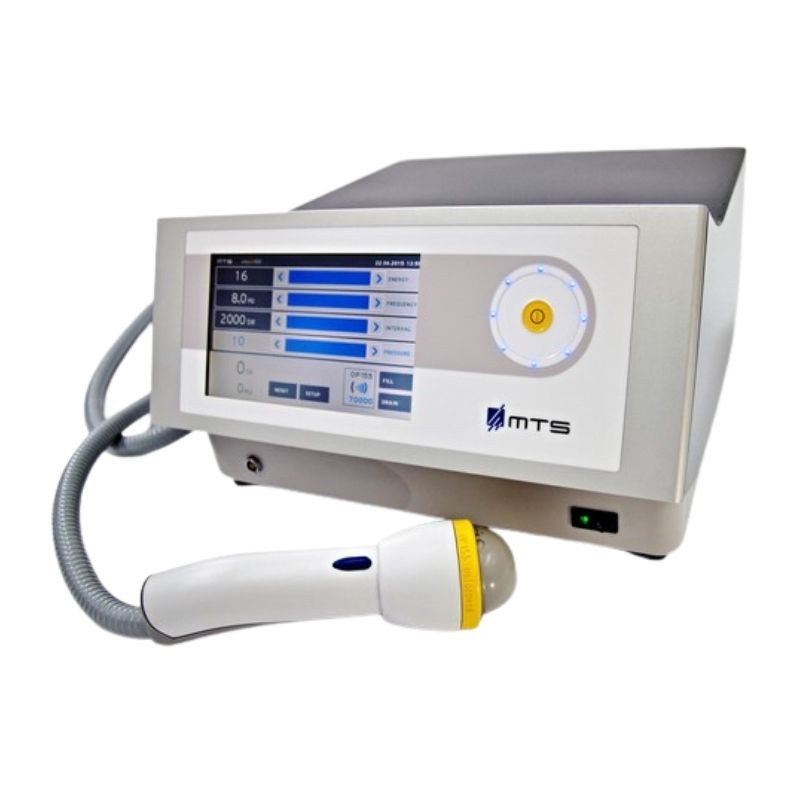
SoftWave Therapy is a non-invasive regenerative treatment that uses acoustic (shock) waves applied to the injured area to stimulate healing at the cellular level. Unlike passive care that only addresses symptoms, SoftWave is designed to:
- Increase local blood flow and circulation in irritated soft tissue.
- Modulate pain by influencing nerve signaling in the treatment area.
- Stimulate your body’s natural repair pathways to help speed up tissue recovery.
For patients with pectoralis minor strain, this can be especially valuable because the muscle is small, deep, and often involved in chronic postural and overuse patterns, making it slow to settle down with rest alone.
How SoftWave Therapy Helps Pectoralis Minor Strain Heal
In our Cincinnati clinic, SoftWave Therapy is used as part of a comprehensive treatment plan for pec minor strains, not a stand-alone quick fix. A typical approach may include:
- Precise assessment of the pain generator
We carefully identify whether your pain is coming from the pec minor, pec major, rotator cuff, or a combination of structures, and rule out red flags that require medical referral. - Targeted SoftWave session to the pec minor and surrounding tissues
SoftWave is applied over the front of the shoulder and chest region where the pec minor originates and inserts, with intensity adjusted to your tolerance and clinical findings. - Posture and movement correction
We coach you on shoulder blade positioning, breathing mechanics, and work or gym modifications that offload the pec minor and reduce ongoing irritation. - Personalized exercise progressions
As pain decreases, we add graded strengthening for the chest and scapular stabilizers, along with safe range-of-motion and mobility work at the right time in your healing window.
By combining SoftWave’s regenerative effects with smart rehab, many patients experience faster pain reduction and improved function compared with rest and exercise alone.
Combining SoftWave, Chiropractic, and Corrective Exercise
At Simply Well Chiropractic in Cincinnati, your care starts with a focused evaluation—not just a machine session.
During your first visit, we will:
- Listen to your story: when the chest/shoulder pain started, what makes it worse, what you’ve already tried
- Perform a detailed shoulder and chest exam to differentiate muscular strain from more serious causes
- Assess posture, shoulder blade movement, and strength to see how the pectoralis minor is involved
If your exam suggests a pectoralis minor or related soft-tissue strain, we may recommend a SoftWave Discovery Session. In that session, the SoftWave device is used to:
- “Map” the irritated areas along the chest, collarbone, and front of the shoulder
- Deliver therapeutic waves to calm pain and kick-start healing right away
- Help determine how well your tissues respond to SoftWave Therapy
Most treatment plans involve a short series of sessions spread over several weeks, often combined with:
- Targeted stretches to open the chest and relieve pectoralis minor tightness
- Shoulder blade stabilization and posture exercises
- Chiropractic or manual therapies, when appropriate, to restore healthy movement patterns
Because SoftWave continues to stimulate tissue repair even after your last session, many patients notice continued improvements in pain and function in the weeks that follow.

When to Seek Help (and When to Go to the ER)
You should schedule an evaluation at Cincinnati SoftWave Therapy if:
- Chest or front-of-shoulder pain has lasted more than a couple of weeks
- You feel a persistent “pulled chest muscle” that keeps coming back with workouts or daily activities
- You notice tightness or pulling under the collarbone with posture, lifting, or reaching
- Shoulder motion feels restricted, weak, or unstable despite rest and home care
However, call 911 or go to the emergency room immediately if:
- You have sudden chest pressure, heaviness, or squeezing
- Pain spreads to the jaw, neck, or left arm
- You feel short of breath, sweaty, dizzy, nauseated, or “just not right” in a way that worries you
Muscle strain and heart problems can both cause chest discomfort, and only an emergency team can safely rule out a cardiac cause in those situations.
Schedule a Visit at Cincinnati SoftWave Therapy
If chest or front-of-shoulder pain is keeping you from lifting, working, or sleeping comfortably, you don’t have to guess whether it’s “just a pulled muscle” anymore. At Simply Well Chiropractic, home of Cincinnati SoftWave Therapy, we help people from across the Cincinnati area get clear answers and non-invasive treatment options for chest and shoulder pain.
Click to request an appointment or call our office today to schedule your SoftWave Discovery Session. We’ll help you find out whether a pectoralis minor strain—or another shoulder or chest issue—is behind your pain, and create a plan to get you confidently back to the activities you love.
Frequently Asked Questions About Pec Minor Strain

Written and medically reviewed by Dr. Faith Swartzendruber, DC
Ohio Chiropractic License: DC-05144 | Palmer College of Chiropractic
Founder, Simply Well Chiropractic, Cincinnati