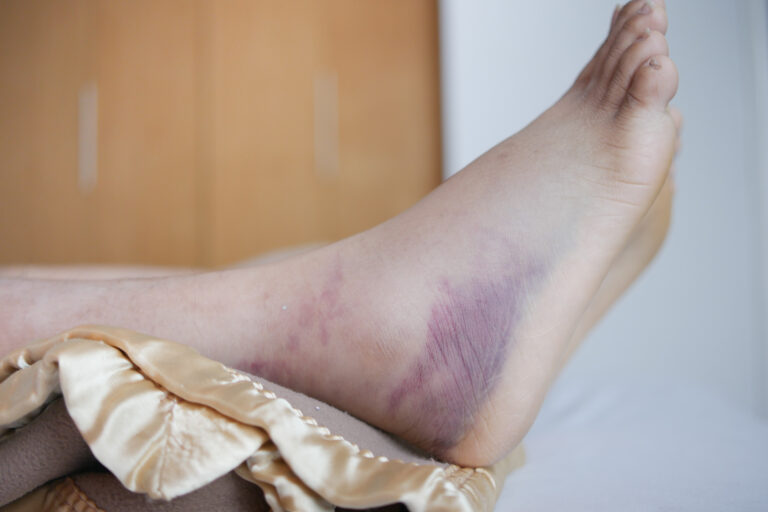
Sprained Ankle Recovery Timeline: What’s Normal and When to Get Help
Most ankle sprains improve significantly within 2–8 weeks, depending on the grade, but pain and swelling still lingering at week 6 is a sign you should get a closer evaluation rather than just “waiting it out.” In cases where healing has clearly stalled, SoftWave Therapy at Simply Well Chiropractic can be a non-surgical option to restart the repair process and help you regain confidence in your ankle.
Quick answer: How long does a sprained ankle take to heal?
- Mild (Grade 1) sprains often improve enough for normal daily walking within about 1–3 weeks, with higher-impact activity coming back over 3–4 weeks.
- Moderate (Grade 2) sprains usually need about 4–8 weeks before the ankle feels reasonably solid, with sports or heavy activity coming later.
- Severe (Grade 3) sprains can take 8–12 weeks for basic function and 3–6 months for full return to high-demand activity, sometimes longer if rehab is inadequate.
If you are still having noticeable swelling, pain with walking, or a sense of instability after 6 weeks, that is not typical for a simple sprain and warrants a deeper look to rule out missed damage (like a higher-grade ligament tear, cartilage injury, or even a small fracture) and to upgrade your rehab plan.
Grades 1, 2, and 3 sprains: what they really mean

healthy tissue
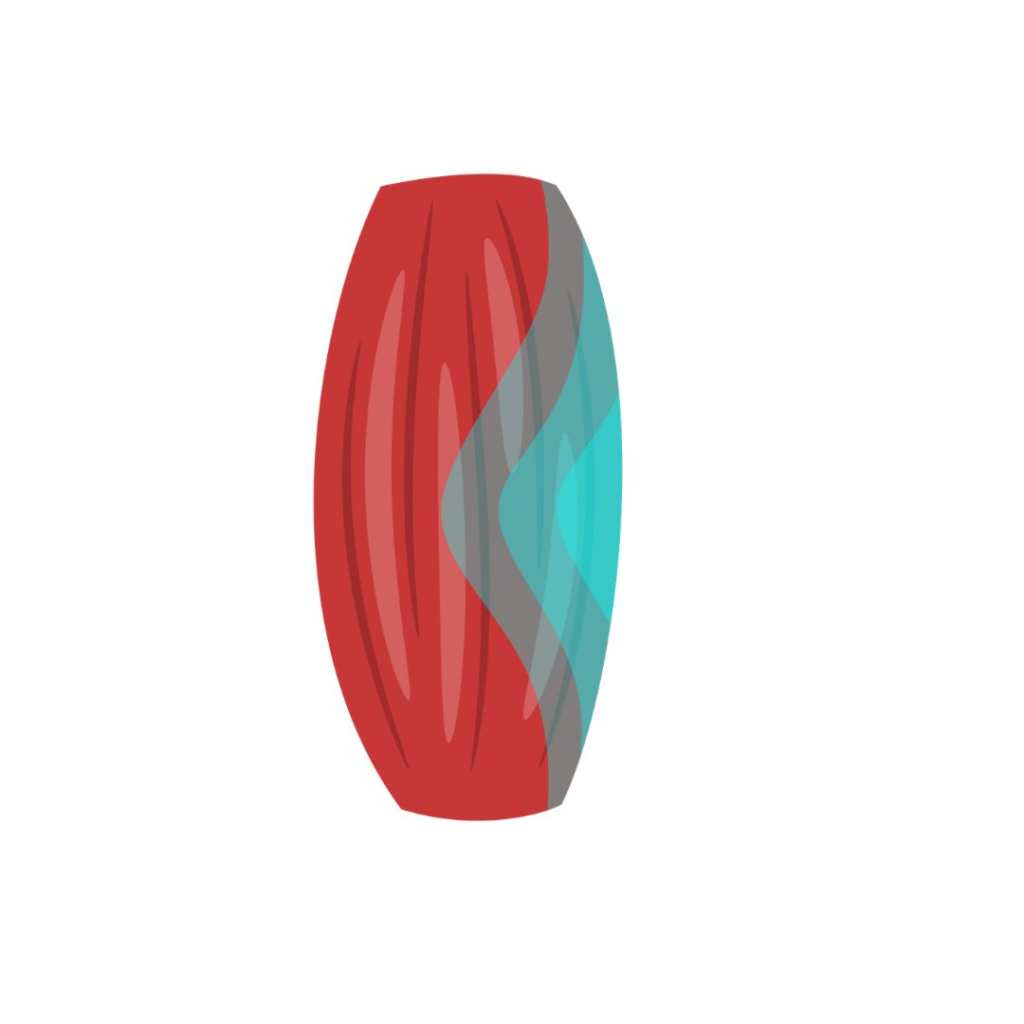
Grade 1 ankle injury
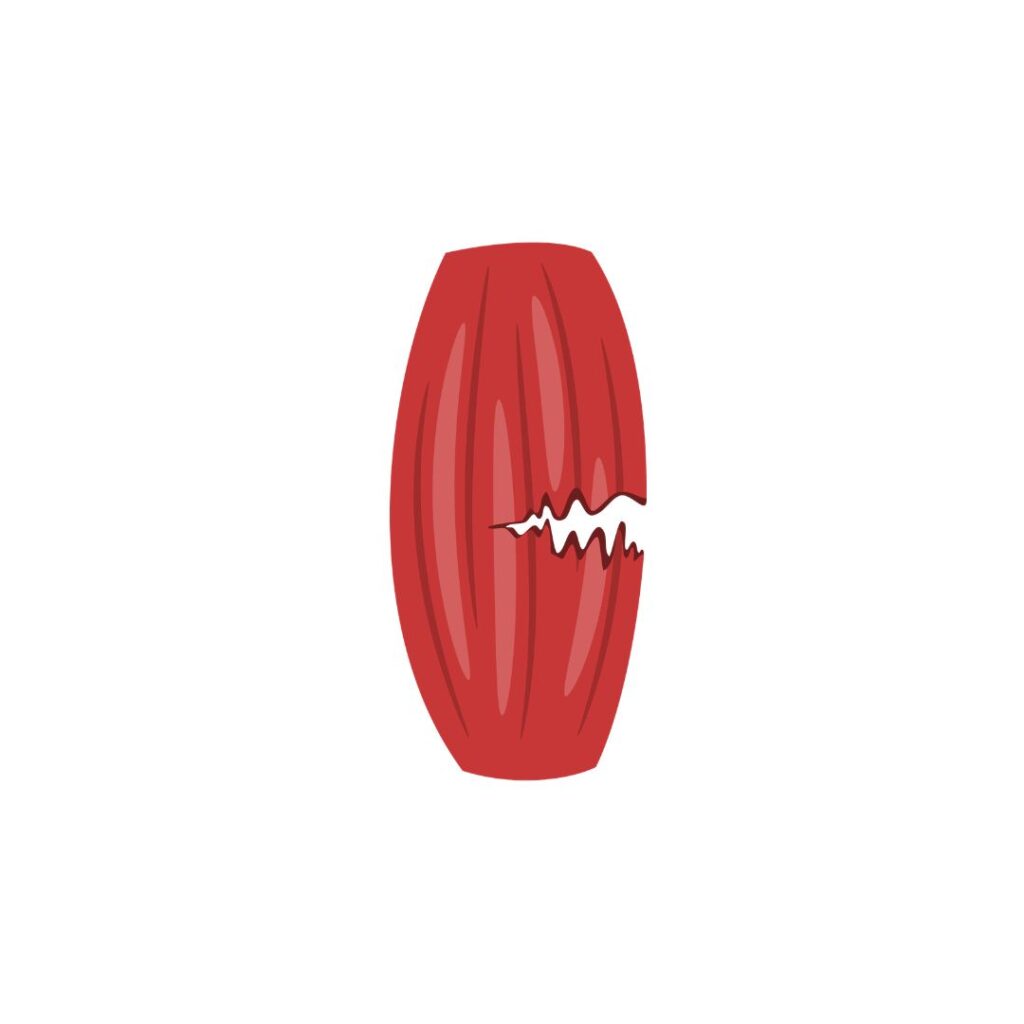
Grade 2 ankle injury

Grade 3 ankle injury
Here’s a simple way to think about the three grades and their expected timelines when care and rehab are done well.
Sprain grades and typical recovery
| Sprain grade | What’s happening in the tissue | Typical daily-activity recovery | Typical return to sport / high impact | What it often feels like |
|---|
| Sprain grade | What’s happening in the tissue | Typical daily-activity recovery | Typical return to sport / high impact | What it often feels like |
|---|---|---|---|---|
| Grade 1 (mild) | Ligaments are stretched with microscopic tearing, but overall stability is preserved. | Walking with minimal pain often within 1–2 weeks. | 3–4 weeks if strength and balance are restored. | Sore and puffy for a few days, then steadily improving with light activity. |
| Grade 2 (moderate) | Partial ligament tear with more swelling, bruising, and pain; some looseness but not a complete rupture. | Everyday walking more comfortable around 3–4 weeks, sometimes up to 6. | Often 6–8+ weeks before cutting, jumping, and fast change of direction feel safe. | You can walk but don’t fully trust the ankle, and it complains if you push too hard. |
| Grade 3 (severe) | Complete ligament tear, marked instability; sometimes associated with other injuries. | Weight-bearing can take 3–4 weeks or more; bracing or boot often needed early. | 12+ weeks for high-demand activity, with full recovery often in the 3–6 month range. | Major swelling and bruising, can’t trust the ankle at all; often evaluated by ortho. |
These ranges are averages, not guarantees, but if your recovery is much slower than this—even with basic home care—it’s reasonable to ask, “What are we missing?”
What’s normal vs. a red flag at each stage
Think of sprained ankle recovery in phases rather than a single deadline.
Days 0–3: “Acute fire” phase
Normal:
- Noticeable swelling and bruising, especially in the first 24–48 hours.
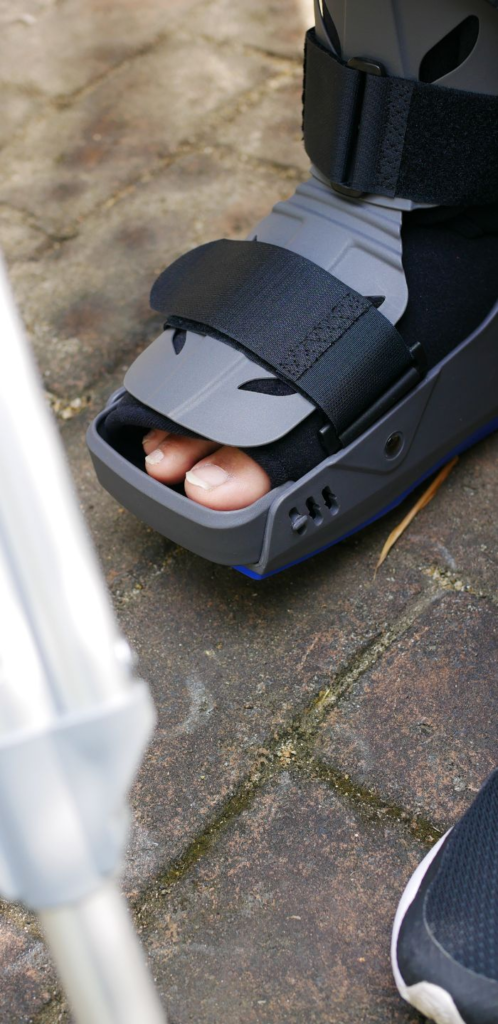
- Pain with weight-bearing, sometimes needing crutches or a boot early on.
- Using RICE/PRICE: rest, ice, compression, elevation, plus short-term support.
Red flags:
- You cannot put any weight on the ankle at all, even to hobble a step or two.
- Visible deformity, the ankle “looks wrong,” or you heard a crack at injury.
- Severe swelling and bruising that rapidly spreads, or intense pain that doesn’t change with position and basic care.
These are “don’t wait” signs—this is the time to rule out a fracture or major tear.

Days 4–14: “Early healing and reloading”
Normal:
- Swelling is still present but steadily trending down, especially in the morning.
- Range of motion improves; you can move the ankle more without sharp pain.
- You begin gentle exercises and put more weight through the foot as tolerated.
Red flags:
- Pain is not improving at all—or is worse—after 3–5 days of good home care.
- Swelling is not budging and the ankle feels increasingly unstable or “wobbly.”
- You still cannot walk across a room with partial weight-bearing by the end of week 2.
If you hit these red flags, you want an exam and possibly imaging, not “more ice and more rest.”
Weeks 3–6: “Rebuild strength and confidence”
Normal:
- For Grade 1, walking is mostly comfortable and you’re working back to light jogging or easy activity around weeks 3–4.
- For Grade 2, walking is much easier by weeks 3–4, and you’re starting more focused strengthening and balance work, possibly headed back to sports closer to 6–8 weeks.
- Some mild end-of-day puffiness or stiffness is still possible, especially if you’re on your feet a lot.
Red flags (including your week 6 scenario):
You have sharp, localized pain deep in the joint that doesn’t match a typical soft-tissue sprain, raising concern for cartilage or bone involvement.
You still have noticeable swelling most days at 6 weeks, especially if simply walking or standing keeps flaring it up.
Pain hasn’t clearly improved in the last 2–3 weeks, or you feel “stuck”—you can’t progress beyond a certain point without aggravating symptoms.
The ankle feels unstable, you’re afraid to step off a curb or walk on uneven ground, or you roll it easily with small missteps.

Why some people plateau instead of fully healing
If you’re stuck at week 4, 6, or 8 still seeing swelling, pain, or instability, it’s usually not because your body “forgot” how to heal. Something is blocking or slowing the process.
Common reasons people plateau:
- The true severity was underestimated. A sprain you were told was “mild” may actually have been a higher-grade partial or full tear, or combined with a bone bruise or small fracture.
- You only got the “rest and ice” phase, not the “rebuild and retrain” phase. Early RICE/PRICE is important, but without progressive strengthening, balance work, and mobility training, the ankle stays weak and vulnerable.
- Lingering inflammation becomes chronic. Swelling that never fully resolves can become low-level chronic inflammation that stiffens tissue, irritates nerves, and makes loading uncomfortable.
- Compensation patterns set in. You start walking differently to protect the ankle, shifting stress into the knee, hip, or back and feeding a cycle of incomplete loading and incomplete healing.
- Hidden injuries are present. In some cases, cartilage damage, syndesmotic (“high”) sprains, peroneal tendon issues, or small fractures weren’t seen initially, especially if imaging was minimal.
If your story sounds like, “I was told it was just a sprain, but I’m still swollen and nervous to move at week 6,” your ankle likely needs both a better diagnosis and a more complete plan.
When to get help (and what that looks like)
You do not need to wait months to ask for help. Here are practical thresholds to seek an evaluation from someone who sees ankle sprains all the time:
You should be evaluated if:
- You still have significant pain, swelling, or instability after 2–3 weeks of good home care.
- You have trouble walking normally at 4–6 weeks, or you can walk but the ankle “gives way” when you move faster or change direction.
- Your first sprain keeps turning into repeated sprains because the ankle never feels “right.”
A focused ankle exam at Simply Well Chiropractic in Cincinnati typically includes:
- An assessment and screening for missed issues like high ankle sprains or tendon involvement.
- Review of what you’ve already tried (rest, brace, PT, etc.) and where you started to plateau.
- A plan that combines corrective rehab and, when appropriate, regenerative tools like SoftWave Therapy to get you out of the “stuck” phase and back into active healing.
How SoftWave can help when healing stalls
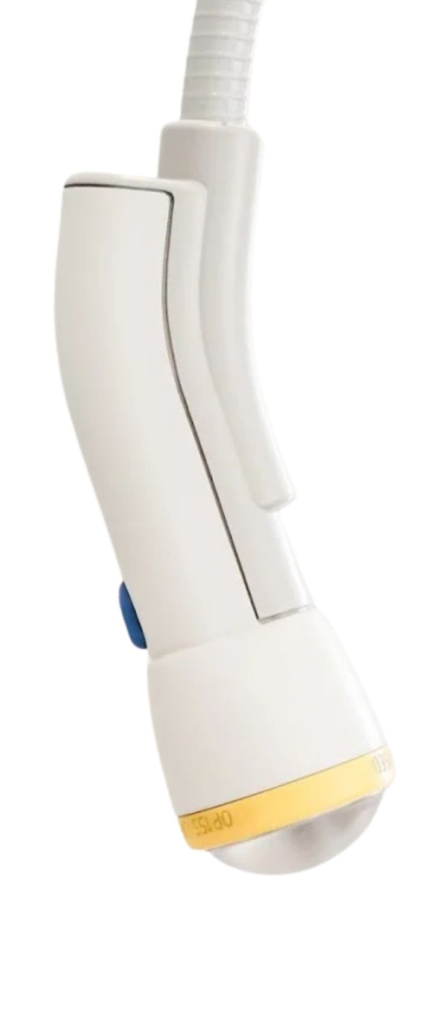
SoftWave Therapy uses focused shockwave-like acoustic waves on the injured area to mechanically stimulate tissue, improve local circulation, and signal your body to restart and amplify the healing process. It is non-surgical, non-invasive, and typically performed in brief in-office sessions that fit around work and family life.
How SoftWave fits into ankle sprain recovery at Simply Well Chiropractic:
- Targets stubborn inflammation and pain. For ankles still swollen and sore at 4–6+ weeks, SoftWave can help calm chronic inflammation and reduce pain so you can tolerate the rehab you need.
- Supports tissue repair in partially healed ligaments. By stimulating cell signaling and microcirculation, SoftWave may enhance the body’s attempt to remodel damaged ligament fibers rather than leaving them in a weak, poorly organized state.
- Pairs with corrective rehab, not instead of it. At Cincinnati SoftWave Therapy inside Simply Well Chiropractic, we combine SoftWave sessions with specific exercises to restore strength, balance, and ankle mechanics so you don’t just feel better—you move better.
- Can shorten the “stuck phase.” Many patients who were spinning their wheels with home care alone find they can progress faster once pain is controlled and tissue healing is reactivated.
Ready to Get Your Ankle on Track to heal properly?
If your sprained ankle is still swollen, sore, or unsteady weeks later, that’s your sign to get it checked—not just ice it again. At Simply Well Chiropractic in Cincinnati, we’ll tell you if your recovery is on track, what grade your sprain likely is, and whether SoftWave Therapy could help you finally move past the plateau.
Book your SoftWave Discovery Session in Cincinnati today and get a clear plan—not just more waiting and hoping.
Address
5721 Dragon Way #110, Cincinnati, OH 45227
info@simplywellchiro.com
Phone
(513) 271-1233

Written and medically reviewed by Dr. Faith Swartzendruber, DC
Ohio Chiropractic License: DC-05144 | Palmer College of Chiropractic
Founder, Simply Well Chiropractic, Cincinnati
– Freya