Meniscus Tear Treatment in Cincinnati
$49 Discovery Session at Simply Well Chiropractic
Living with a meniscus tear can make every step, squat, or stair a painful reminder that your knee is not working the way it should. Many Cincinnati patients have already tried rest, medications, physical therapy, injections, or even talked to surgeons — but still wonder, “Can I actually heal my meniscus without surgery?” At Simply Well Chiropractic, we focus on non-surgical meniscus tear treatment using advanced SoftWave Tissue Regeneration Therapy, targeted rehabilitation, and alignment-based chiropractic care to support healing while preserving as much of your natural meniscus as possible
What Is a Meniscus Tear?
The meniscus is a C-shaped piece of cartilage that acts like a shock absorber between your thigh bone (femur) and shinbone (tibia). Each knee has two menisci:
- Medial meniscus: Inner side of your knee
- Lateral meniscus: Outer side of your knee
This fibrocartilage spreads out the forces that move through your knee joint, helps stabilize the joint, and protects the underlying bone surfaces from wear.
Common Types of Meniscus Tears
Orthopedic and sports medicine specialists typically describe meniscus tears by their shape and location. The most common patterns include:
- Radial tear: A slice starting from the inner edge of the meniscus, often from twisting injuries
- Horizontal tear: Splits the meniscus into top and bottom layers, common in degenerative tears
- Flap or parrot-beak tear: A loose piece that can catch in the joint
- Bucket-handle tear: A large tear where a portion of the meniscus flips into the joint and can lock the knee
- Degenerative tear: Frayed, worn cartilage more common in adults over 40 or with arthritis
The type and location of your tear (inner vs. outer “red zone” with better blood supply) matter because they strongly influence whether conservative, non-surgical care can be effective.
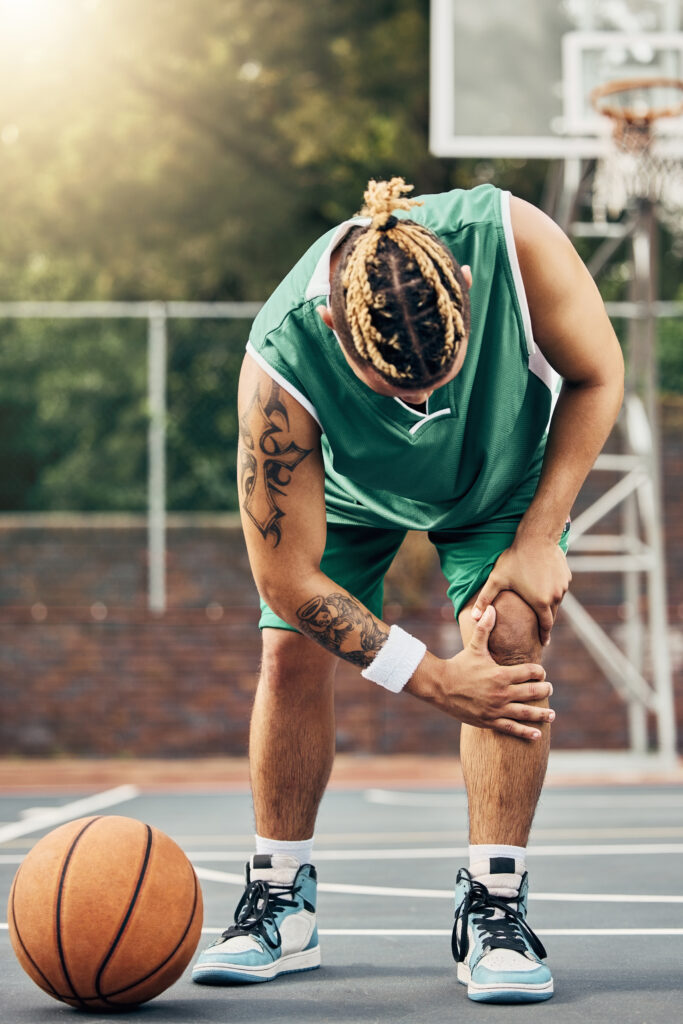
Causes and Risk Factors in Cincinnati Patients
Meniscus tears can happen suddenly in a pivot or build up slowly over time. Orthopedic groups in Cincinnati see these injuries in both competitive athletes and everyday adults.
Common Causes
- Sudden twist or pivot with the foot planted (sports like basketball, soccer, tennis)
- Deep squatting or kneeling under load (lifting, manual labor, yard work)
- Direct trauma to the knee (falls, collisions)
- Age-related degeneration where cartilage weakens and tears more easily
- Existing osteoarthritis that changes how forces move through the joint
Risk Factors
- High-impact or pivot-heavy sports
- Physically demanding jobs or repetitive squatting
- Previous knee injuries (ACL tears, prior meniscus surgery)
- Increased age and degenerative changes in the knee
- Excess body weight that adds load across the joint
Meniscus Tear Symptoms: When to Get Evaluated
Not every meniscus tear hurts immediately, which is why some patients postpone care until pain or swelling gets worse. Common symptoms include:
- Sharp or aching pain along the joint line of the knee
- Swelling or stiffness that may increase over 24–48 hours after injury
- Clicking, popping, or catching sensations inside the knee
- Difficulty fully bending or straightening the knee
- Feeling like the knee may “give way” or buckle
- Locking or inability to move the knee through its full range — especially with bucket-handle tears
If your knee is locked and will not straighten or bend fully, or you cannot bear weight, you should seek prompt medical evaluation to rule out a severe or unstable tear.

Why Consider Non-Surgical Meniscus Treatment?
Traditional approaches to meniscus tears often involve steroid injections for temporary pain relief or arthroscopic surgery to repair or remove damaged tissue. While these methods can be effective, they come with significant drawbacks:
For many patients—especially those with mild to moderate tears—conservative, non-invasive treatment offers a safer, more sustainable solution.
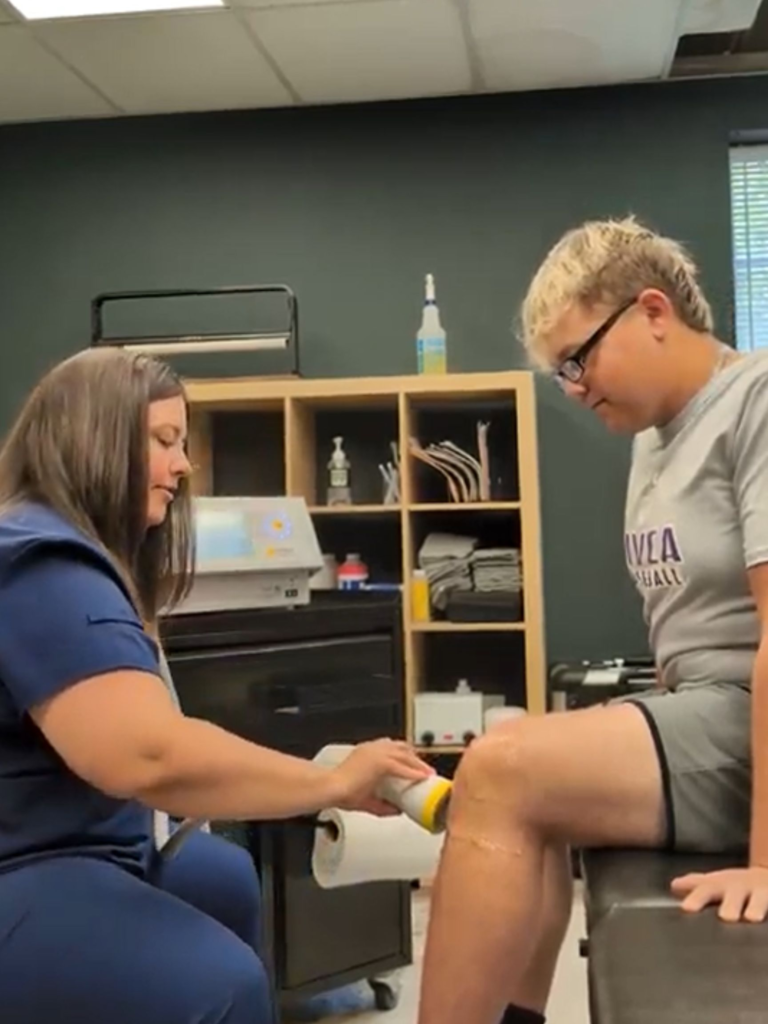
Non-Surgical Meniscus Tear Treatment in Cincinnati: A More Regenerative Approach
At Simply Well Chiropractic, we focus on non-surgical strategies that do more than numb pain. The goal is to support your body’s ability to repair or remodel damaged meniscal tissue while improving how your knee moves and loads during everyday activities.
Our approach combines:
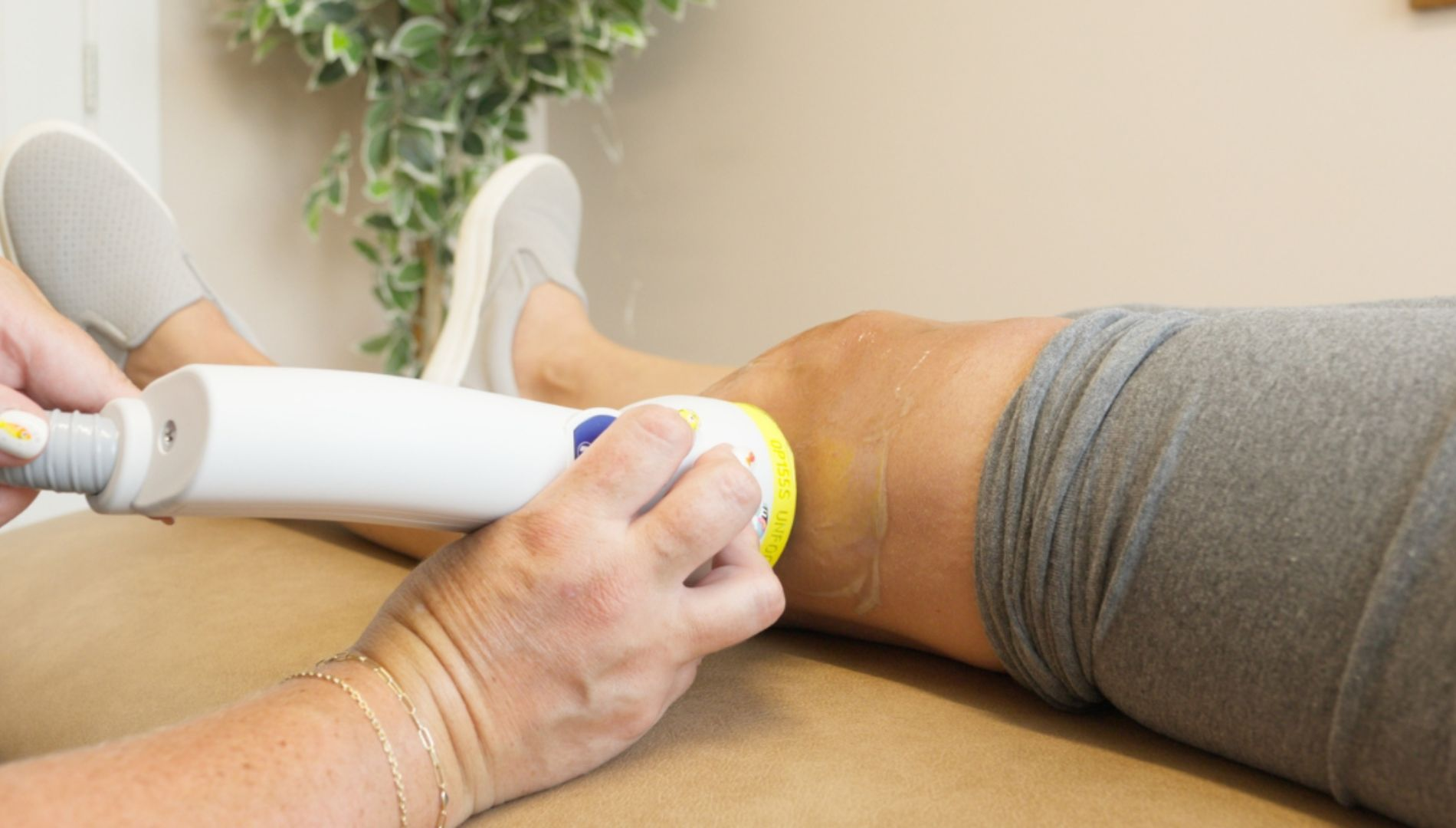
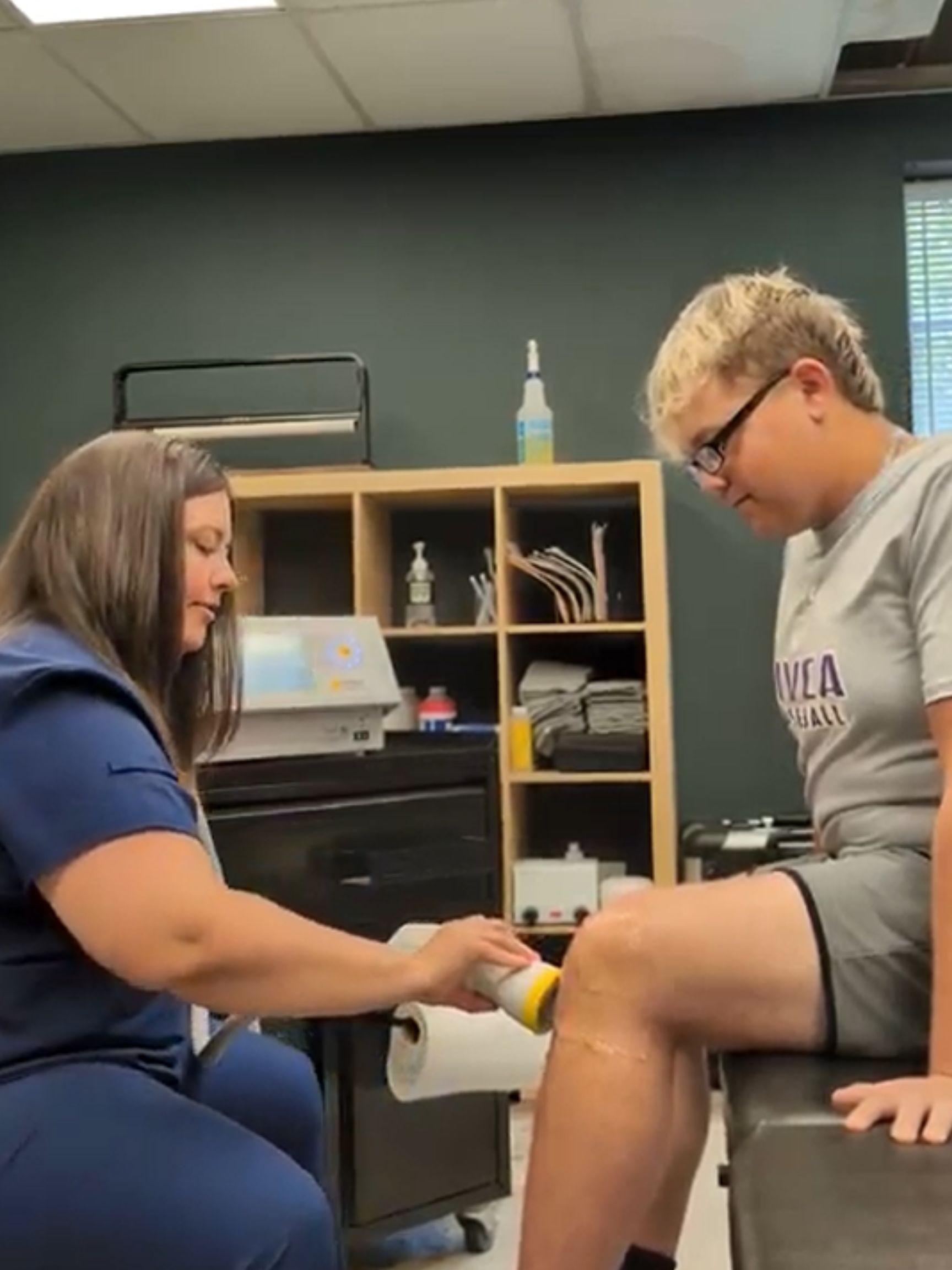
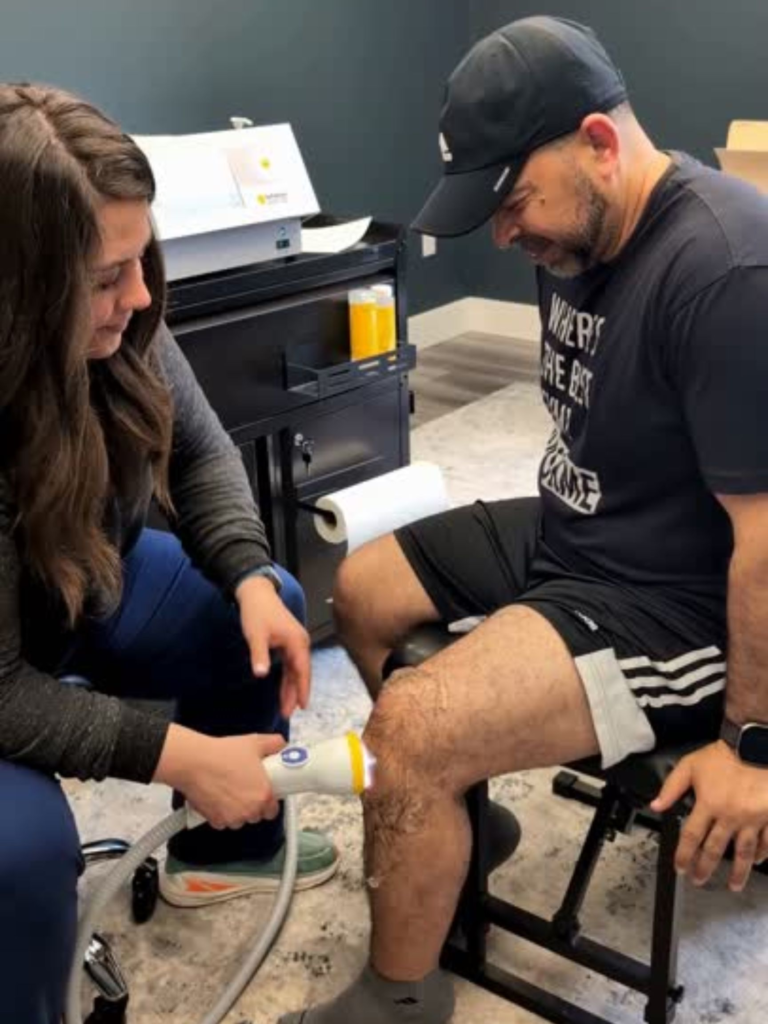
- SoftWave Tissue Regeneration Therapy (an advanced form of extracorporeal shockwave therapy)
- Individualized movement and strengthening recommendations
- Chiropractic care to optimize alignment and mechanics
- Education and activity modifications that protect the meniscus as it heals
This model is designed for patients who want to avoid surgery when possible, those who have not responded well to injections or standard PT alone, and athletes seeking a way back to their sport with less downtime.
SoftWave Therapy for Meniscus Tears: How It Works
SoftWave Therapy uses patented, broad-focused supersonic acoustic wave technology to deliver energy through both superficial and deeper tissues around the knee. Unlike some traditional focused shockwave systems, SoftWave is designed to distribute energy over a wider area without intentionally causing microtrauma.
Core Effects of SoftWave on Knee and Meniscal Tissue
Research on extracorporeal shockwave therapy and SoftWave’s specific technology suggests several key biological effects that are relevant for meniscus injuries:
- Modulates inflammation: Helps calm chronic inflammatory processes that keep the joint painful and swollen while still allowing necessary early inflammation for healing.
- Stimulates improved blood flow: Promotes neovascularization (new blood vessel formation) and improved microcirculation in surrounding tissues, delivering oxygen and nutrients important for repair.
- Activates endogenous stem cells: Signals resident stem and progenitor cells to migrate to the area, supporting tissue regeneration and remodeling.
- Encourages collagen production and tissue remodeling: Helps organize new collagen and support healthier, more resilient tissue structure over time.
Clinical studies of extracorporeal shockwave therapy for degenerative meniscus tissue and other knee conditions have shown improvements in pain, function, and imaging findings over months following treatment.
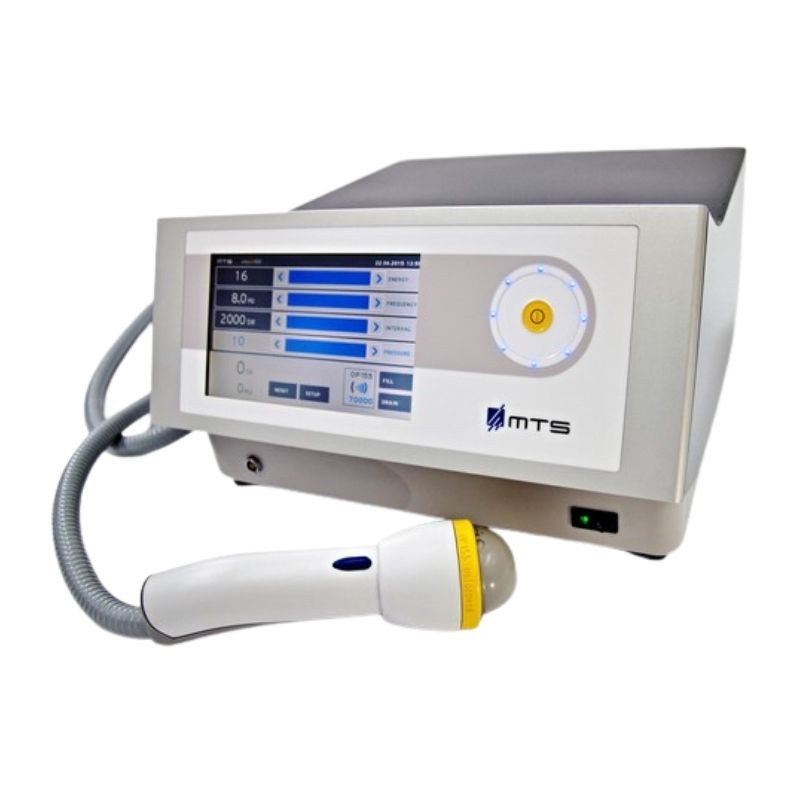
What to Expect from SoftWave Meniscus Treatment at Simply Well Chiropractic
Comprehensive Evaluation
Your first visit in our Cincinnati office includes:
- Detailed history of your injury, symptoms, and activity goals
- Functional movement and orthopedic testing of the knee
- Review of any imaging you already have (X-ray, MRI), or referral if needed
- Discussion of whether your specific tear pattern is appropriate for conservative, non-surgical care
If we feel your knee is unstable or has red flags for a surgical lesion, we will recommend consultation with an orthopedic surgeon and can coordinate alongside your care.
SoftWave Treatment Sessions
- Non-invasive sessions typically last 10–15 minutes
- No injections, anesthesia, or incisions are required
- Patients often feel gradual improvement over a series of treatments, with many noticing changes within the first few sessions
- There is no required downtime; most people return to normal daily activities immediately after treatment, with specific guideline adjustments for sport or heavy loading
A typical plan for meniscus tears might involve 6–8 SoftWave sessions spaced over several weeks, adjusted based on your response and goals.

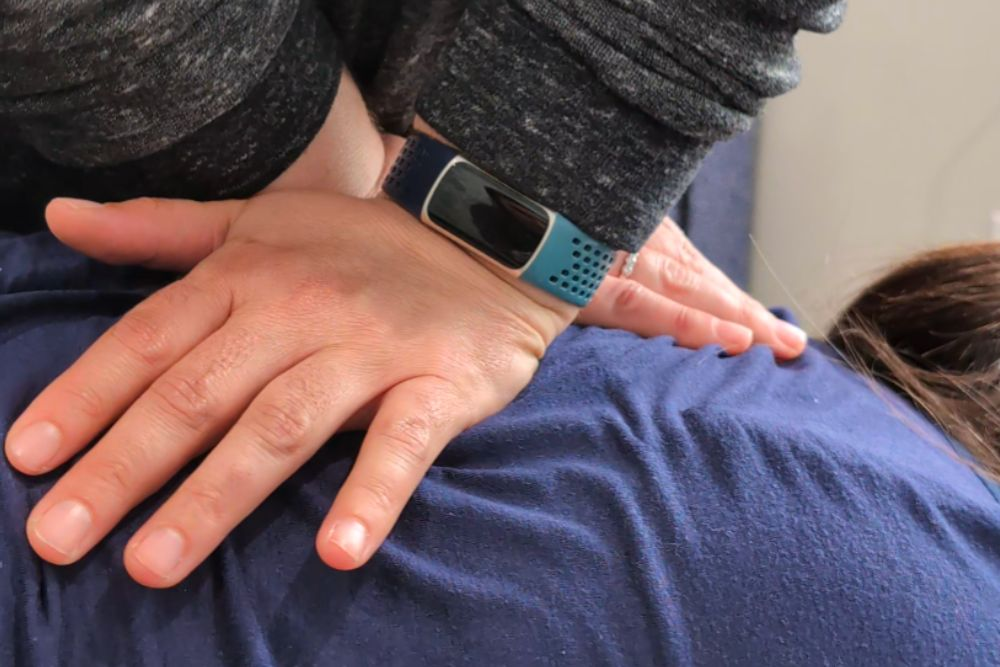
Supportive Care Around SoftWave
To maximize healing, we layer SoftWave with targeted support:
- Gentle, progressive strengthening of the quadriceps, hamstrings, hips, and calf
- Neuromuscular training to improve stability and movement patterns
- Chiropractic and soft tissue care to reduce compensations in the low back, hips, and opposite leg
- Practical guidance on walking, work, and sport modifications during the healing phase
This integrative approach helps ensure that new tissue and improved meniscus health are supported by better movement mechanics and load tolerance.
Who Is a Good Candidate for Non-Surgical Meniscus Tear Treatment?
You may be a good candidate for SoftWave-based conservative treatment at Simply Well Chiropractic if:
- Your MRI shows a mild to moderate meniscus tear
- Your knee is painful or stiff but not mechanically locked
- You want to avoid or delay surgery when safely possible
- You have already tried rest, medication, or basic PT with limited lasting improvement
- You have a degenerative meniscus tear associated with aging or early arthritis
- You are an athlete seeking a non-invasive option to support healing and performance
Patients with severe, unstable tears, large bucket-handle tears, or knees that lock or catch significantly may be better served by a surgical consultation first; we will tell you honestly if that appears to be the case
– Ava Elizabeth
Why Cincinnati Patients Choose Simply Well Chiropractic for Meniscus Tear Treatment
While large orthopedic groups in Cincinnati offer excellent surgical and traditional non-surgical care, Simply Well Chiropractic provides a focused, non-invasive alternative centered around tissue regeneration and biomechanics.
At our clinic you can expect:
Our clinical model frequently attracts patients who:
Cincinnati’s trusted softwave provider
Dr. Faith Swartzendruber is a licensed chiropractor and SoftWave Therapy provider in Cincinnati, Ohio, who helps people recover from meniscus tears and knee pain. Her goal is to reduce inflammation, relieve discomfort, and restore smooth, pain-free movement—without surgery or dependence on medication. Dr. Faith takes an evidence-informed, personalized approach, combining SoftWave Therapy with targeted chiropractic and rehabilitative care to support natural healing, strengthen the joint, and improve long-term knee function.
Dr. Faith earned her Doctor of Chiropractic degree from Palmer College of Chiropractic in 2022.
She holds Ohio chiropractic license (DC-05144).
Dr. Faith Swartzendruber, DC, integrates her SoftWave Therapy training and chiropractic license with her education background to deliver SoftWave treatments that are both clinically informed and patient-centered.
Dr. Faith has helped hundreds of Cincinnati patients overcome chronic pain with SoftWave Therapy and chiropractic care.
Frequently Asked Questions
Schedule Your Meniscus Consultation Today
If knee pain from a meniscus tear is limiting your life, work, or sport — and you are looking for a non-surgical solution — we invite you to explore what SoftWave therapy and integrative chiropractic care can offer.
Call Simply Well Chiropractic at (513) 271-1233 or schedule your consultation online to see if our non-surgical meniscus tear treatment program is right for you.
We proudly serve Cincinnati, Oakley, Fairfax, Mariemont, Madisonville, Anderson Township, Hyde Park, Madeira, Indian Hill, and surrounding communities.

Written and medically reviewed by Dr. Faith Swartzendruber, DC
Ohio Chiropractic License: DC-05144 | Palmer College of Chiropractic
Founder, Simply Well Chiropractic, Cincinnati