Biceps Tendinitis Treatment in Cincinnati (Non‑Surgical, Drug‑Free Relief)
Schedule your $49 Discovery Session today!
What Is Biceps Tendinitis?
Your biceps muscle sits on the front of your upper arm and attaches to your shoulder and elbow through strong, cord‑like tendons. Biceps tendinitis happens when the upper (long‑head) biceps tendon becomes irritated or inflamed, usually where it anchors into the shoulder.
Common causes include:
- Repetitive overhead activities (throwing, swimming, lifting, overhead work).
- Sports like tennis, baseball, golf, volleyball, and weightlifting.
- Gradual wear‑and‑tear with age.
- Co‑existing shoulder issues such as rotator cuff irritation, shoulder impingement, or arthritis.
Over time, ongoing irritation can lead to fraying or even partial or full biceps tendon tears if the tendon is not allowed to heal properly.
Biceps Tendinitis Symptoms
Patients with biceps tendinitis usually describe:
- Deep, aching pain in the front of the shoulder.
- Pain that worsens with lifting, reaching overhead, or throwing.
- Tenderness when pressing on the front of the shoulder.
- Pain that can travel down the upper arm.
- Possible snapping, popping, or catching sensations in the shoulder.
In more severe cases or tendon tears, you may notice sudden sharp pain, bruising, or a visible “Popeye” bulge in the upper arm where the tendon has recoiled. This is a sign that you need an evaluation.

Traditional Treatment Options (And Their Limits)
Standard care for biceps tendinitis usually includes:
- Rest and activity modification.
- Ice or cold packs to decrease inflammation.
- Nonsteroidal anti‑inflammatory medications (NSAIDs).
- Physical therapy to improve shoulder mechanics and strength.
- Cortisone injections around the tendon for short‑term pain relief.
Many active adults in Cincinnati tell us they are looking for an option in between “rest and pills” and “surgery,” especially when pain has lingered for months. This is where SoftWave Therapy can be a good fit.
The table below summarizes common approaches you may be offered for biceps tendinitis and where SoftWave fits in your decision‑making:
| Treatment option | What it does | Pros | Considerations |
|---|---|---|---|
| Rest, ice, NSAIDs | Calms irritation and pain in early stages | Easy to start, inexpensive | Often not enough for chronic or recurrent tendonitis |
| Physical therapy | Strengthens shoulder, improves mechanics | Proven part of rehab, teaches self‑care | Progress can stall if the tendon is too irritated to heal |
| Cortisone injections | Powerfully reduces inflammation and pain | Rapid short‑term relief | Does not repair tendon; repeated use may weaken tissue |
| Surgery (tenodesis/tenotomy) | Removes or reattaches damaged tendon | Helpful in select, severe cases | Invasive, requires recovery time and rehab |
| SoftWave Therapy | Uses acoustic waves to support tendon healing | Non‑surgical, drug‑free, regenerative‑focused | Multiple sessions; not usually covered by insurance |
SoftWave Therapy for Biceps Tendinitis in Cincinnati
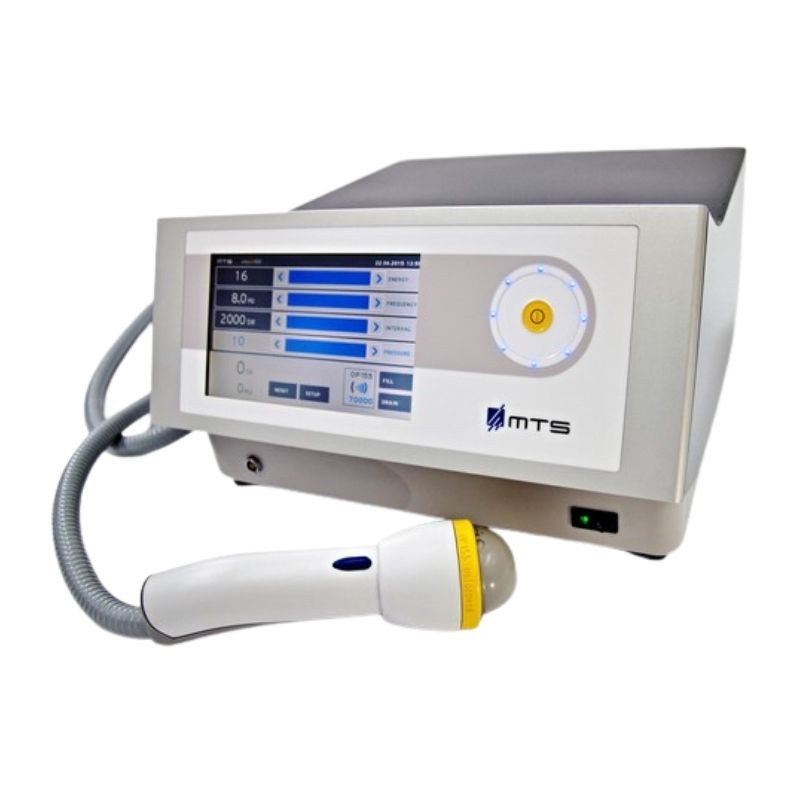
SoftWave Therapy (SoftWave TRT) is a non‑invasive treatment that uses unfocused electrohydraulic acoustic waves to stimulate your body’s own healing processes inside the tendon. Unlike treatments that simply numb pain, SoftWave is designed to target the underlying biology of chronic tendon irritation.
How SoftWave Works on a Biceps Tendon
During a SoftWave session, a specialized device sends broad‑focused acoustic waves through the skin into the irritated biceps tendon and surrounding shoulder tissues. Research on SoftWave‑type therapy suggests it can:
- Reduce chronic inflammation that keeps the tendon stuck in a painful state.
- Increase local blood flow, bringing more oxygen and nutrients to damaged tissue.
- Activate resident stem cells and growth factors that support tendon repair and remodeling.
- Break up small, disorganized areas of scar tissue that limit motion and comfort.
Because SoftWave uses a broad focus instead of a pinpoint beam, it can treat a wider region of the shoulder, which is helpful when pain involves the biceps tendon plus rotator cuff or surrounding soft tissue.
Benefits of SoftWave for Biceps Tendinitis
Many patients choose SoftWave Therapy for biceps tendinitis because it is:
- Non‑surgical: No incisions, anesthesia, or downtime.
- Drug‑free: No dependence on painkillers or repeated steroid injections.
- Targeted: Focused directly over the painful tendon and related shoulder tissues.
- Efficient: Sessions are brief, and most people return to normal daily activities the same day.
- Regenerative‑focused: Aims to support actual tissue healing instead of short‑term numbing of pain.
While every case is different, SoftWave has been used successfully on difficult tendonitis cases that did not respond well to rest, stretching, or standard conservative care.
What to Expect at Simply Well Chiropractic
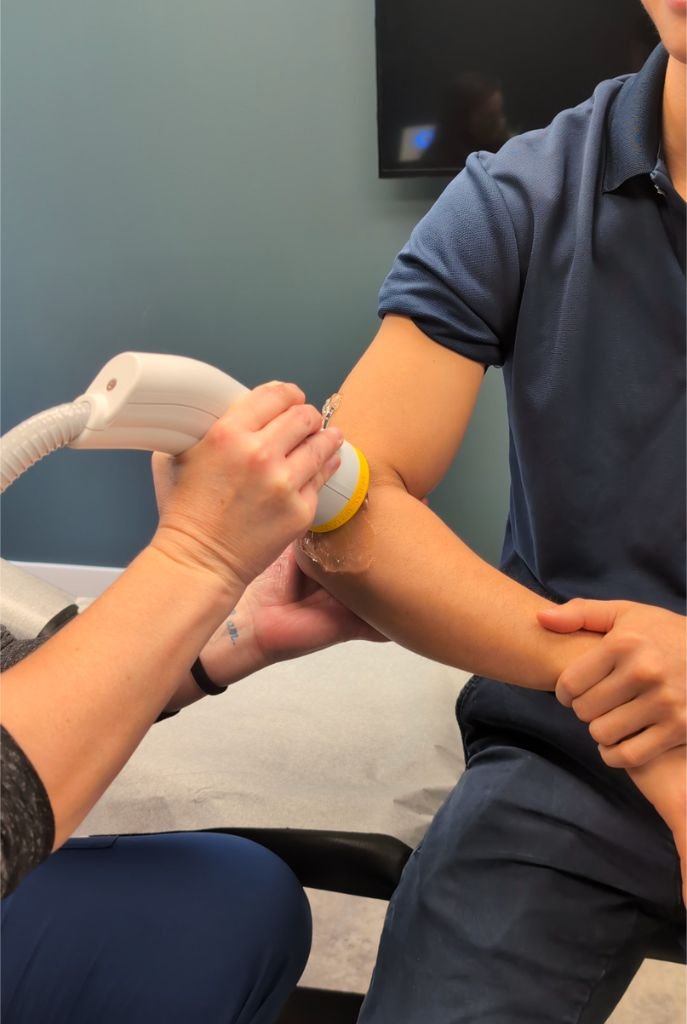
At Simply Well Chiropractic in Cincinnati, we integrate SoftWave Therapy with personalized chiropractic and rehabilitative care for the shoulder.
Your visit may include:
- Detailed assessment of your shoulder, posture, and movement patterns.
- Targeted SoftWave session over the biceps tendon and related shoulder structures.
- Gentle joint and soft‑tissue work as needed to improve mechanics of the shoulder blade, spine, and rib cage.
- Simple home exercises to reinforce better shoulder stability and help you maintain progress between visits.
Most patients feel some degree of change in their pain or range of motion within the first few sessions, though a series of treatments is usually recommended for long‑standing tendon problems.
Who Is a Good Candidate?
SoftWave‑based biceps tendinitis treatment may be appropriate if:
- You have ongoing front‑of‑shoulder pain diagnosed (or suspected) as biceps tendinitis.
- Pain has lasted more than a few weeks despite rest, ice, or basic home care.
- You want to avoid or delay surgery if possible.
- You prefer to limit repeated steroid injections or long‑term medication use.
Cincinnati’s trusted softwave provider
Dr. Faith Swartzendruber is a licensed chiropractor and SoftWave Therapy provider in Cincinnati, Ohio, who helps people recover from bicep tendinitis and shoulder or upper arm pain. She focuses on reducing inflammation, relieving tension, and restoring strong, comfortable movement—without surgery or heavy medications. Using an evidence-informed, personalized approach, Dr. Faith combines SoftWave Therapy with targeted chiropractic and rehabilitative care to promote tendon healing, improve strength, and support long-term shoulder and arm function.
Dr. Faith earned her Doctor of Chiropractic degree from Palmer College of Chiropractic in 2022.
She holds Ohio chiropractic license (DC-05144).
Dr. Faith Swartzendruber, DC, integrates her SoftWave Therapy training and chiropractic license with her education background to deliver SoftWave treatments that are both clinically informed and patient-centered.
Dr. Faith has helped hundreds of Cincinnati patients overcome chronic pain with SoftWave Therapy and chiropractic care.
Biceps Tendinitis Treatment in Cincinnati: Next Steps
If biceps tendinitis or a biceps tendon tear is keeping you from lifting, throwing, or sleeping comfortably, you do not have to jump straight from “rest and pills” to surgery. At Simply Well Chiropractic in Cincinnati, we offer SoftWave Therapy as a non‑surgical, regenerative‑focused option to help calm pain, promote tendon healing, and get you back to the activities you love.
You do not need a formal diagnosis before scheduling a visit, and your first step can be a low‑pressure discovery session to see whether SoftWave is a good fit for your shoulder.

Written and medically reviewed by Dr. Faith Swartzendruber, DC
Ohio Chiropractic License: DC-05144 | Palmer College of Chiropractic
Founder, Simply Well Chiropractic, Cincinnati