
shoulder instability treatment in Cincinnati
Schedule your $49 Discovery Session today!
What Is Shoulder Instability?
Your shoulder is a ball‑and‑socket joint that relies on soft tissues—not just bone—to stay centered and move smoothly. Shoulder instability occurs when the structures that normally keep the ball (humeral head) in the socket (glenoid)—the labrum, ligaments, capsule, and surrounding muscles—are stretched, torn, or too loose to control motion.
When those stabilizers are compromised, the ball can slide too far, partially slip (subluxation), or fully dislocate, leading to pain, weakness, and a constant sense that you cannot trust your shoulder.
Common Causes of Shoulder Instability
Shoulder instability can develop suddenly after an injury or gradually over time.
- Traumatic injury or dislocation
A fall on an outstretched arm, collision in sports, or forceful overhead motion can dislocate the shoulder and damage the labrum, capsule, or ligaments. - Repetitive overhead sports
Throwing, swimming, tennis, volleyball, gymnastics, and weightlifting can stretch stabilizing tissues over time, especially when mechanics or strength are not ideal. - Generalized ligament laxity
Some people are naturally more flexible or “loose jointed,” which can make the shoulder more prone to slipping or subluxing, even with normal activities. - Previous dislocations
Once the shoulder has dislocated, the chance of it happening again can be higher, especially in younger athletes and contact‑sport participants. - Weakness or poor control of the rotator cuff and shoulder blade
When stabilizing muscles are not doing their job, the ball is more likely to move excessively in the socket.

Symptoms of Shoulder Instability
People describe shoulder instability differently, but common patterns show up again and again.
- A feeling that the shoulder may slip, slide, or “come out of place,” especially with the arm overhead or out to the side
- Repeated episodes of partial dislocation (subluxation) or full dislocation that require reduction
- Aching pain deep in the shoulder, especially after activity or certain positions
- Weakness or loss of power with lifting, throwing, or pushing
- Clicking, catching, or popping sensations inside the joint
- Apprehension or fear with specific movements (reaching overhead, reaching back to throw, pushing up from the ground) because it feels like the shoulder might give way
If you notice yourself avoiding positions because you’re worried the shoulder will slip, that “apprehension” is a classic sign of instability.
Why Early Treatment Matters
Ignoring shoulder instability and just “working around it” can allow small problems to become bigger ones.
- Repeated subluxations and dislocations can further stretch the capsule and ligaments, increasing looseness over time.
- Ongoing instability can irritate the rotator cuff, labrum, and cartilage, potentially leading to early wear and tear or additional tears.
- Compensations in posture and movement can trigger pain in the neck, upper back, and opposite shoulder as your body tries to protect the unstable side.
Addressing the root causes early—strength, control, tissue healing, and mechanics—helps you protect your shoulder and stay active with more confidence.
How SoftWave Therapy Supports Shoulder Stability
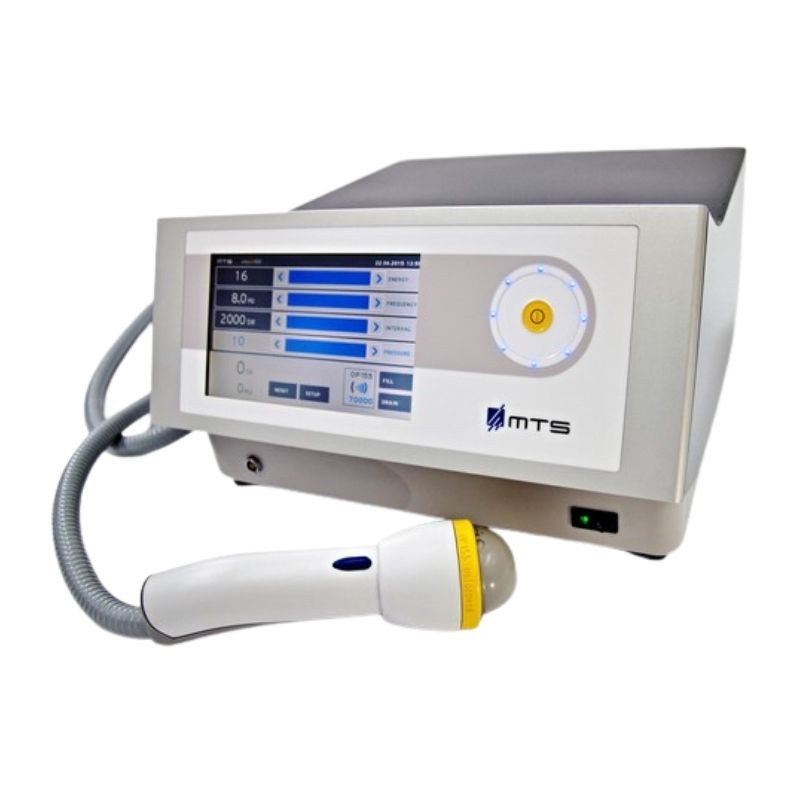
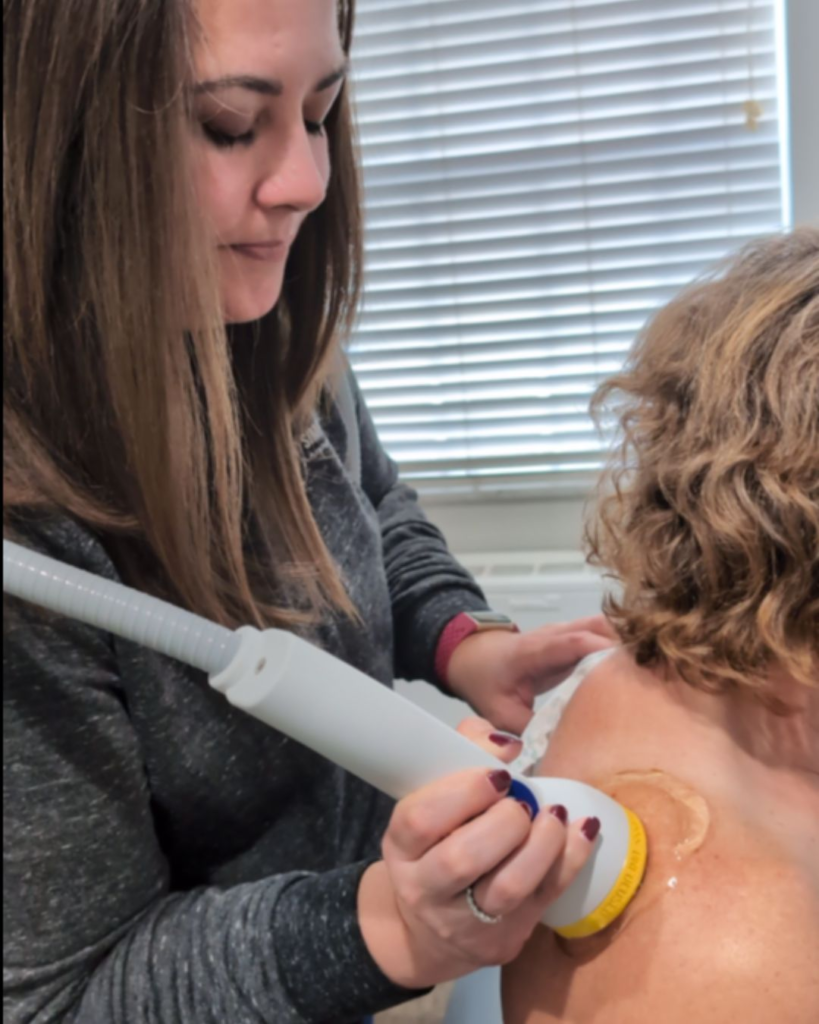
SoftWave Therapy uses patented acoustic (shock) waves to stimulate tissue repair and reduce pain in and around the shoulder without injections, medication, or surgery.
For patients with shoulder instability, SoftWave Therapy can help by:
- Increasing blood flow to irritated tendons, ligaments, and capsular tissues so they receive more of the raw materials needed for healing
- Stimulating cellular repair processes, including activation of local stem cells and growth factors that support regeneration and remodeling of soft tissue
- Encouraging collagen production, which is important for restoring strength and tension in stretched or partially injured structures
- Decreasing pain and inflammation so you can participate more fully in your rehab and strengthening program
At Simply Well Chiropractic in Cincinnati, SoftWave is delivered with an FDA‑cleared Class II device designed to treat a broad area around the shoulder, often covering the rotator cuff, biceps tendon, labral attachments, and capsule in a single session. We use your exam findings to target treatment where your instability and pain are truly coming from.
What to Expect From Your Treatment Plan
Because every shoulder and every sport or job is different, your plan is personalized to your goals and exam findings.
- Frequency of care
Many patients begin with a short series of SoftWave sessions combined with progressive rehab and chiropractic adjustments over several weeks, then taper as stability improves. - Staying active
Most people can remain active in some capacity during care, with guided modifications to protect healing tissues while still moving and training. - Home exercises
You receive a clear, step‑by‑step exercise plan to improve posture, shoulder blade control, rotator cuff strength, and core support between visits. - Monitoring progress
We regularly recheck your range of motion, strength, and apprehension in previously provocative positions so you can see and feel your progress over time.
In chronic or high‑demand cases—such as overhead athletes or heavy lifters—periodic maintenance care can help manage load and reduce the risk of recurrent flare‑ups.
Chiropractic Care for an Unstable Shoulder
Chiropractic treatment focuses on how your spine, rib cage, shoulder blade, and shoulder joint coordinate so the ball stays centered in the socket throughout your day.
Your individualized plan may include:
- Gentle joint adjustments and mobilization
Improving alignment and motion in the neck, upper back, ribs, and shoulder can reduce nerve irritation, improve mechanics, and help the shoulder move in a safer path. - Soft tissue therapies
Targeted work on tight or overactive muscles, fascia, and trigger points around the shoulder, chest, and upper back can reduce guarding and improve muscle balance. - Corrective and stability exercises
We prescribe specific exercises to strengthen the rotator cuff and periscapular muscles—the smaller stabilizers that keep the ball centered and support the shoulder blade.
The goal is not only to decrease pain but to retrain your shoulder so it can tolerate work, childcare, lifting, and sports without constantly feeling like it might give out.
Cincinnati’s trusted softwave provider
Dr. Faith Swartzendruber is a licensed chiropractor and SoftWave Therapy provider in Cincinnati, Ohio, who helps people improve shoulder stability and relieve pain caused by joint laxity or muscle imbalance. She focuses on restoring strength, coordination, and confident movement—without surgery or heavy medications. Using an evidence-informed, personalized approach, Dr. Faith combines SoftWave Therapy with targeted chiropractic and rehabilitative care to support long-term stability, proper shoulder alignment, and lasting function.
Dr. Faith earned her Doctor of Chiropractic degree from Palmer College of Chiropractic in 2022.
She holds Ohio chiropractic license (DC-05144).
Dr. Faith Swartzendruber, DC, integrates her SoftWave Therapy training and chiropractic license with her education background to deliver SoftWave treatments that are both clinically informed and patient-centered.
Dr. Faith has helped hundreds of Cincinnati patients overcome chronic pain with SoftWave Therapy and chiropractic care.
Shoulder Instability Treatment in Cincinnati: Start With a Discovery Sessionv
If your shoulder keeps popping, slipping, or holding you back from the activities you love, you do not have to wait until it is “bad enough” for surgery to take action. At Simply Well Chiropractic in Cincinnati, we offer a focused approach to shoulder instability that emphasizes tissue healing, neuromuscular control, and whole‑body mechanics, using SoftWave Therapy and chiropractic care when appropriate.
Click to schedule your $49 Discovery Session to find out:
Address
5721 Dragon Way #110, Cincinnati, OH 45227
info@simplywellchiro.com
Phone
(513) 271-1233

Written and medically reviewed by Dr. Faith Swartzendruber, DC
Ohio Chiropractic License: DC-05144 | Palmer College of Chiropractic
Founder, Simply Well Chiropractic, Cincinnati