
Ankle Sprain Treatment in Cincinnati with SoftWave Therapy
If you are looking for ankle sprain treatment in Cincinnati, Simply Well Chiropractic offers a non-surgical approach for pain, swelling, stiffness, and ankle instability. Dr. Faith Swartzendruber, DC, will evaluate your injury, movement, and goals to help determine whether conservative care, guided exercises, referral, or SoftWave Therapy may be appropriate for your recovery.
Common Syptoms of Ankle Sprains
Rolled Your Ankle? Start With the Right Next Step
A mild ankle sprain may improve with basic home care and gradual return to activity. But not every rolled ankle is minor, and not every ankle that continues to hurt is simply “taking a while.”
You may be searching for help because you have:
- Pain when walking, standing, using stairs, running, or exercising
- Swelling or bruising after rolling your ankle
- A sharp pain on the inside or outside of the ankle
- Stiffness that makes it hard to flex your foot or squat
- Weakness, poor balance, or a feeling that the ankle may give out
- A sprain that keeps coming back
- An old ankle injury that never felt fully normal again
- Pain near the Achilles tendon or along the side of the ankle
- An ankle that has not improved with rest, ice, a brace, or activity changes
If your ankle pain is limiting your life, the goal is not simply to push through it. The goal is to understand what is affecting your movement and choose an appropriate path back to the activities you enjoy.
what to do after an ankle sprain
Most mild to moderate ankle sprains can be treated at home in the first 48-72 hours. Follow these steps to reduce swelling and inflammation and support healing.


Seek Urgent care if you notice
- Severe pain or inability to put weight on your foot
- Rapid swelling or bruising
- Numbness or tingling
- Deformity (looks out of place)
Ankle Sprain Grades and Typical Healing Time
Doctors classify ankle sprains by severity, which helps guide treatment and expected recovery.
1
Grade 1 (Mild):
Slight stretch or microscopic tearing of ligaments, mild tenderness and swelling, usually recover within about 2–4 weeks with conservative care.
2
Grade 2 (Moderate):
Partial ligament tear, more significant swelling and bruising, pain with walking, recovery often 6–8 weeks or more with proper treatment.
3
Grade 3 (Severe):
Complete ligament tear, marked swelling, instability, difficulty or inability to bear weight; may require bracing, more intensive rehab, and sometimes surgery.
Ankle Sprain Symptoms: When to Get Checked
Mild ankle sprains can sometimes be safely managed at home, but moderate to severe injuries need a professional exam so you do not miss a fracture or a significant ligament tear.
Symptoms of an ankle sprain may include:
- Pain when walking, standing, or putting weight on the foot
- Swelling around the ankle joint or into the foot
- Bruising or discoloration
- Tenderness when you touch the ligaments
- A feeling of instability or “giving way”
- Stiffness and reduced range of motion
Seek urgent medical care or an orthopedic evaluation if:
- You cannot bear weight on the injured foot
- The ankle looks deformed or severely misaligned
- Pain is severe or worsening after 24–48 hours
- You heard a “pop” at the time of injury
- Numbness, tingling, or coldness develops in the foot
If you have already been evaluated, ruled out for fracture, and are still dealing with persistent ankle pain, swelling, or stiffness, SoftWave Therapy can accelerate healing and help you avoid chronic ankle instability.to rule out a fracture before starting conservative care.
How SoftWave Therapy helps ankle sprains heal faster
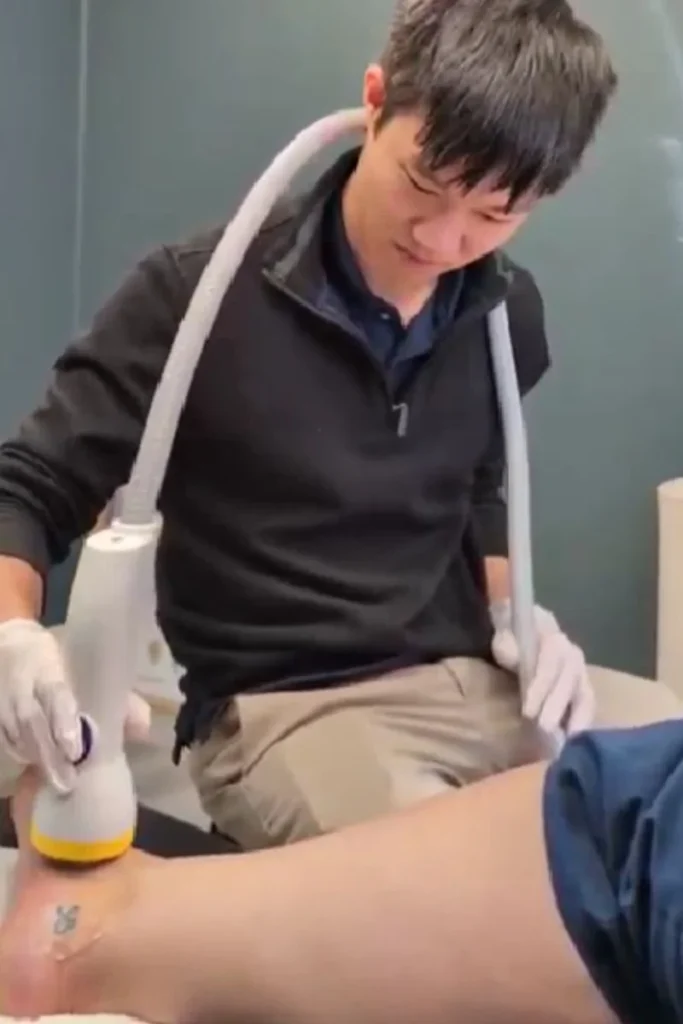
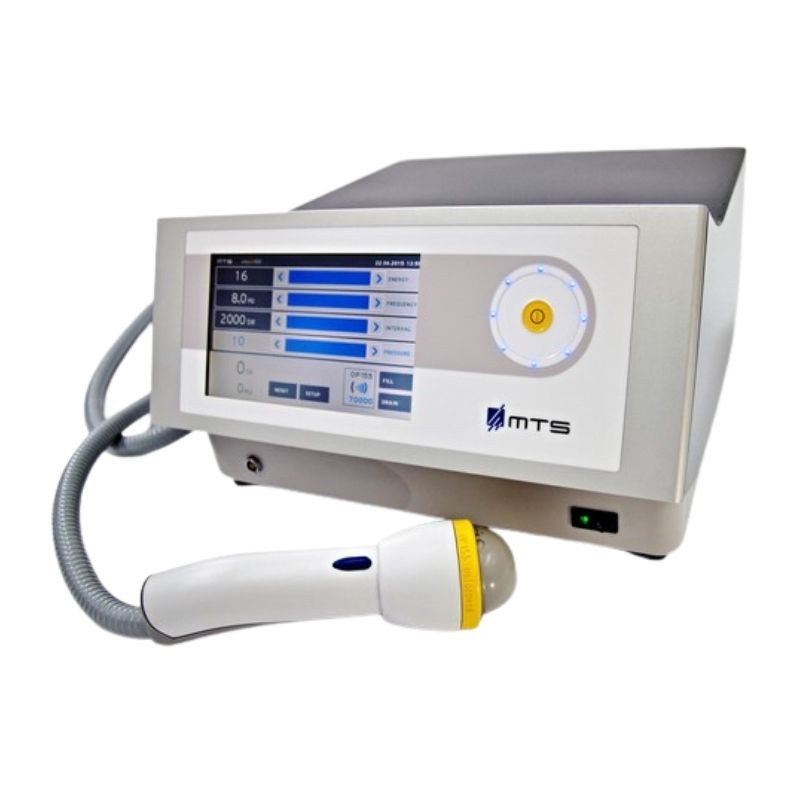
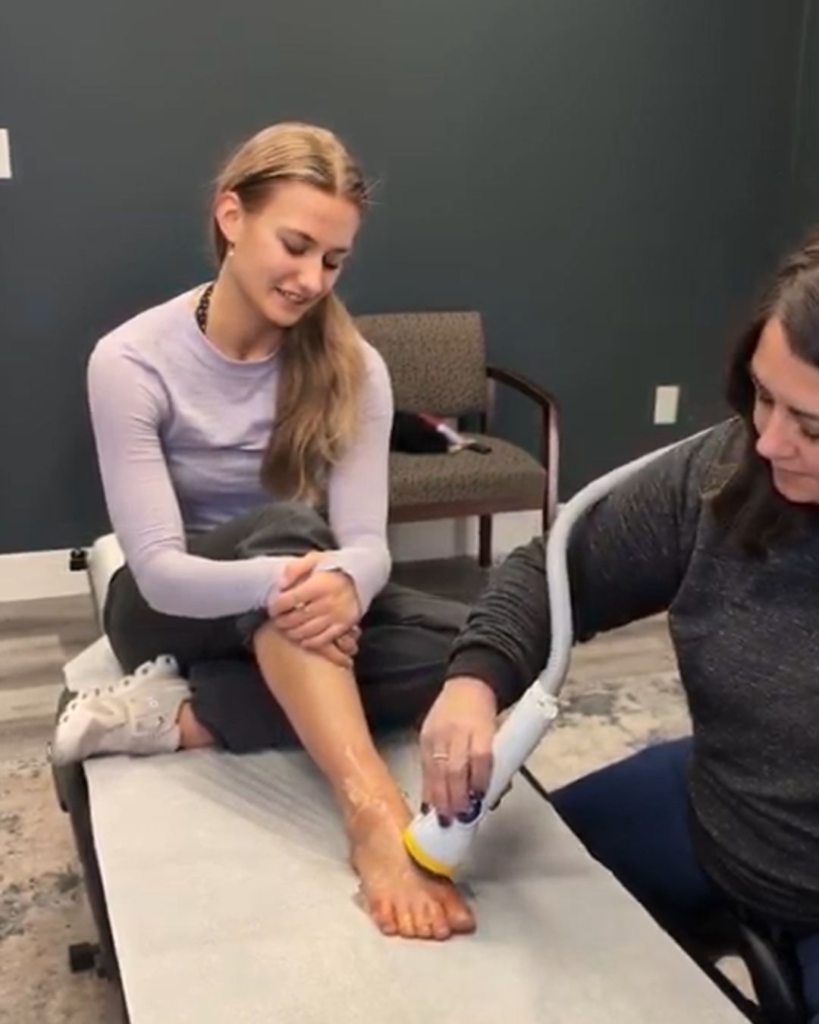
At Simply Well Chiropractic, we add a powerful tool most traditional clinics in Cincinnati do not offer: SoftWave Therapy. SoftWave is an FDA-cleared, non-invasive treatment that uses acoustic (sound) waves to stimulate your body’s own healing processes in the damaged ankle ligaments and surrounding tissues.
SoftWave Therapy can:
- Increase blood flow into injured ligaments, delivering more oxygen and nutrients to speed repair in an area that naturally has poor circulation
- Activate dormant stem cells that help regenerate damaged tissue and support long-term healing
- Stimulate new collagen production so ligaments heal stronger and more resilient
- Reduce pain and inflammation so you can move and rehab the ankle more comfortably
Many patients feel meaningful pain relief within 24–48 hours of their first SoftWave session and need only a short series of visits, rather than months of slow progress.
Traditional Ankle Sprain Treatment Options
Most orthopedic and sports medicine providers recommend a progression of conservative care first.
Typical components include:
- Rest and activity modification to protect the injured ligaments
- Ice in the first 48–72 hours to help control pain and swelling
- Compression wraps or sleeves to limit swelling
- Elevation to help fluid drain away from the ankle
- Bracing or short-term immobilization to support the joint
- Anti-inflammatory medications as recommended by your doctor
- Physical therapy to restore motion, strength, and balance
Severe sprains, fractures, or ruptured tendons and ligaments sometimes require casting or surgery, especially when there is significant instability or displacement. Even after surgery, targeted rehab is essential to get back full function.
Where traditional care often falls short is in stubborn cases where the ankle “never feels the same,” stays swollen, or repeatedly gives way months after the initial injury. This is where SoftWave Therapy provides a strong regenerative boost.
What Makes SoftWave Different From Standard Care?
| Treatment type | Main goal | Limitations | Where SoftWave fits |
|---|---|---|---|
| RICE / home care | Short-term pain and swelling control | Does not actively stimulate tissue regeneration | SoftWave accelerates underlying ligament and tendon healing |
| Bracing / immobilization | Protect and support the joint during healing | Prolonged immobilization can lead to stiffness and weakness | SoftWave works alongside bracing to shorten recovery while rehab restores motion |
| Medications | Reduce pain and inflammation | Do not repair tissue; some may slow aspects of healing when overused | SoftWave targets the root cause at the tissue level rather than just symptoms |
| Surgery | Repair or reconstruct torn ligaments or fractures | Reserved for severe cases; involves downtime and risk | SoftWave may help you avoid surgery in select cases, or support post-surgical healing |
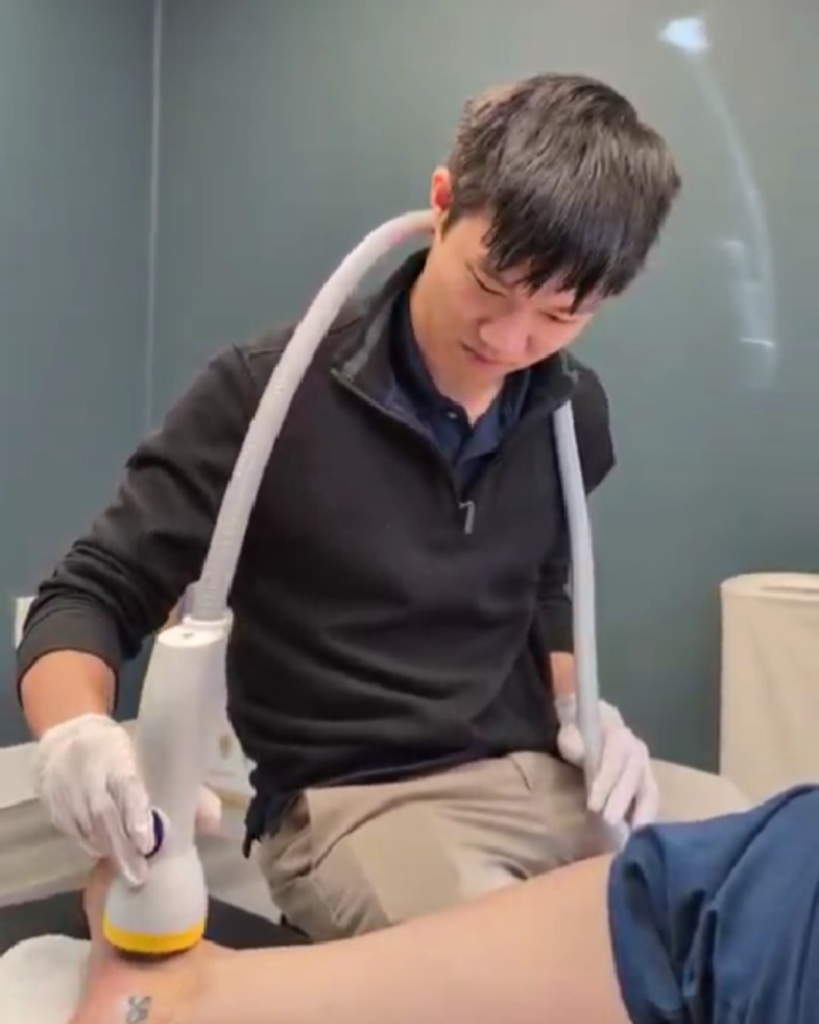
Who Is a Good Candidate for SoftWave Ankle Sprain Treatment?
SoftWave Therapy can be helpful in several ankle sprain scenarios:
- Recent ankle sprains that are not improving as quickly as you would like
- Moderate to severe sprains once fracture has been ruled out and your provider clears you for conservative care
- Chronic ankle pain, swelling, or stiffness months after the initial injury
- Recurrent “rolling” of the ankle or feelings of instability
- Post-surgical ankle pain or slow recovery when you want to accelerate tissue healing
We will always screen you first to determine whether you should see an orthopedic specialist for imaging, bracing, or surgical evaluation before starting SoftWave. Many patients come to us in coordination with their orthopedic physician, podiatrist, or physical therapist.
What an ankle sprain treatment plan looks like at Simply Well Chiropractic
Your first appointment includes:
- Detailed history of how you injured your ankle and what has happened since
- Functional exam to assess swelling, range of motion, ligament stability, gait, and balance
- Review of any prior X-rays, MRI, or orthopedic notes you bring
- A test-dose of SoftWave so you can feel how it works and see how your ankle responds
If you are a good candidate, we create a customized plan that may include:
- A series of 3–5 SoftWave sessions spaced over several weeks
- Gentle mobility and strengthening exercises to restore normal movement
- Balance and proprioception training to reduce re-sprain risk
- Home care guidance (when to use bracing, what activities to avoid, how to safely progress)
Most treatments take only minutes, and you can usually walk out and resume light daily activities the same day.
Cincinnati’s trusted softwave provider
Dr. Faith is a chiropractor at Simply Well Chiropractic in Cincinnati who focuses on helping patients recover from ankle sprains and related ankle injuries without surgery or long‑term medications. She has extensive experience using non‑invasive SoftWave Therapy to support tissue healing, reduce inflammation, and improve stability in sprained ankles and surrounding soft tissues. Over the years, Dr. Faith has helped many Cincinnati patients get back to walking, sports, and daily activities with less pain and greater confidence by combining SoftWave Therapy with personalized, conservative care plans.
Dr. Faith earned her Doctor of Chiropractic degree from Palmer College of Chiropractic in 2022.
She holds Ohio chiropractic license (DC-05144).
Dr. Faith Swartzendruber, DC, integrates her SoftWave Therapy training and chiropractic license with her education background to deliver SoftWave treatments that are both clinically informed and patient-centered.
Dr. Faith has helped hundreds of Cincinnati patients overcome chronic pain with SoftWave Therapy and chiropractic care.
How Many SoftWave Treatments Will I Need?
The number of sessions varies based on severity, duration of symptoms, and your activity goals.
- Mild sprains or lingering pain after a “minor” injury often respond in 3–4 sessions.
- Moderate or long-standing sprains, especially with significant swelling or stiffness, may need closer to 4–6 sessions.
- Complex cases—such as chronic instability or post-surgical pain—may benefit from a staged plan with periodic follow-up treatments.
You will typically notice changes in pain or function early on, and improvements often continue for weeks after your last session as the tissue continues to remodel.
Schedule your ankle sprain evaluation in Cincinnati
Simply Well Chiropractic offers SoftWave Therapy right here in Cincinnati for ankle sprains, chronic ankle instability, and other lower extremity injuries. To find out whether SoftWave Therapy is right for your ankle sprain, call our office or request an appointment online today so you can get back to walking, working, and moving with confidence.
- Non-invasive: No incisions or needles required
- Minimal downtime: Most patients resume normal activities quickly
- Clinically proven: Supported by research for effectiveness in soft tissue healing and pain reduction
- Safe and well-tolerated: Suitable for a wide range of patients
Address
5721 Dragon Way #110, Cincinnati, OH 45227
info@simplywellchiro.com
Phone
(513) 271-1233

Written and medically reviewed by Dr. Faith Swartzendruber, DC
Ohio Chiropractic License: DC-05144 | Palmer College of Chiropractic
Founder, Simply Well Chiropractic, Cincinnati