Frozen Shoulder Relief in Cincinnati
$49 Discovery Session at Simply Well Chiropractic
Non-Invasive | FDA-Cleared
If lifting your arm, fastening your bra, or reaching into the cupboard sends a sharp pain through your shoulder, you may be dealing with frozen shoulder. At Simply Well Chiropractic in Cincinnati, we offer non-surgical frozen shoulder treatment that focuses on restoring your mobility and helping you get back to normal life—without relying on long-term pain medications or injections.
Our clinic combines advanced SoftWave Therapy with chiropractic care, targeted rehab, and lifestyle coaching to help Cincinnati patients work through every stage of frozen shoulder more comfortably and more quickly.
What is frozen Shoulder?
Frozen shoulder, also called adhesive capsulitis, happens when the connective tissue capsule surrounding your shoulder joint becomes inflamed, thickened, and tight, forming adhesions that severely limit your range of motion. As the capsule stiffens and the amount of lubricating synovial fluid in the joint decreases, everyday movements like reaching overhead or behind your back can feel almost impossible.
You may notice:
- A deep, aching pain in the shoulder, often worse at night
- Progressive loss of motion in all directions (lifting, rotating, reaching)
- Difficulty with basic tasks such as dressing, driving, or sleeping on the affected side
Frozen shoulder most commonly affects adults between ages 40–60 and is more frequent in women and in people with conditions such as diabetes or thyroid disorders. It may develop gradually without a clear injury or after periods of immobilization, such as following shoulder surgery, a fracture, or wearing a sling.
The Three Stages of Frozen Shoulder
Understanding the stages of frozen shoulder helps set realistic expectations and guides the timing of treatment choices.
Stage 1: Freezing Stage (Weeks 1-3 months)
- Typically lasts 3–9 months
- Shoulder pain gradually worsens, especially at night and with movement
- Range of motion slowly decreases, and activities start to feel difficult.
Stage 2: Frozen Stage (3-12 months)
- Usually lasts 4–12 months
- Pain may ease somewhat, but stiffness becomes severe
- Lifting, reaching, and rotating the arm can feel nearly impossible, even with help
Stage 3: Thawing Stage (12-24+ months)
- Can last 12–42 months
- Motion gradually returns, but full recovery is not guaranteed for every patient
- Without appropriate care, some stiffness, weakness, and pain can persist for years
While frozen shoulder can eventually improve on its own, the “wait and see” approach can leave you dealing with pain and disability for up to two or more years. Early, targeted treatment often shortens the course and improves your ultimate shoulder function.
Without treatment, frozen shoulder typically lasts 1-3 years. With proper intervention like SoftWave Therapy, most patients see significant improvement within 8-12 weeks.

What Causes Frozen Shoulder?
Frozen shoulder often develops after:
- Shoulder injury or trauma
- Rotator cuff surgery or other shoulder surgery
- Immobility (wearing a sling, not moving the shoulder)
- Stroke or other neurological event
- Heart attack or cardiac surgery
- Diabetes or thyroid disorders
- Menopause
Sometimes it appears with no clear cause. Certain populations are more susceptible: people over 40, women more than men, and those with certain medical conditions.
Signs You May Have Frozen Shoulder
If you have several of these symptoms and they’ve lasted more than a few weeks, frozen shoulder is likely. The longer you wait, the longer recovery takes—so early intervention is critical.
A Non-Surgical Approach: SoftWave Therapy for Frozen Shoulder in Cincinnati
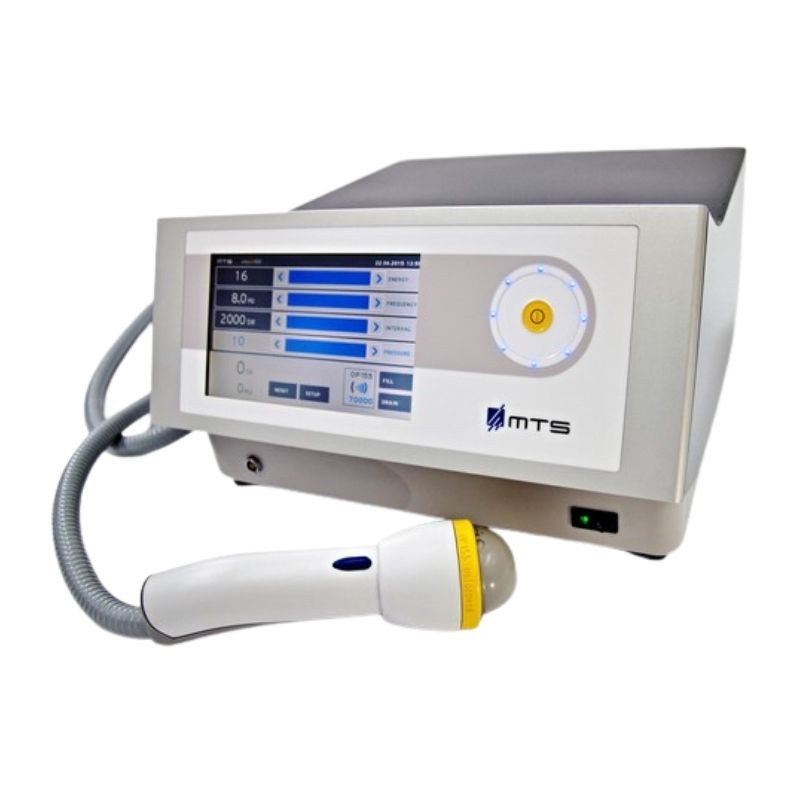
At Simply Well Chiropractic, we specialize in SoftWave Therapy, an FDA-cleared form of extracorporeal shockwave therapy (ESWT) that stimulates tissue repair, reduces inflammation, and helps break up the adhesions that contribute to frozen shoulder.
SoftWave uses broad-focused acoustic waves generated via a parabolic reflector to penetrate deeply into the shoulder capsule and surrounding tissues, treating a larger area than many point-focused shockwave devices. This allows us to address both the capsule and the surrounding musculature, which often tightens in response to pain.
How SoftWave Therapy Helps Frozen Shoulder Heal
Research on extracorporeal shockwave therapy for frozen shoulder shows meaningful improvements in pain, range of motion, and daily function compared to conservative care alone. SoftWave Therapy leverages several key physiologic effects:
- Tissue remodeling and adhesion breakdown: Acoustic waves trigger mechanotransduction, prompting cells to release growth factors and enzymes that remodel the stiff, fibrotic capsule and help reduce adhesions.
- Anti-inflammatory effects: ESWT modulates inflammatory signaling and fosters a shift toward pro-healing immune activity, decreasing chronic inflammation in the shoulder joint.
- Improved blood flow: SoftWave stimulates neovascularization, or new blood vessel formation, which increases oxygen and nutrient delivery to the injured capsule and muscles.
- Pain modulation: Shockwave therapy activates natural pain-relieving pathways and reduces hypersensitivity in irritated nerve fibers, easing pain so you can move more comfortably.
- Muscle relaxation: Changes in cellular signaling and nitric oxide release help relax tight surrounding musculature that contributes to guarding and stiffness.
Multiple randomized clinical trials and systematic reviews of ESWT for frozen shoulder report significant improvements in shoulder pain, flexion, abduction, and rotation, as well as faster return to daily activities compared to control treatments.
The Science Behind SoftWave for Frozen Shoulder
Penetrates the joint capsule (4-5 inch depth)
Acoustic waves reach deep into the shoulder joint—deeper than physical therapy, deeper than topical treatments. This is critical for frozen shoulder because the damaged tissue is inside the joint.
Reduces inflammation
The acoustic waves decrease inflammatory markers in the capsular tissue, reducing pain and swelling naturally—without injections or steroids.
Promotes neovascularization
New blood vessels form, bringing oxygen and nutrients to the damaged capsular tissue. Improved blood flow accelerates healing.
Stimulates fibroblast activity
Fibroblasts are cells that produce collagen. SoftWave reactivates them, triggering tissue remodeling of the thickened, fibrotic capsule.
Breaks adhesions
The acoustic waves help break up scar tissue and adhesions that are restricting movement, gradually restoring range of motion.
Why SoftWave Is Different for Frozen Shoulder
vs. Physical Therapy alone: PT strengthens muscles and improves movement, but SoftWave actually heals the inflamed capsular tissue. Together, they’re powerful. SoftWave accelerates PT results.
vs. Cortisone injections: Injections suppress pain for 3-4 months. SoftWave promotes actual tissue healing, with results lasting 6+ months to 2+ years.
vs. Surgery: SoftWave avoids surgical risks, downtime, and recovery. Most patients (80%+) see meaningful improvement without ever needing surgery.
The Diagnostic Advantage
Like all SoftWave treatments, there’s a diagnostic component. When Dr. Faith applies the device around your frozen shoulder, you’ll feel a distinctive sensation—like a rubber band snapping—when it reaches the affected joint capsule. This tells us:
- Exactly where the inflammation and restriction is
- Whether your tissue will respond to treatment
- Allows precise, targeted healing
Ready to schedule a softwave appointment for Frozen Shoulder?
What to Expect: Your Frozen Shoulder Treatment
Your First Appointment (Discovery Session – $49)
Consultation (10 minutes)
Dr. Faith asks about your frozen shoulder: When did it start? Did it follow an injury or surgery? What movements hurt most? What have you tried so far? What are your goals?
SoftWave Diagnostic Session (10 minutes)
The device is applied around your shoulder. You’ll feel the characteristic response when it reaches the inflamed joint capsule. This diagnostic feedback confirms SoftWave will help.
Immediate Feedback
Many patients notice improved mobility or less pain immediately after the first session—sometimes within the first hour.
Important: Dr. Faith doesn’t oversell packages. She recommends a conservative starting plan, monitors your progress, and only adds sessions if your condition warrants it. If you’re improving well, you move forward. If you plateau, we adjust.
How Long Does frozen shoulder Recovery Take?
Weeks 1-2: First Signs of Improvement
Pain begins to decrease slightly. You might notice you can move your arm a bit more, especially if you combine SoftWave with gentle PT. Sleep may improve.
Weeks 3-4: Noticeable Range of Motion Gain
You can reach higher, move your arm across your body a bit easier. Daily activities become less painful. The stiffness is still there, but it’s improving.
Weeks 4-8: Major Breakthrough
Range of motion increases significantly. You can do more normal activities without restriction. Many patients can raise their arm overhead, reach behind their back, or reach across their body for the first time in months.
Weeks 8-12+: Full Mobility Restoration
Continued improvement in strength and control. Most patients regain nearly full range of motion and can return to sports, work, and normal life without restrictions.
After treatment: Unlike injections or surgery, SoftWave results continue to improve as your tissue continues to remodel. Many patients experience ongoing improvement in the months after completing their treatment series.
SoftWave Therapy is highly effective for frozen shoulder in most patients, especially when caught early in the freezing or early frozen stages, but it is not a cure-all and results vary significantly by individual. The treatment timelines and session ranges described above represent typical patterns observed in most patients, not guarantees—your age, overall health, how long you’ve had frozen shoulder, whether you combine SoftWave with physical therapy, and your commitment to home exercises all influence your outcome. A small percentage of patients with severe, long-standing frozen shoulder or complex medical conditions may not experience the degree of improvement they hope for, and in those cases Dr. Faith will discuss alternative options, which may include modifying your care plan, intensifying physical therapy, exploring additional treatments, or consulting with an orthopedic surgeon about surgical options if conservative care has not provided adequate relief.
Frozen Shoulder vs. Other Shoulder Conditions: How to Tell the Difference
Frozen shoulder is often confused with rotator cuff injury, bursitis, or other shoulder problems. Understanding the difference helps explain why your pain feels the way it does.
| Factor | Frozen Shoulder | Rotator Cuff Injury | Shoulder Bursitis |
|---|---|---|---|
| Main symptom | Extreme stiffness; pain with ALL movement | Sharp pain with specific movements (overhead reaching); weakness | Swelling and aching at shoulder tip |
| Range of motion | Severely restricted in all directions | Limited but some movement possible | Restricted but less than frozen shoulder |
| Onset | Gradual, often no clear cause | Often follows injury or overuse | Usually follows repetitive activity |
| Pain pattern | Constant ache, worse with any movement | Sharp with lifting; may improve with rest | Dull ache aggravated by certain moves |
| What’s damaged | Joint capsule (connective tissue) | Rotator cuff tendons | Bursa (fluid sac) |
| Best stage for treatment | Early (freezing stage) is ideal; any stage helps | As early as possible | Early intervention best |
Key differentiator: If your main complaint is extreme stiffness with pain in all directions, it’s likely frozen shoulder. If your main complaint is sharp pain with specific movements or weakness, it’s likely rotator cuff.
Cincinnati’s trusted softwave provider
Dr. Faith Swartzendruber is a licensed chiropractor and SoftWave Therapy provider in Cincinnati, Ohio, who helps people find relief from frozen shoulder and restore comfortable, pain-free movement. She focuses on reducing stiffness, improving range of motion, and supporting natural recovery—without surgery or heavy medications. Dr. Faith takes an evidence-informed, personalized approach, combining SoftWave Therapy with targeted chiropractic and rehabilitative care to promote lasting healing and better shoulder function.
Dr. Faith earned her Doctor of Chiropractic degree from Palmer College of Chiropractic in 2022.
Dr. Faith holds Ohio chiropractic license (DC-05144).
Dr. Faith Swartzendruber, DC, integrates her SoftWave Therapy training and chiropractic license with her education background to deliver SoftWave treatments that are both clinically informed and patient-centered.
Dr. Faith has helped hundreds of Cincinnati patients overcome chronic pain with SoftWave Therapy and chiropractic care.
Why Choose Simply Well Chiropractic for Frozen Shoulder Treatment?
Patients looking for frozen shoulder treatment in Cincinnati often have already tried rest, medication, or basic stretching without lasting relief. They choose us because:
Frozen Shoulder Treatment in Cincinnati: Schedule Your SoftWave Consultation
Frozen shoulder doesn’t have to control your life for years. With SoftWave Therapy, most patients see significant improvement in 8-12 weeks—not 1-2 years.
Your $49 Discovery Session includes:
- Full frozen shoulder evaluation with Dr. Faith
- Your first SoftWave treatment
- Personalized treatment plan (no obligation)
Stop letting frozen shoulder limit your activities. Stop reaching for pain medication or accepting that “it will go away eventually.” Take action now and regain your shoulder mobility.
Book your discovery session today.
Frequently Asked Questions About Frozen Shoulder Softwave Treatment
How long does frozen shoulder last without treatment?
Frozen shoulder naturally follows a 1-3 year cycle: freezing stage (months 1-3), frozen stage (months 3-12), and thawing stage (months 12-24+). Without treatment, you’re looking at 1-2 years of significant limitation. With SoftWave, most patients see major improvement in 8-12 weeks.
Will my frozen shoulder come back?
True recurrence of frozen shoulder in the same shoulder is rare (5-10%). However, 10-15% of people develop it in the opposite shoulder. Once SoftWave heals your shoulder, the results typically last years. Some patients with high physical demands choose occasional maintenance sessions.
Can I do physical therapy at the same time as SoftWave?
Yes, absolutely—and we encourage it. SoftWave reduces inflammation and restriction; PT maintains mobility and strengthens muscles. Together, they’re more effective than either alone. Let Dr. Faith know if you’re seeing a PT, and we can coordinate.
Is frozen shoulder ever a surgical emergency?
No. Frozen shoulder is not dangerous to your health—it’s painful and restrictive, but not an emergency. Surgery is optional and a last resort. Most patients improve with conservative care like SoftWave and PT.
What if I’ve had frozen shoulder for years?
Even chronic frozen shoulder (years of duration) responds to SoftWave. It may take more sessions or longer treatment, but the principle is the same: reduce inflammation, restore mobility. Older adhesions take longer to remodel, but they can improve.
How is frozen shoulder different from a stiff shoulder from arthritis?
Frozen shoulder is acute inflammation of the joint capsule with adhesion formation. Arthritis is gradual cartilage degeneration. They feel similar (stiffness, pain) but respond differently to treatment. Dr. Faith’s evaluation will clarify which you have.
Can frozen shoulder be prevented?
If you’re post-surgery, move your shoulder gently as soon as approved (immobility causes frozen shoulder). If you have diabetes or thyroid disorders, manage those conditions (they’re risk factors). If you’re going through menopause, maintain shoulder health with gentle movement and stress management. There’s no guaranteed prevention, but early intervention stops it from worsening.
Address
5721 Dragon Way #110, Cincinnati, OH 45227
info@simplywellchiro.com
Phone
(513) 271-1233

Written and medically reviewed by Dr. Faith Swartzendruber, DC
Ohio Chiropractic License: DC-05144 | Palmer College of Chiropractic
Founder, Simply Well Chiropractic, Cincinnati