
Shoulder Impingement Treatment in Cincinnati | SoftWave Therapy
Schedule your $49 Discovery Session today!
What Is Shoulder Impingement?
Shoulder impingement happens when the soft tissues in the top of the shoulder—especially the rotator cuff tendons and the cushioning bursa—get “pinched” between the top of your upper arm bone (humerus) and part of your shoulder blade called the acromion. Over time, that repeated pinching can irritate and inflame those tissues, causing pain with lifting and reaching, weakness, and a painful catch or “block” as you raise your arm.
Your rotator cuff is a group of four small muscles and tendons that help keep the ball of your shoulder centered in the socket while you move. A fluid‑filled sac called the subacromial bursa sits above those tendons to reduce friction as they glide under the acromion during overhead movement. When this space narrows or the tissues inside it swell, those structures rub, leading to shoulder impingement.
Common contributors include:
- Rounded‑shoulder posture and upper‑back stiffness that tip the shoulder blade forward.
- Weakness or poor coordination of the shoulder blade (scapular) stabilizer muscles.
- Repetitive overhead sports or work (swimming, throwing, painting, lifting, construction).
- Bone spurs or age‑related changes in the shape of the acromion that further narrow the space.
- Rounded‑shoulder posture and upper‑back stiffness that tip the shoulder blade forward.
- Weakness or poor coordination of the shoulder blade (scapular) stabilizer muscles.
- Repetitive overhead sports or work (swimming, throwing, painting, lifting, construction).
- Bone spurs or age‑related changes in the shape of the acromion that further narrow the space.
Left unaddressed, chronic impingement can contribute to rotator cuff tendinitis, bursitis, and, over time, partial or full‑thickness rotator cuff tears.
Common Shoulder Impingement Symptoms
People rarely search “shoulder impingement” at first; they search for the way it feels. You may recognize yourself in one or more of these symptoms:
- Pain in the front or side of the shoulder, especially when lifting your arm to the side or overhead.
- A sharp “pinch” when reaching up into a cabinet, putting on a shirt, or buckling a seatbelt.
- Pain or aching when you lie on the affected shoulder at night, sometimes waking you from sleep.
- Weakness, fatigue, or “dead arm” feeling with lifting, carrying, or overhead work.
- Stiffness or a painful arc of motion between about 60–120 degrees of lifting.
- Discomfort after repetitive activities like swimming, throwing, weightlifting, painting, or stocking shelves.
More irritated cases can also bring swelling, tenderness to touch, and sometimes a popping or clicking sensation as you move. If the pinching continues for months, pain can spread down the side of the arm and limit basic tasks like grooming, dressing, or reaching overhead.

Why Your Shoulder Hurts: The “Pinch” Inside the Joint
Your shoulder is a ball‑and‑socket joint designed for a large range of motion, but that freedom depends on precise coordination between your rotator cuff, shoulder blade, and upper back. As you lift your arm, your shoulder blade should gently rotate and tilt to keep enough space for the rotator cuff and bursa to glide beneath the acromion.
When posture, muscle balance, or joint mechanics are off, this space narrows:
- The humeral head rides too high toward the acromion.
- The shoulder blade does not rotate or tilt properly.
- The bursa and tendons swell, further crowding the area.
That narrowing leads to:
- Increased friction and irritation of the rotator cuff tendons (tendinitis).
- Inflammation of the subacromial bursa (bursitis).
- A painful “catch,” pinch, or block when you lift or rotate your arm.
Effective care must do more than numb the pain. It should calm irritated tissues, restore healthy shoulder mechanics, and reduce the chance you end up in a cycle of recurring flare‑ups or progressive tendon damage.
How SoftWave Therapy Helps Shoulder Impingement
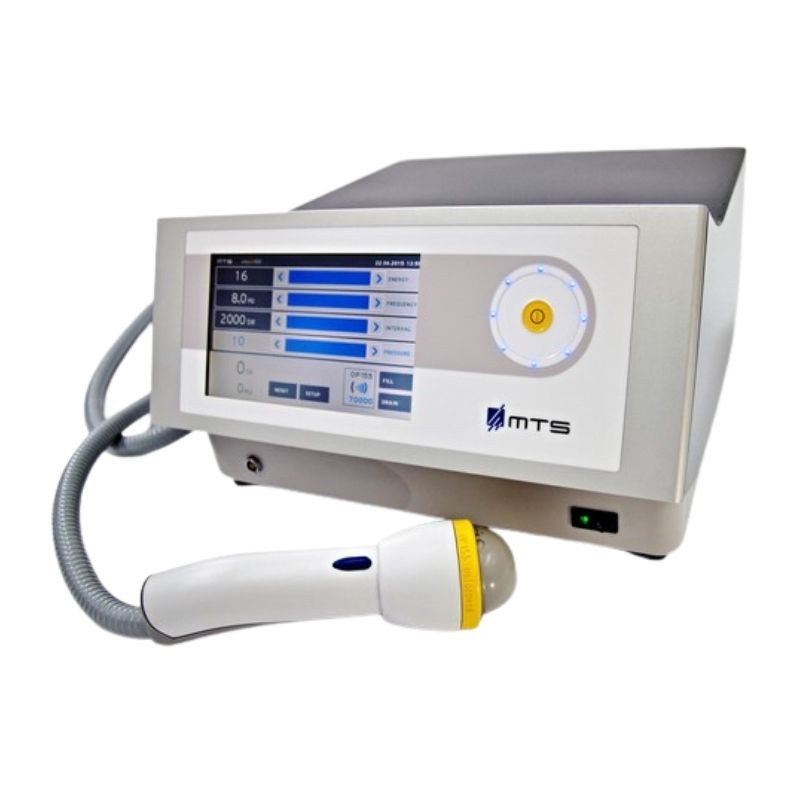
SoftWave Therapy is an FDA‑cleared, non‑invasive technology that uses acoustic (sound) waves to stimulate healing in injured or irritated tissue. Unlike treatments that only numb pain, SoftWave aims to reduce inflammation, improve blood flow, and activate your body’s natural repair cells so tissue can remodel and strengthen.
What SoftWave Does in an Impinged Shoulder
During a SoftWave Therapy session, targeted acoustic waves are delivered to the rotator cuff tendons, surrounding muscles, and bursal region. Research and clinical experience with shockwave‑type therapies show that this kind of treatment can:
- Reduce inflammation and irritation in tendons and bursa.
- Increase local blood flow and nutrient delivery to damaged tissue.
- Stimulate cellular repair by activating stem cells and growth factors involved in healing.
- Promote new collagen production to support stronger, more resilient tendon tissue over time.
- Modulate pain signaling and help relax tight soft tissues around the shoulder.
As irritated tissues calm and circulation improves, there is more space for your rotator cuff and bursa to glide. For many patients, lifting, reaching, and lying on the shoulder gradually become smoother and less painful as the tissue heals and shoulder mechanics are retrained.
The SoftWave Diagnostic Advantage
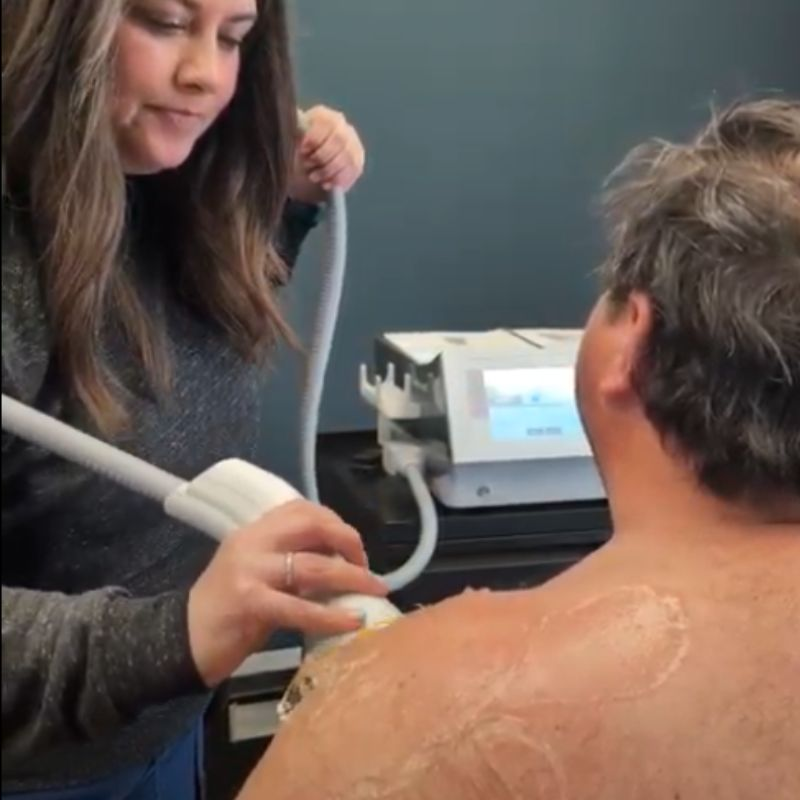
One unique feature of SoftWave Therapy is how it helps pinpoint the true hot spots in your shoulder. As the SoftWave applicator is moved over the area, you will feel minimal sensation over healthy tissue, but a distinct “rubber‑band‑snap” feeling over irritated or degenerating tissue.
What to Expect at Your Visit
Your care typically begins with a focused shoulder assessment and, when appropriate, a SoftWave Discovery Session. This visit is designed to answer two key questions: what is driving your pain, and how likely are you to respond to SoftWave Therapy?
During this first visit, Dr. Faith will:
- Listen to your story, including when your shoulder hurts the most and what you have already tried.
- Perform orthopedic and movement testing to identify signs of impingement and related issues, such as weakness, limited motion, or scapular dyskinesis.
- Use the SoftWave device to gently “scan” the shoulder and map out irritated tissue based on your response.
If SoftWave appears to be a good fit, you will usually receive your first treatment in the same visit and leave with a clear plan tailored to your pain level, diagnosis, and goals.
Who Is a Good Candidate for SoftWave Shoulder Treatment?
SoftWave Therapy can be an excellent option if you:
- Have been told you have shoulder impingement, rotator cuff tendinitis, or shoulder bursitis.
- Feel a pinch with overhead or sideways lifting, or pain when sleeping on the shoulder.
- Want to avoid or delay injections or surgery when it is safe to do so.
- Have plateaued with rest, medications, or basic home exercises.
- Are returning from a sports or repetitive‑use shoulder injury and need to restore confident motion.
Your initial evaluation will clarify whether SoftWave, chiropractic, a structured home exercise program, or a combined approach makes the most sense for you. When appropriate, we may also coordinate with orthopedic or imaging providers to rule out advanced tears or other conditions that truly require surgical evaluation.

Who Is a Good Candidate for SoftWave Shoulder Treatment?
SoftWave Therapy is often appropriate if you:
- Have been told you have shoulder impingement, rotator cuff tendonitis, or shoulder bursitis
- Feel a pinch with overhead or sideways lifting
- Want to avoid or delay injections or surgery when safe to do so
- Have plateaued with rest, medication, or basic home exercises
- Are returning from a sports or repetitive‑use shoulder injury
Your initial evaluation will clarify whether SoftWave, chiropractic, or a combined approach makes the most sense for your situation.
Cincinnati’s trusted softwave provider
Dr. Faith Swartzendruber is a licensed chiropractor and SoftWave Therapy provider in Cincinnati, Ohio, who helps people find relief from shoulder impingement and related pain. She focuses on reducing inflammation, easing irritation in the rotator cuff, and restoring smooth, pain-free movement—without surgery or heavy medications. Using an evidence-informed, personalized approach, Dr. Faith combines SoftWave Therapy with targeted chiropractic and rehabilitative care to promote proper shoulder mechanics, support healing, and improve long-term strength and function.
Dr. Faith earned her Doctor of Chiropractic degree from Palmer College of Chiropractic in 2022.
She holds Ohio chiropractic license (DC-05144).
Dr. Faith Swartzendruber, DC, integrates her SoftWave Therapy training and chiropractic license with her education background to deliver SoftWave treatments that are both clinically informed and patient-centered.
Dr. Faith has helped hundreds of Cincinnati patients overcome chronic pain with SoftWave Therapy and chiropractic care.
Shoulder Impingement Relief in Cincinnati
Whether your goal is sleeping through the night, lifting your kids, working overhead without pain, or returning to sports, you should not have to live with a constant pinch in your shoulder. At Simply Well Chiropractic in Cincinnati, SoftWave Therapy offers a non‑invasive, drug‑free option to address the irritated tissues behind shoulder impingement, while chiropractic care and corrective exercise support healthier mechanics for the long term.
If you are ready to find out whether this approach is right for you, schedule your $49 SoftWave Discovery Session at our Cincinnati office and take the next step toward lifting, reaching, and sleeping with confidence again.
Address
5721 Dragon Way #110, Cincinnati, OH 45227
info@simplywellchiro.com
Phone
(513) 271-1233

Written and medically reviewed by Dr. Faith Swartzendruber, DC
Ohio Chiropractic License: DC-05144 | Palmer College of Chiropractic
Founder, Simply Well Chiropractic, Cincinnati