
De Quervain’s Treatment in Cincinnati
Schedule your $49 Discovery Session today!
What is De Quervain’s Tenosynovitis?
De Quervain’s tenosynovitis is a painful inflammation of the tendons on the thumb side of your wrist. These tendons run through a narrow tunnel (sheath); when the tendons or sheath swell, they rub and catch, causing pain and stiffness with thumb and wrist movement.
This condition is sometimes called:
- De Quervain’s tendonitis or tendinosis.
- “Mommy wrist,” because it is common in new parents who are frequently lifting infants.
Without effective treatment, De Quervain’s tenosynovitis can make it difficult to grasp, pinch, lift, or twist, and it may even limit your long‑term range of motion in the thumb and wrist.
Common symptoms you shouldn’t ignore
De Quervain’s tenosynovitis typically causes:
- Pain or tenderness at the base of the thumb along the wrist (radial side).
- Pain that gets worse when gripping, pinching, lifting, or twisting.
- Pain that may radiate from the thumb into the wrist or forearm.
- Swelling or a small bump on the thumb side of the wrist.
- A catching, snapping, or popping sensation with thumb movement.
- Stiffness or reduced range of motion of the thumb.
- Sometimes numbness or tingling around the thumb and index finger.
If you notice these symptoms getting worse with activity instead of better with rest, it’s time to get evaluated before the problem becomes chronic.
What causes De Quervain’s Tenosynovitis?
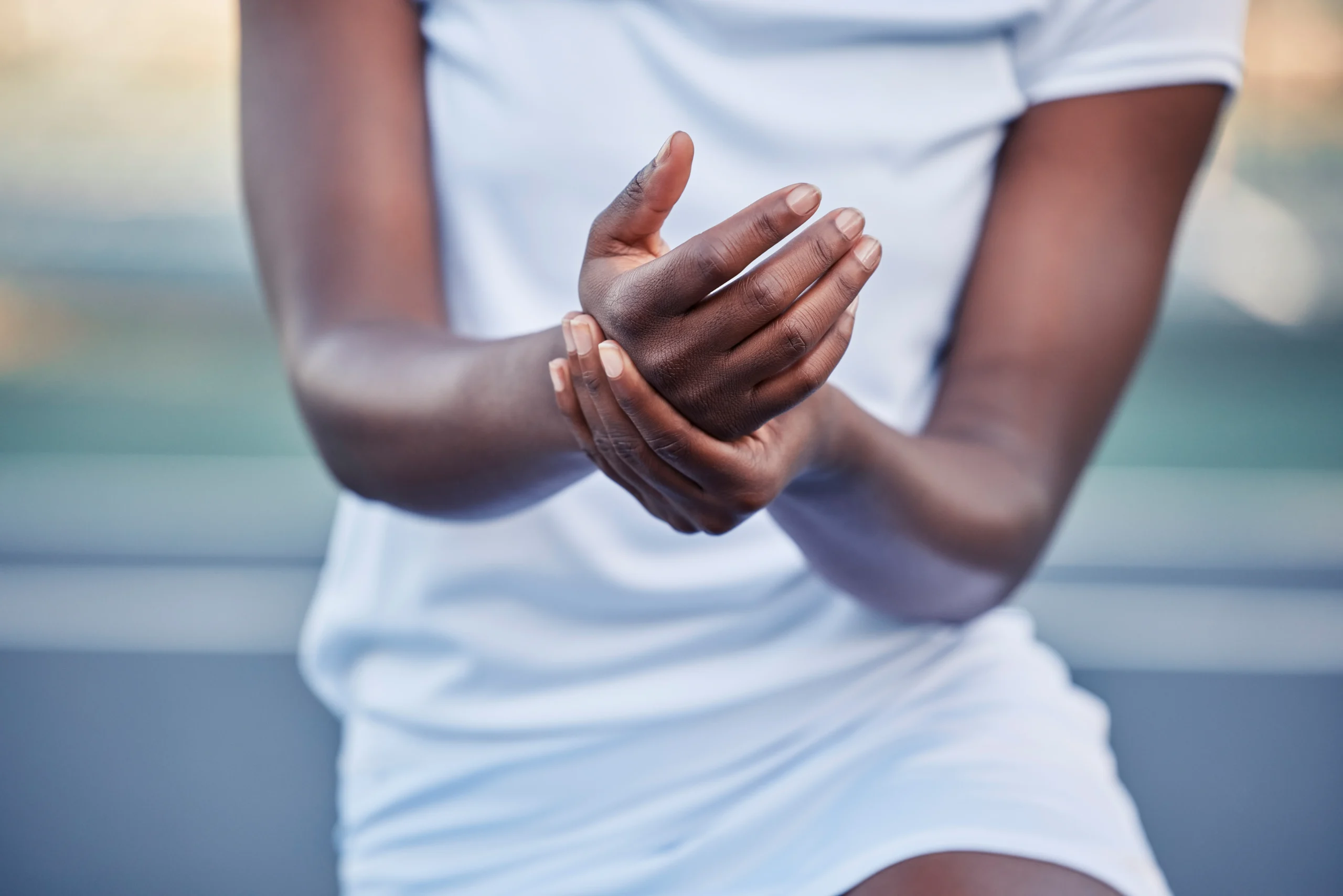
Anything that repeatedly stresses the thumb tendons can trigger De Quervain’s tenosynovitis. Common triggers include:
- Repetitive gripping or pinching for work or hobbies.
- Lifting infants or small children, especially with the wrist bent (“new mom” wrist).
- Sports that overuse the thumb and wrist (tennis, racquet sports, skiing).
- Using tools such as hammers or screwdrivers for prolonged periods.
- Direct trauma or a blow to the thumb or wrist.
- Inflammatory conditions such as certain types of arthritis.
Risk is higher in women, people over 40, caregivers of young children, and those whose work involves constant hand use.
SoftWave Therapy: a non‑surgical option for De Quervain’s in Cincinnati
SoftWave Therapy is an FDA‑cleared, non‑invasive technology that uses broad‑focused acoustic waves to stimulate healing in inflamed or degenerated soft tissues. Instead of relying solely on medications to quiet symptoms, SoftWave targets the underlying tendon and surrounding tissues to help your body repair them.
SoftWave Therapy has been used successfully for many tendon and soft tissue conditions, including carpal tunnel syndrome, De Quervain’s tenosynovitis, wrist tendinitis, and other hand and wrist problems.
How SoftWave helps De Quervain’s
During a SoftWave session for De Quervain’s tenosynovitis, acoustic waves are delivered over the thumb‑side wrist and forearm to:
- Reduce pain and inflammation: SoftWave can decrease inflammatory mediators and help calm irritated tissues, which often leads to pain relief.
- Improve circulation: The therapy promotes new blood vessel formation (angiogenesis) and increases blood flow, bringing more oxygen and nutrients to the injured area.
- Stimulate tissue repair: SoftWave has been shown to recruit and activate stem cells and support regeneration in tendons and connective tissues.
- Support better mobility and function: As inflammation and pain decrease and tissues recover, patients often find it easier to grip, lift, and move the wrist and thumb.
Because SoftWave is non‑invasive, there are no incisions, injections, or downtime, and you can usually return to normal daily activities right after your session.
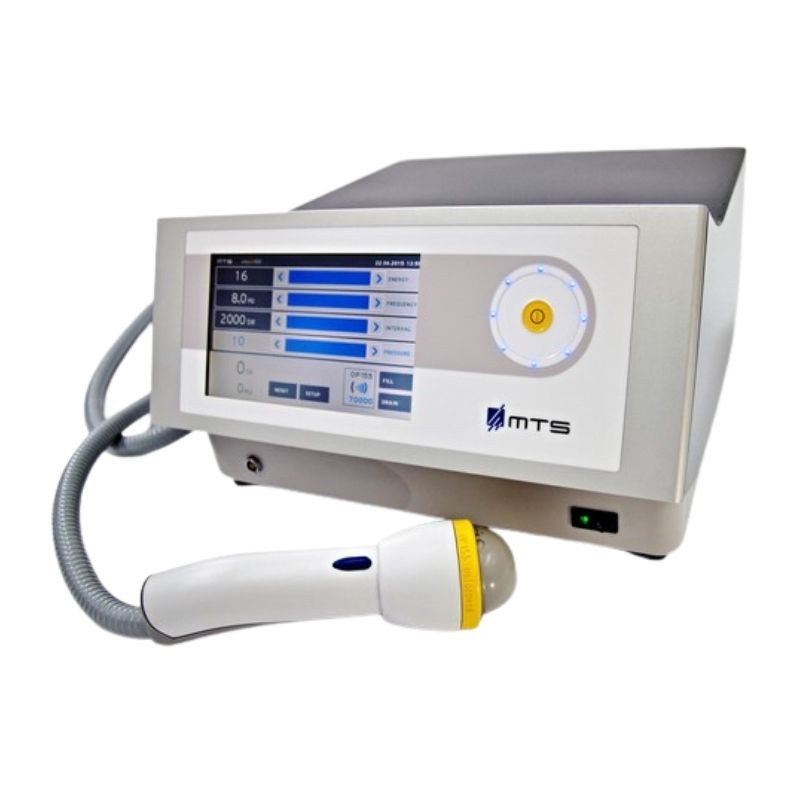
What to expect during your SoftWave session
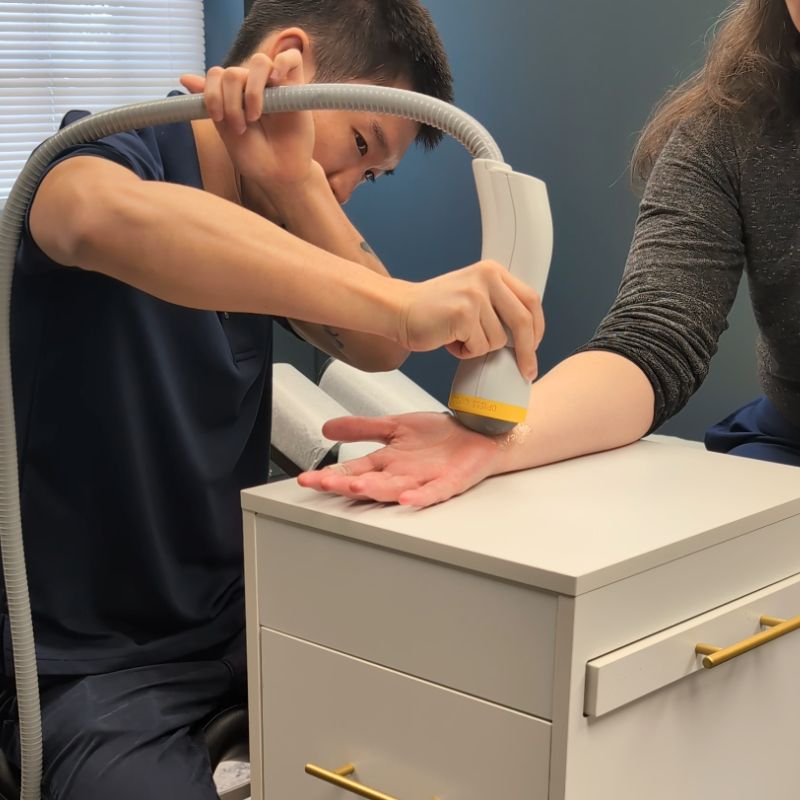
A typical SoftWave treatment for De Quervain’s tenosynovitis in our Cincinnati office is straightforward and generally well‑tolerated:
- A gel is applied to your wrist and lower thumb area to transmit the acoustic waves.
- The SoftWave applicator is moved over specific tender points along the thumb tendons and surrounding tissue.
- You may feel mild to moderate discomfort in irritated areas; this often indicates where the tissue needs the most attention.
- Each session usually lasts about 5-10 minutes for the thumb and wrist region.
Many patients notice some change in pain or mobility within the first few visits, with further improvement as treatments progress and the tissue continues to heal.
How SoftWave Therapy compares to other common treatments for De Quervain’s
| Treatment option | Invasive? | Main focus | Typical pros | Typical cons |
|---|---|---|---|---|
| Rest & splinting | No | Immobilize & protect | Simple, inexpensive, often first line. | May not resolve chronic cases; can cause stiffness. |
| NSAIDs | No | Reduce pain & inflammation | Easy access, short‑term relief. | GI/other side effects; does not repair tissue. |
| Corticosteroid injection | Minimally | Potent anti‑inflammatory | Often rapid relief, especially early cases. | Possible recurrence; repeated use not ideal for tendon health. |
| Hand/physical therapy | No | Restore mobility & strength | Addresses mechanics, helpful for function. | Progress can be slow if inflammation persists. |
| SoftWave Therapy | No | Stimulate healing & circulation | Non‑surgical; targets tissue repair, can complement other care. | Not every patient is a candidate; requires a series of visits. |
| Surgery | Yes | Release tendon sheath | High long‑term success for refractory cases. | Downtime, surgical risks, not usually first‑line. |
Cincinnati’s trusted softwave provider
Dr. Faith Swartzendruber is a licensed chiropractor and SoftWave Therapy provider in Cincinnati, Ohio, who helps people find relief from De Quervain’s tenosynovitis and persistent thumb or wrist pain. She focuses on reducing tendon irritation, easing inflammation, and restoring smooth, pain-free hand movement—without surgery or heavy medications. Using an evidence-informed, personalized approach to care, Dr. Faith combines SoftWave Therapy with targeted chiropractic and rehabilitative strategies to support tendon healing, improve grip strength, and promote long-term function and comfort.
Dr. Faith earned her Doctor of Chiropractic degree from Palmer College of Chiropractic in 2022.
She holds Ohio chiropractic license (DC-05144).
Dr. Faith Swartzendruber, DC, integrates her SoftWave Therapy training and chiropractic license with her education background to deliver SoftWave treatments that are both clinically informed and patient-centered.
Dr. Faith has helped hundreds of Cincinnati patients overcome chronic pain with SoftWave Therapy and chiropractic care.
Take the next step toward relief
You don’t have to live with constant thumb‑side wrist pain or wait until your De Quervain’s tenosynovitis is “bad enough” for surgery.
- Call Simply Well Chiropractic at (513) 271-1233 to schedule your SoftWave consultation.
- Or request an appointment online and our team will contact you with available times.
We’ll help you understand your condition, walk you through your options, and design a plan to get you back to using your hand comfortably again.

Written and medically reviewed by Dr. Faith Swartzendruber, DC
Ohio Chiropractic License: DC-05144 | Palmer College of Chiropractic
Founder, Simply Well Chiropractic, Cincinnati