
Knee Strain Treatment in Cincinnati
Schedule your $49 Discovery Session today!
What Is a Knee Strain (vs. Sprain or Tear)?
Your knee is supported by a network of muscles, tendons, ligaments, cartilage, and bone that all have to work together every time you stand, walk, or climb stairs. A knee strain happens when the muscles or tendons around the knee are overstretched or partially torn, often from overuse, sudden force, or gradually increasing activity too quickly.
A knee sprain involves the ligaments that connect bone to bone and help stabilize the joint, such as the ACL, PCL, MCL, or LCL. In both strains and sprains, these soft tissues develop micro‑tears and inflammation that cause pain, swelling, stiffness, and a feeling that the knee is weak or “giving way.”
In more serious injuries, a ligament or tendon can be completely torn, which may require surgical consultation and advanced imaging. During your visit, we screen for red‑flag signs and will refer you to an orthopedic specialist if we suspect a major tear, fracture, or injury that is not appropriate for conservative care alone.
Signs and Symptoms of a Knee Strain
People in Cincinnati rarely search for “knee strain”—they search for the way their knee actually feels. You may be dealing with a strain or sprain if you notice:
- Pain after twisting, pivoting, stepping off a curb, or mis‑stepping on stairs
- Pain on the inside (medial) or outside (lateral) of the knee
- Swelling, warmth, or stiffness around the joint
- Pain when walking, running, squatting, kneeling, or going up and down stairs
- A feeling that your knee is weak, wobbly, or might “give out”
- Soreness that lingers after sports, workouts, or a long day on your feet
- Pain around the kneecap or patellar tendon (sometimes called jumper’s knee)
Mild knee strains may feel like a nagging ache or tightness that clears in a week or two with rest. Moderate to more severe strains can limit weight‑bearing, make stairs or hills very painful, and take several weeks or months to fully heal if they are not managed well.
If you notice intense pain, a loud pop at the time of injury, an inability to put weight on the leg, a visibly deformed knee, or severe locking or catching, you should seek urgent medical evaluation right away. We can help you determine whether you are a good candidate for SoftWave Therapy or whether you should see an orthopedic surgeon first.
Common Causes of Knee Strain in Cincinnati
In our Cincinnati SoftWave clinic, we frequently see knee strains and sprains from:
- Weekend sports such as pickleball, recreational basketball, and running along the riverfront or at Lunken
- Sudden twists on wet grass, uneven sidewalks, or when a dog pulls hard on the leash
- Repetitive strain from going up and down stairs, squatting, lifting, or kneeling for work
- “Old injuries” that never fully healed and now flare with activity or weather changes
- Increased training volume for runners, hikers, and gym‑goers without adequate recovery
Several specific structures are commonly involved, including the medial collateral ligament (MCL), lateral collateral ligament (LCL), patellar tendon, quadriceps tendon, and supporting muscles around the hip and thigh. Sometimes strain occurs on top of underlying knee arthritis or a small meniscus tear, making the knee feel more unstable and painful than usual.
How SoftWave Therapy Helps Knee Strains Heal
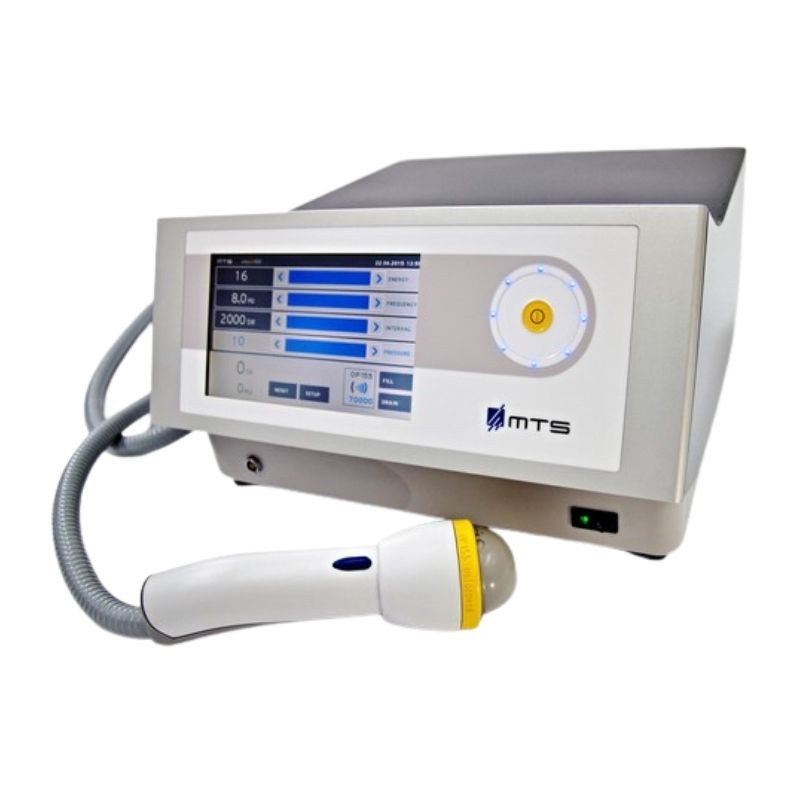
SoftWave Therapy is an FDA‑cleared, non‑invasive acoustic wave treatment that stimulates your body’s own repair processes in injured soft tissues. Rather than masking pain, SoftWave is designed to address what is happening inside the strained muscles, tendons, and ligaments around your knee.
During a SoftWave session, broad‑focused acoustic waves are delivered through the skin into the injured region. Research on shockwave‑type therapies shows that this style of treatment can:
- Increase blood flow and support new blood vessel formation in damaged tissue, improving oxygen and nutrient delivery needed for repair.
- Reduce chronic inflammation that keeps tissues stuck in a low‑grade irritated state instead of fully healing.
- Stimulate repair cells and growth factors involved in collagen remodeling and soft tissue regeneration, particularly in tendons and ligaments.
- Improve mobility and function by decreasing pain and stiffness around the joint when combined with proper movement and rehab.
Many patients notice some change in pain or motion within the first few sessions, with further improvement as the tissue responds over a series of treatments. Sessions are performed in the office, without anesthesia, and there is no downtime—you typically walk out and resume normal daily activities the same day.
What to Expect at Your Knee Strain Visit
Your first visit at Simply Well Chiropractic in Cincinnati is focused on clarity and a clear plan of action.
Detailed History and Movement Assessment
We discuss how your knee pain started, what makes it better or worse, and what you want to get back to doing (stairs without fear, running, playing with kids, recreational sports). We then test range of motion, strength, and specific movements that recreate your pain.

Targeted SoftWave Mapping Session
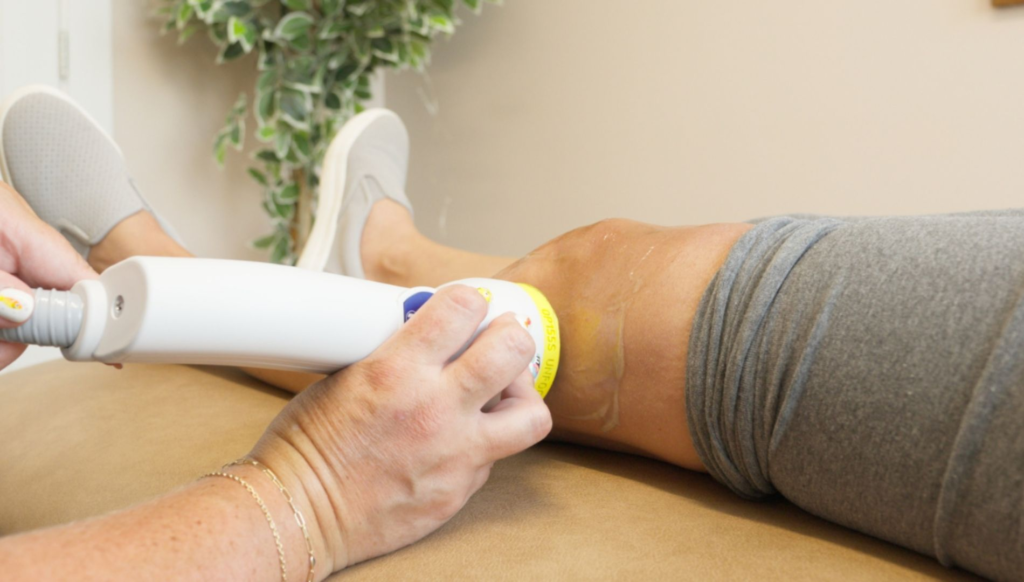
During a SoftWave evaluation, we use the handheld device to “map” the knee and locate the exact areas of tissue irritation or strain. Most patients feel this as a combination of gentle tapping and occasional tender spots—which helps confirm where the problem truly lives.
Personalized Treatment Plan
Based on your exam, imaging (if available), and SoftWave mapping, we put together a plan that may include a series of SoftWave sessions, specific home care recommendations, and, when appropriate, complementary chiropractic or rehab exercises. The goal is not just pain relief, but restoring strength, stability, and confidence in your knee.
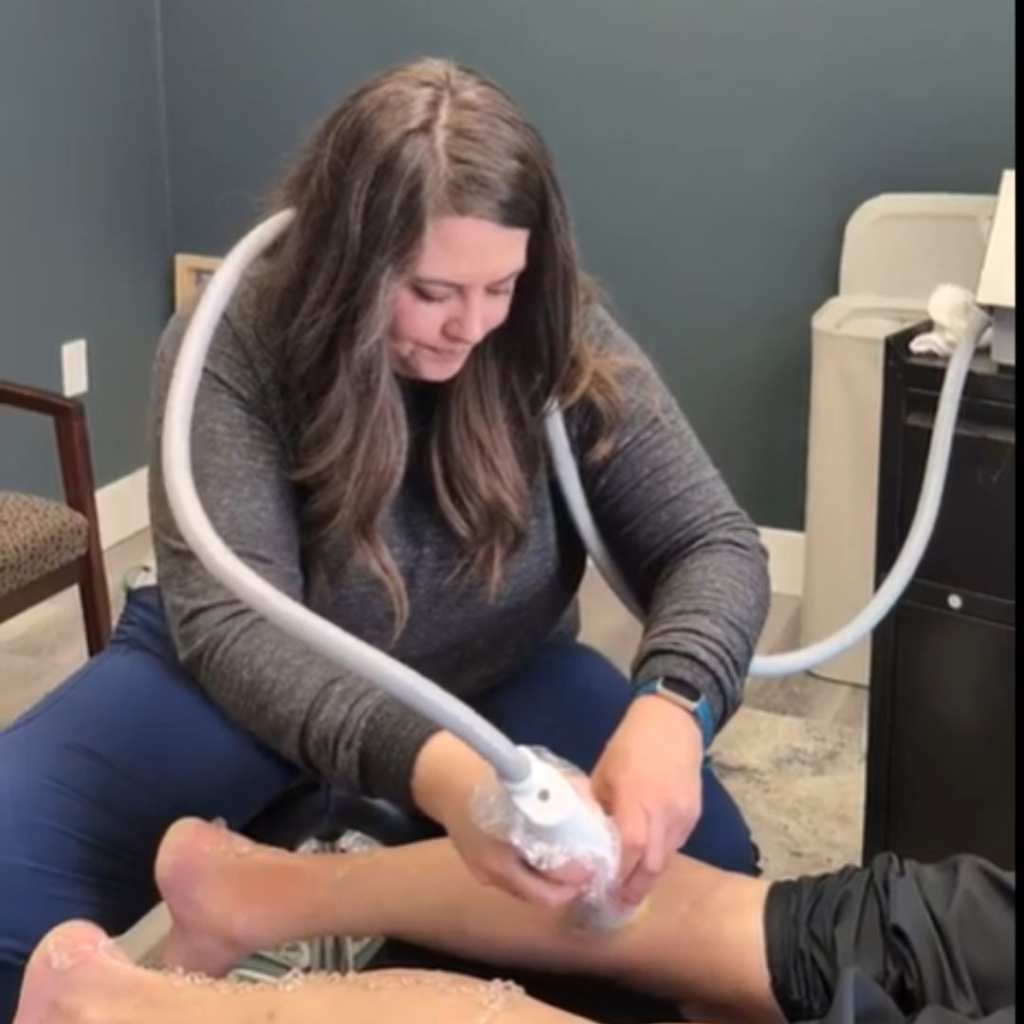
Each SoftWave visit is usually around 5-10 minutes, and there is no downtime—you can walk out and resume your day right away.
Who Is a Good Candidate for SoftWave Knee Strain Treatment?
SoftWave Therapy may be appropriate if:
- You have knee pain after a twist, misstep, or overuse and want to avoid surgery if possible
- You have been told you have a “sprain” or “strain,” but the knee still feels weak or sore weeks or months later
- You have tried rest, ice, bracing, or basic therapy and your pain returns as soon as you increase activity
- You have underlying arthritis or an old knee injury that now flares with stairs, walking, or sports
- You are looking for a non‑invasive, drug‑free approach with no injections or downtime
If at any point we believe your knee would be better served by an orthopedic surgeon or another specialist, we will let you know and help you take the next step.
Recovery Timeline: How Long Does a Knee Strain Take to Heal?
Healing time depends on the severity of the strain or sprain, your overall health, and how well you follow your treatment plan.
- Mild strains and sprains often improve within 1–2 weeks with rest and early care.
- Moderate injuries may take 3–6 weeks to heal and benefit from structured rehab.
- More severe strains or partial tears can take several months to fully recover and may require more intensive rehab and medical oversight.
SoftWave Therapy is not a magic switch, but for many soft‑tissue injuries it can help reduce chronic inflammation and support more complete healing when progress has plateaued. During your visits we will regularly reassess your pain, motion, and function so we can adjust your plan and keep you moving in the right direction.
Get Help for Your Knee Strain in Cincinnati
You don’t have to keep guessing whether it’s “just a strain,” live on ice packs, or hope your knee magically starts behaving again. SoftWave Therapy at Simply Well Chiropractic in Cincinnati gives your knee the biological nudge it needs to actually heal, not just cope.
To schedule your SoftWave knee evaluation:
- Call our office or
- Request an appointment online through our SoftWave Therapy appointments page.
Tell us you’re coming in for knee pain or a suspected knee strain, and we’ll reserve time to thoroughly evaluate your knee and outline a clear, step-by-step plan to get you moving with confidence again.
Preventing Future Knee Strains
Once your knee is improving, we want to keep it that way.
To help reduce the risk of future strain or sprain:
- Build gradual strength and stability in the hips, thighs, and calves
- Warm up before sports or workouts and add light stretching after activity
- Increase training volume slowly instead of jumping into high‑intensity workouts
- Wear appropriate footwear for your sport or job and replace worn‑out shoes
- Use good body mechanics when lifting or working on your knees
- Listen to early warning signs—nagging twinges or swelling are easier to address than full‑blown injuries
We can provide a tailored home‑exercise and activity plan based on the specific way you use your knees in daily life, work, and sports.
Address
5721 Dragon Way #110, Cincinnati, OH 45227
info@simplywellchiro.com
Phone
(513) 271-1233

Written and medically reviewed by Dr. Faith Swartzendruber, DC
Ohio Chiropractic License: DC-05144 | Palmer College of Chiropractic
Founder, Simply Well Chiropractic, Cincinnati